
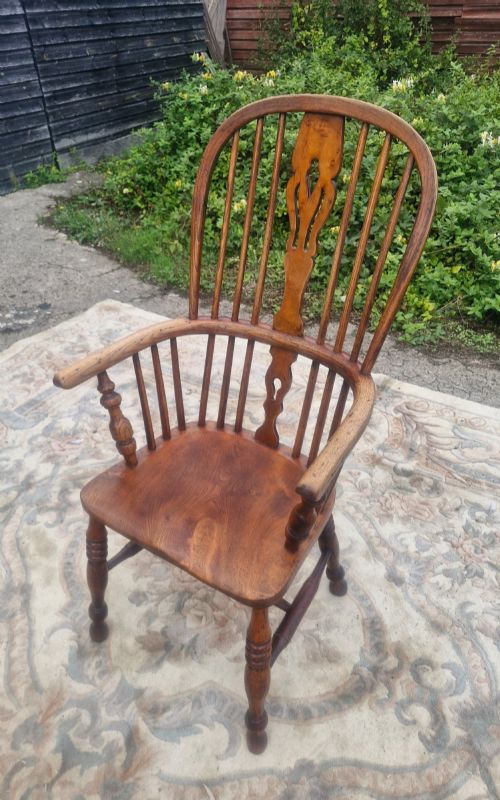
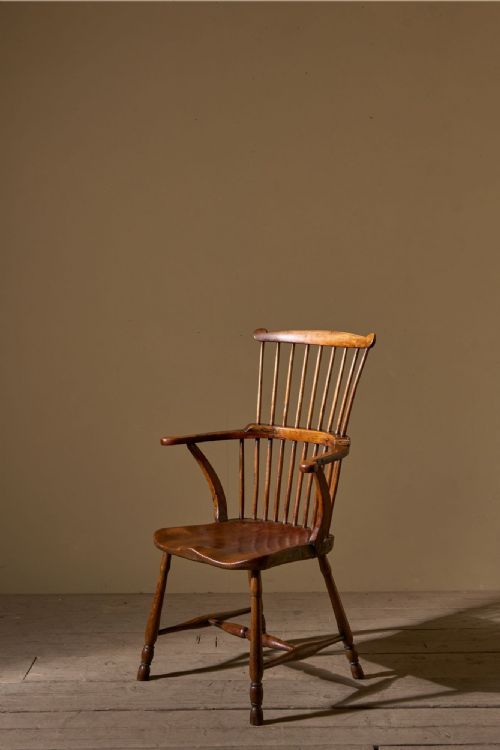
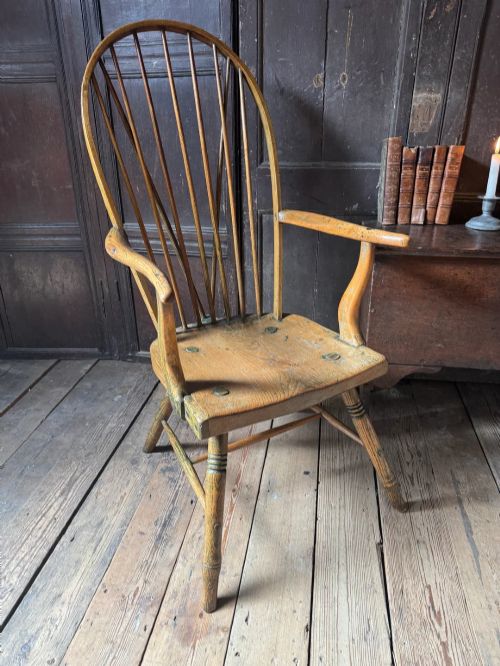
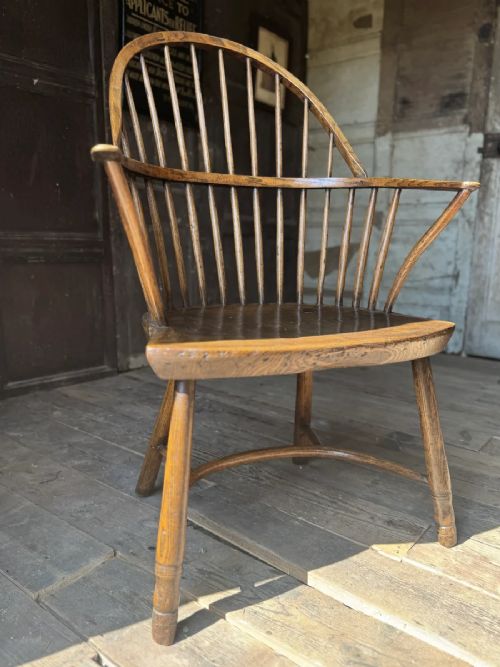


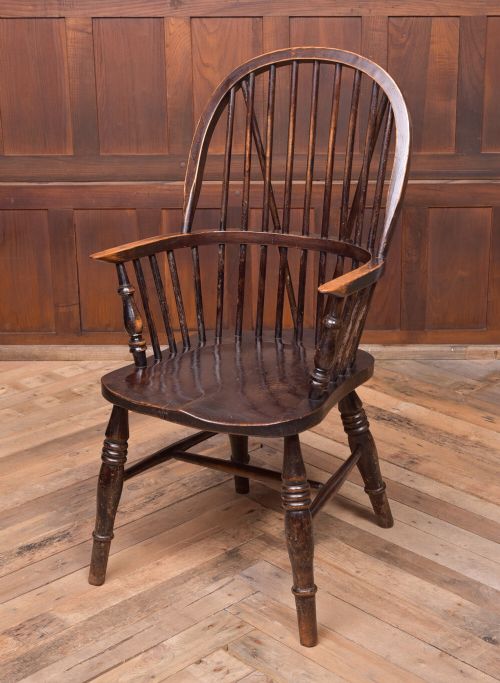

Period Elm Armchair
A period elm armchair brings tangible country character and robust native timber into a room.
Period Elm Armchair
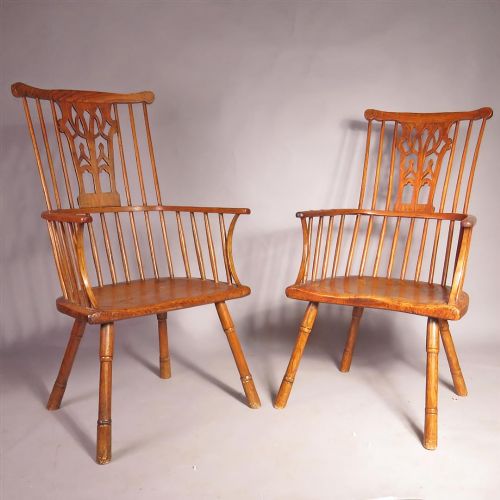
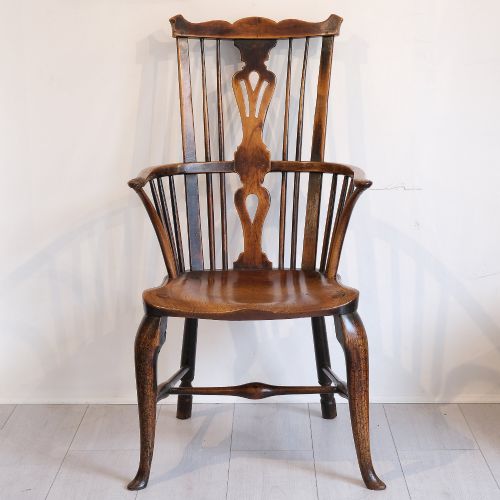
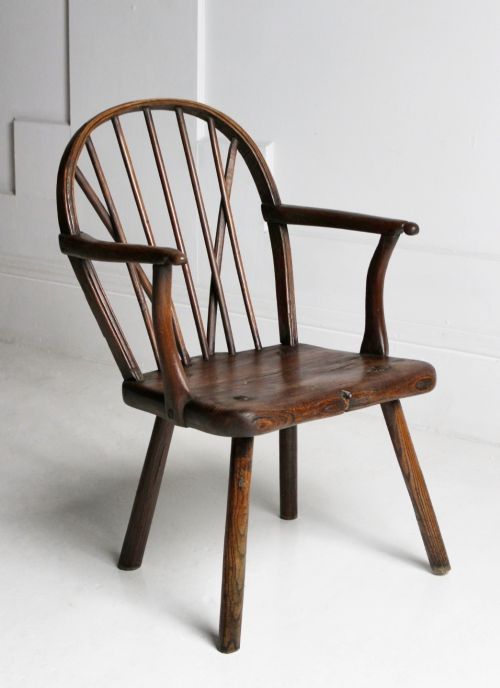
A period elm armchair is a seating form grounded in English vernacular tradition, combining native timbers like elm, ash, and fruitwood. Buyers seeking a period elm armchair typically encounter Windsor chair variants, including high back, low back, comb back, and hoop back designs originating from the eighteenth and nineteenth centuries.
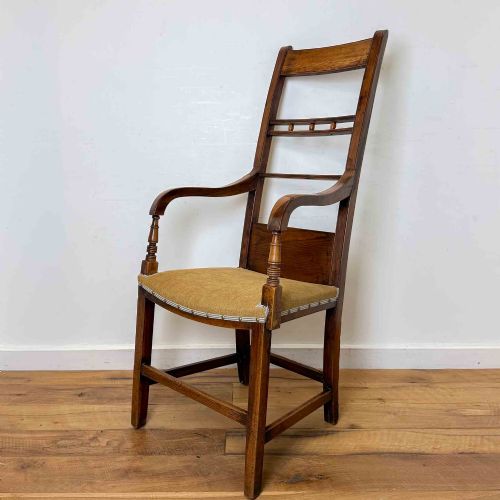
The regional diversity is wide, stretching from West Country workshops to general country house contexts. Alongside standard armchairs, related forms such as child's chairs and stick back chairs appear within Georgian, Regency, and Victorian periods.
Makers working within these vernacular styles favoured comfort and structural honesty over rigid formality. These chairs served utility in dining and parlour settings, displaying the varied joinery and turning methods typical of regional bodgers and provincial cabinet makers.
Distinctions in quality
Quality rests on the selection of timber, the grace of the spindle turning, and the sculptural comfort of the bentwood hoop. Superior examples display well-figured elm seats with deep, comfortable saddle contours and balanced proportions across the arms and crest rails.
The integrity of the original joints and the subtlety of regional variations determine the standing of a piece. Better chairs maintain their original structural components without excessive timber replacement, preserving the authentic tool marks of the provincial maker.
The Period Elm Armchair Glossary
- Windsor chair
- A chair built with a solid wooden seat into which the legs and back spindles are directly inserted. This construction method defines many regional English seating forms.
- Comb back
- A Windsor chair variation where the tall back resembles the teeth of a comb, often topped by a horizontal crest rail. It provides sturdy upper back support.
- Crinoline stretcher
- A bentwood or turned stretcher linking the legs of a Windsor chair in a curved loop. It strengthens the underframe significantly.
- Vernacular
- Objects made by regional craftsmen following local traditions rather than strict academic style guidelines. These pieces prioritise practical function and local materials.
- Hoop back
- A continuous bentwood rail forming the arms and upper back of a chair in a single flowing curve. It distributes weight evenly across the frame.
Period Elm Armchair: Frequently Asked Questions
How do I identify a West Country Windsor chair?
West Country examples often feature distinct turnings, robust proportions, and characteristic crinoline stretchers linking the undercarriage. Regional makers utilised local stocks of elm and ash to create these sturdy forms.
Examining the underseat wedging and spindle placement helps confirm the specific provincial workshop traditions behind the construction.
What is the difference between high back and low back chairs?
High back chairs offer extended support with tall spindles, hoops, or comb arrangements suited for parlour use. Low back variants feature compact profiles originally designed for easy movement around a hearth or dining table.
Both styles utilise solid elm seats shaped for comfort during extended sitting.
Can I use a period elm armchair every day?
These chairs were built for practical domestic utility from strong native timbers like elm and ash. Their robust construction handles regular daily use when placed on even flooring.
Avoid exposing antique timber to sudden humidity changes or direct heat sources to preserve the original wood grain.
How do I date an elm armchair?
Dating relies on observing stylistic markers such as George III crinoline stretchers, Regency fruitwood usage, or Victorian high back proportions. Tool marks, joinery techniques, and timber wear provide further clues to the period of origin.
Comparing structural details against documented regional pieces helps narrow the decade of manufacture.