



Period Double Chest
A period double chest stands as a commanding vertical statement, offering substantial storage through two stacked sections designed to anchor traditional rooms.
Period Double Chest
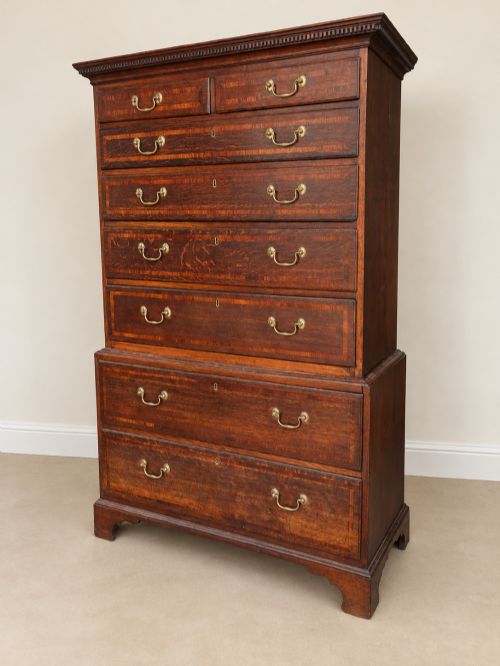
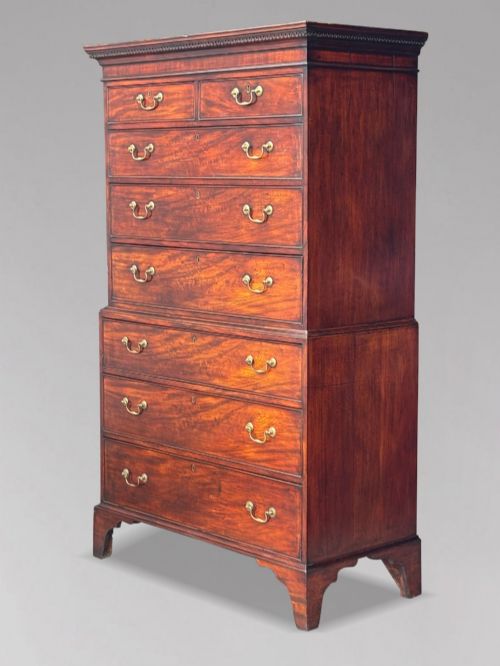
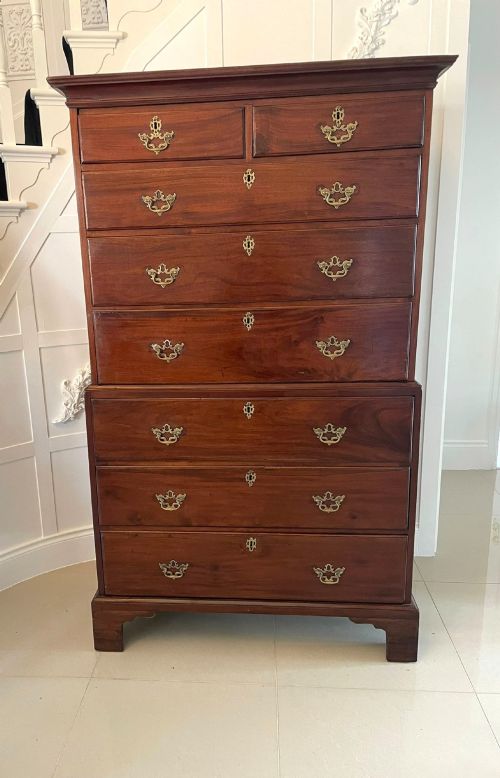
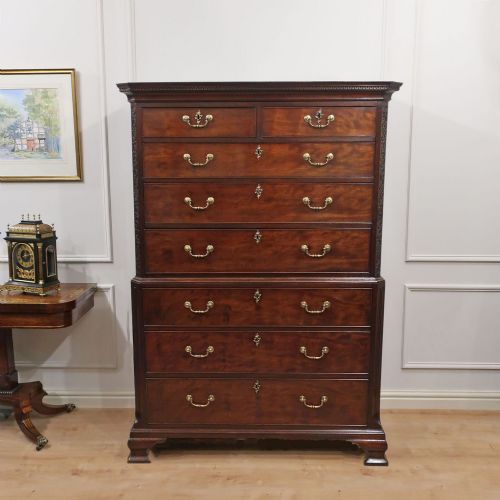
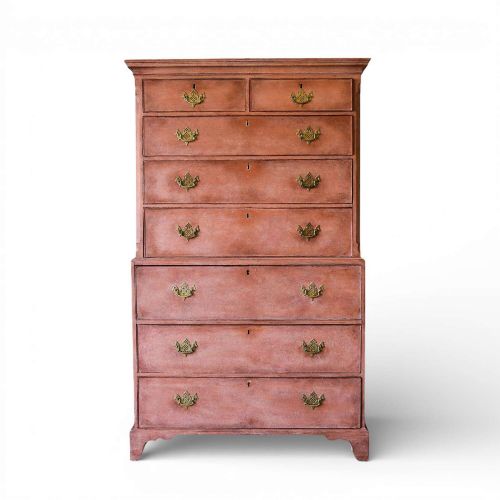
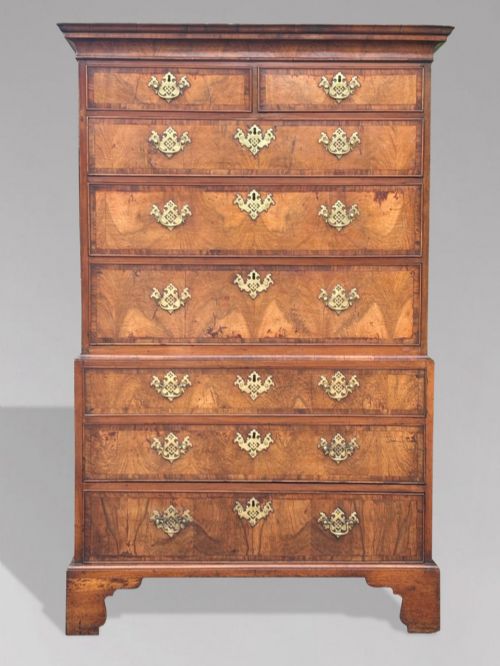
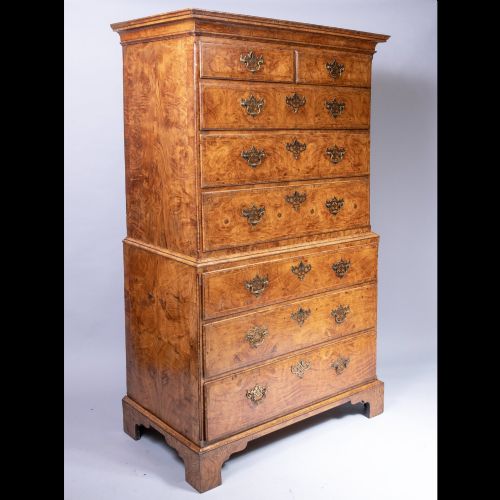
A period double chest, commonly known in the listings as a chest on chest or tallboy, consists of a smaller upper carcase mounted directly upon a wider lower chest of drawers. This configuration maximises vertical storage without demanding an excessive floor footprint, making it a practical addition to period interiors.
The versions most frequently encountered on this page date from the eighteenth century, spanning the George II, George III, and Regency eras. Mahogany remains the dominant timber, though walnut, oak, elm, and painted finishes also appear among these tall forms.
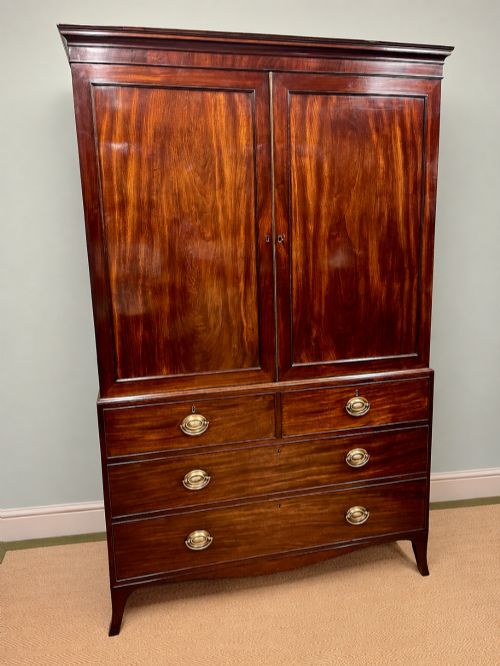
Beyond standard drawer configurations, some examples incorporate secretaire drawers that pull down to form a writing surface, or upper sections configured as linen presses and bookcases. These multi-functional designs reflect the evolving domestic requirements of Georgian households.
Assessing quality and proportion
The fineness of a period double chest relies heavily on the crispness of its carved details, such as classical cornices, canted corners, and bracket or ogee feet. Superior examples maintain balanced proportions between the upper and lower sections, avoiding a top-heavy appearance.
Timber selection dictates visual appeal, with figured mahogany and rich walnut achieving greater depth through skilled polishing. Original brass handles and undisturbed surface patination further distinguish higher quality items from altered pieces.
Period Double Chest Retail Price Guide 2026
Typical asking prices for period double chest among the pieces listed under this phrase on Sellingantiques today, from the lower quarter to the upper quarter. They describe what is for sale here now, not the wider market.
Listings feature eighteenth-century and Regency periods, utilising mahogany, walnut, oak, elm, and painted finishes.
The Period Double Chest Glossary
- Chest on chest
- A tall storage unit formed by stacking one chest of drawers directly on top of another wider chest. This form is frequently referenced interchangeably with a tallboy.
- Tallboy
- A traditional term used to describe tall chests of drawers, particularly those constructed in two distinct stacked sections. They provide elevated storage capacity.
- Secretaire
- A drawer fitted with a drop-down front that reveals a writing surface and small internal compartments. It combines desk functionality within a standard drawer height.
- Linen press
- A tall cabinet featuring upper doors that enclose sliding trays for textile storage, positioned above base drawers. They serve as substantial bedroom storage pieces.
- Brushing slide
- A pull-out shelf integrated into the waist of the chest, originally used for brushing clothes or as a temporary writing surface.
Period Double Chest: Frequently Asked Questions
What is a period double chest?
A period double chest is a tall piece of furniture comprising two stacked sections of drawers, designed to maximise vertical storage space.
These pieces typically date from the eighteenth century and are also known as chest on chests or tallboys.
How were these chests used?
Households used these tall units primarily for storing clothing, linens, and personal valuables across multiple graduated drawers.
Some variations included integrated writing compartments or sliding trays to accommodate specific domestic storage needs.
Where should I place one?
These tall forms suit traditional bedrooms, dressing rooms, or hallways where vertical storage is required without sacrificing floor space.
Ensure adequate ceiling height and wall clearance before positioning these substantial items in a room.
How do I identify the period?
Stylistic indicators such as bracket feet, cornice carvings, and timber choices help distinguish between George II, George III, and Regency eras.
Mahogany and walnut predominate in eighteenth-century examples, alongside characteristic brass hardware designs.