

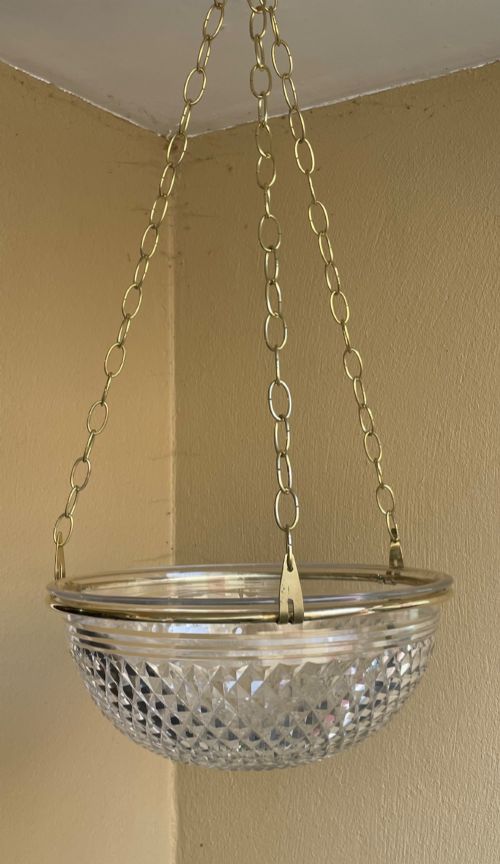


Period Cut Crystal Light
These period cut crystal light fixtures bring remarkable refractive brilliance to any room, and this selection ranges from Edwardian pendants to Regency candlesticks.
Period Cut Crystal Light
When you search for period cut crystal light, you are looking at illumination hardware shaped by historical glass-cutting traditions across the Edwardian, Regency, and nineteenth-century eras. The objects on this page primarily take the form of chandeliers, ceiling lights, pendant lights, and candlesticks, designed to catch and scatter light through faceted surfaces.
You are most likely to meet Edwardian and nineteenth-century pieces on this page, often built with cut glass, crystal, and brass or silver-plated mounts. These fixtures range from single-bulb plafonniers and hall lights to multi-arm chandeliers carrying several lights.
The styles stretch from French Rococo and French Classical to Art Deco and Victorian designs, showing how makers adapted glass cutting to changing interior tastes. Each piece uses hanging prisms, lustres, or entire bodies of cut glass to create visual weight and brilliance.
How they were made
Makers formed these pieces using heavy lead glass or clear glass, shaped by hand-cutting and polishing facets to maximise light refraction. This glass work combines with structural metalwork in brass, gilt brass, gilt bronze, and silver plate.
Components like drops and lustres hang from metal wire or pinned frames, joining glass elements to metal crowns and arms. The frames themselves utilise cast and gilded brass or bronze, particularly in French-influenced and Regency pieces.
Period Cut Crystal Light Retail Price Guide 2026
Typical asking prices for period cut crystal light among the pieces listed under this phrase on Sellingantiques today, from the lower quarter to the upper quarter. They describe what is for sale here now, not the wider market.
Some antique chandeliers carry the faint aroma of old polish, lingering from decades of careful housekeeping in grand Edwardian halls.
What varies in quality
The distinction between standard work and the finest pieces lies in the crispness of the glass faceting and the depth of the hand-polish. Superior items exhibit sharp, clean edges on every cut and heavy, clear crystal that holds a bright ring when struck.
Metal mounts also separate tiers of quality, with heavier cast or ormolu frames providing stability and intricate detail compared to simpler wire construction. The integration of the metal fittings with the cut glass elements determines the overall harmony of the object.
The Period Cut Crystal Light Glossary
- Plafonnier
- A ceiling-mounted light fixture that sits flush or close to the ceiling surface, often enclosed in a glass bowl or shade.
- Lustre
- A cut-glass pendant or hanging prism designed to refract light, frequently suspended from candlesticks or chandeliers.
- Ormolu
- Gilded bronze or brass mounts used for decorative structure and detail on lighting fixtures.
- Electrolier
- A light fixture designed specifically for electricity, often adapted from earlier gas or candle fittings.
- Cage
- The skeletal metal framework of a chandelier that supports tiers of glass drops and arms.
Period Cut Crystal Light: Frequently Asked Questions
How do I clean a cut crystal chandelier?
Cleaning requires a soft cloth and a gentle glass cleaning solution applied by hand to each individual crystal prism and arm.
Avoid immersing the entire fixture in liquid, as moisture can damage the historical metal wiring, frames, and silver-plated or gilded surfaces.
Are these lights wired for modern UK electricity?
Many period fixtures retain older wiring or have been adapted at various points in their history by previous owners.
Buyers should have a qualified electrician inspect and rewire the lighting components to meet current safety standards before installation.
How do I tell an Edwardian chandelier from a Regency one?
Edwardian pieces often feature lighter frames, silver-plated details, and brighter, machine-assisted glass cuts typical of the early twentieth century.
Regency items tend to display heavier cast bronze or ormolu mounts, hand-cut lustres, and neoclassical or classical French design influences.
Can heavy crystal ceiling lights hang safely in modern homes?
These fixtures require secure mounting directly into ceiling joists or solid masonry rather than standard plasterboard fixings.
Because materials like cut glass, brass, and bronze add substantial weight, professional installation is essential to support the load.