


Period Brass Table Lamp
A period brass table lamp brings warm metal tones and steady illumination to a room, spanning nineteenth-century oil burners and Edwardian designs.
Period Brass Table Lamp
A period brass table lamp encompasses functional lighting solutions originating from the eighteenth century through to the early twentieth century. These objects frequently began life as oil-burning lamps or candle lamps before later conversion to electricity.
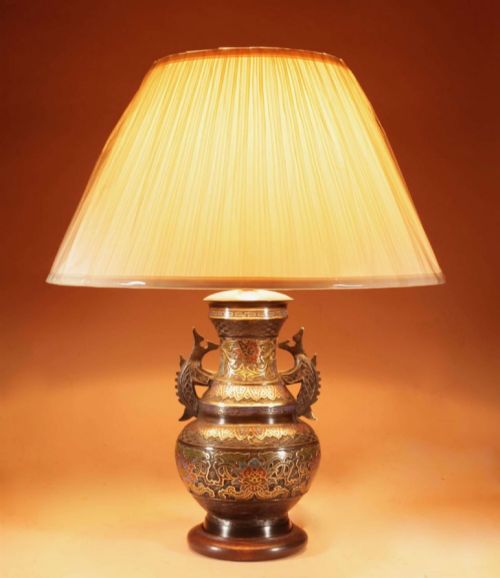
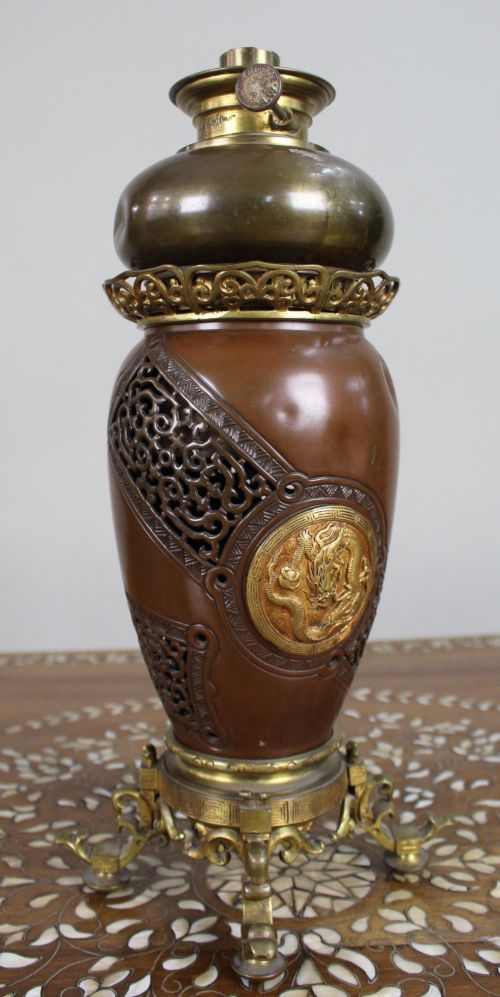
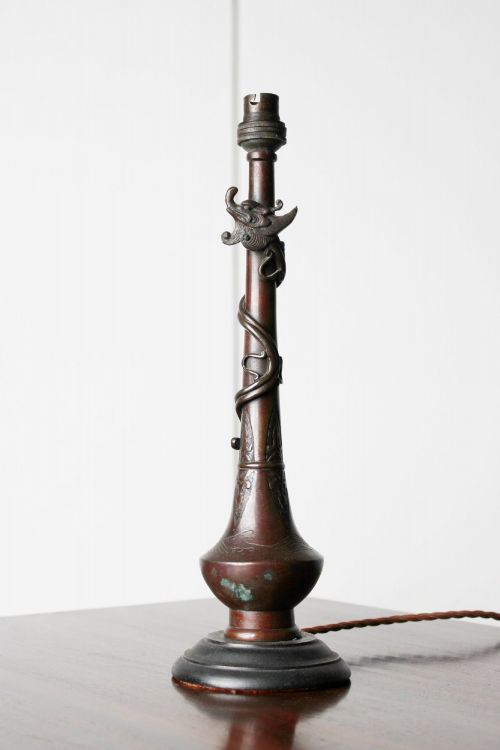
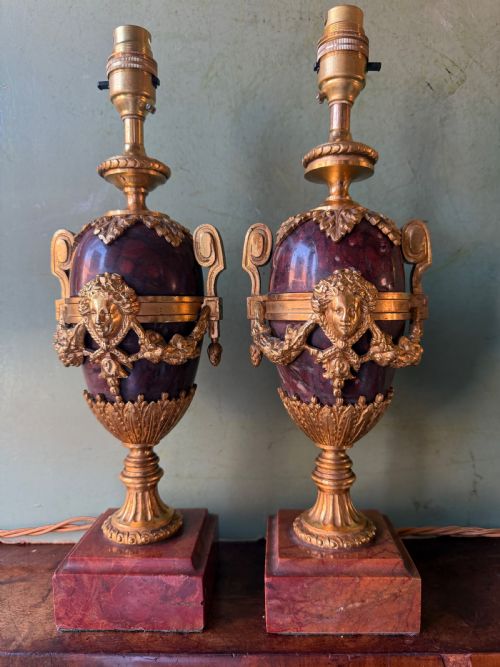
The selection ranges from simple Victorian domestic brass oil lamps to elaborate Japanese bronze and champlevé examples, alongside French ormolu-mounted marble pieces. Alongside dedicated lighting, the record includes furniture forms such as occasional and sofa tables associated with lamp use.
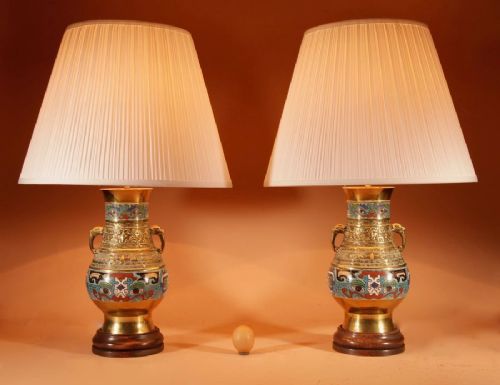
Victorian and Edwardian pieces dominate the current selection, often incorporating materials like glass, fabric, and enamel. Buyers encounter both single lamps and matching pairs suitable for sideboard or desk placement.
How they were made
Metalworking formed the primary construction method, utilising cast and turned brass, copper, and bronze. Artisans frequently combined these metals with decorative elements such as champlevé and cloisonné enamel.
Many items incorporate organic and mineral materials alongside metalwork, including mahogany, rosewood, marble, ceramic, and porcelain components. Structural assembly relied on threaded brass fittings, rivets, and hand-finishing.
Griffins occasionally stand guard over Victorian candle lamps, glaring fiercely at the evening gloom.
What varies in quality
Quality rests upon the crispness of casting detail in the metalwork and the integration of secondary materials like enamel, marble, or inlaid wood. Superior examples display careful finishing to decorative mounts and columns.
The fidelity of period styling, such as classical column proportions or precise brass inlay on rosewood and mahogany surfaces, separates standard utility pieces from finer decorative works.
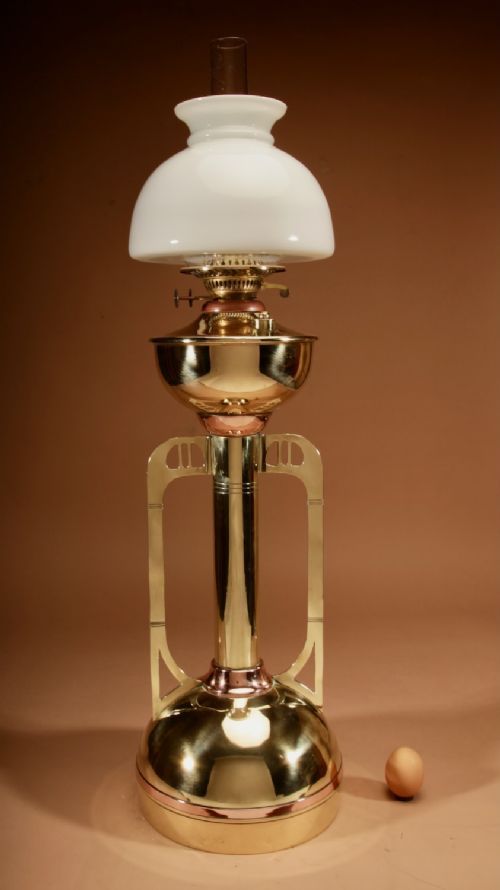
Gustave Serrurier Bovy
The Period Brass Table Lamp Glossary
- Champlevé
- An enamelling technique where troughs are dug into a bronze or brass surface and filled with vitreous enamel before firing. This method creates colourful patterns on Japanese and European metalwork.
- Cloisonné
- A technique where metal wires form small compartments on a bronze base, which are then filled with enamel paste and fired. It appears frequently on Japanese vases later adapted into lamps.
- Ormolu
- Gilded bronze ornamentation applied to furniture and decorative objects, particularly popular in French nineteenth-century pieces. It provides a bright golden contrast to marble or darker woods.
- Rosewood
- A dense, heavily figured timber utilised in Regency lamp tables and occasional furniture. Its dark grain often provides a contrasting background for brass inlay.
- Satsuma
- A type of Japanese earthenware featuring an ivory-coloured crackle glaze, frequently painted with polychrome and gilt designs. These bodies are often mounted as table lamps.
Period Brass Table Lamp: Frequently Asked Questions
Are these lamps still wired for oil?
Many period brass table lamps were originally constructed as oil lamps, paraffin lamps, or candle lamps during the nineteenth and early twentieth centuries.
Over time, standard practice has seen many of these converted to electricity for modern domestic use while retaining their original metal reservoirs and burners.
How do I identify a Victorian brass lamp?
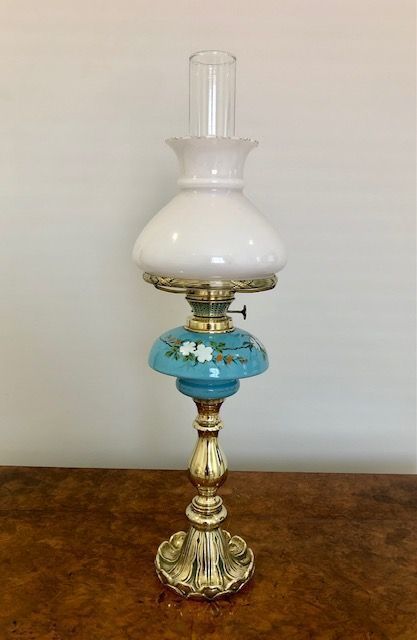
Victorian examples frequently display heavy cast brass bases, sometimes combined with ceramic fonts, glass shades, or structural columns.
They date from the middle to the late nineteenth century and often show utilitarian engineering designed for kerosene or paraffin combustion.
What is the difference between Japanese bronze and brass?
Japanese metalwork from the Meiji period often utilises cast bronze as a dark, stable base for intricate champlevé or cloisonné enamel decoration.
Brass components tend to have a brighter metallic yellow tone and appear widely in both Asian export pieces and standard European domestic lighting.
Can I use standard lampshades with these?
Many period lamps accommodate standard modern shades depending on the fitter type remaining from their original oil or electric conversion.
Some specialised items, such as candle lamps with griffin shades or adjustable desk configurations, require specific shade carriers to match their historic mounts.