



Period Brass Light Holder
A period brass light holder brings steady candlelight to a room, taking the form of heavy Georgian candlesticks and Regency ormolu candelabra.
Period Brass Light Holder
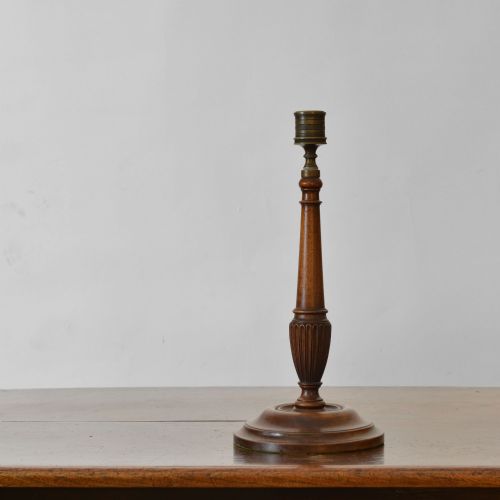
When you search for a period brass light holder, you encounter items designed to support candles for illumination across several centuries. The selection centres heavily on candlesticks, chamber sticks, and multi-light candelabra originating from Georgian, Regency, and Victorian workshops.
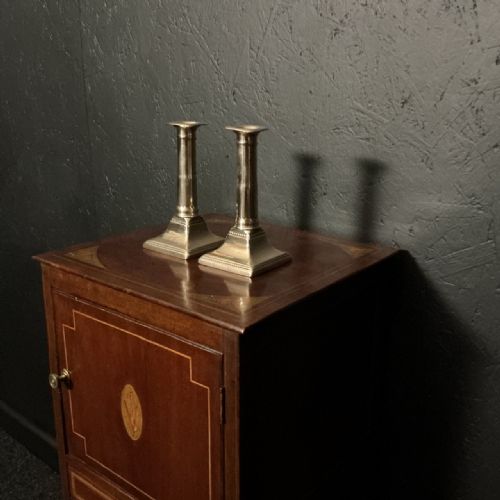
You are most likely to meet practical domestic pairs cast in brass or bronze, ranging from simple 18th-century seamed columns to ornate French Empire ormolu designs. These objects served to light hallways, dining tables, and writing desks before the widespread adoption of electricity.
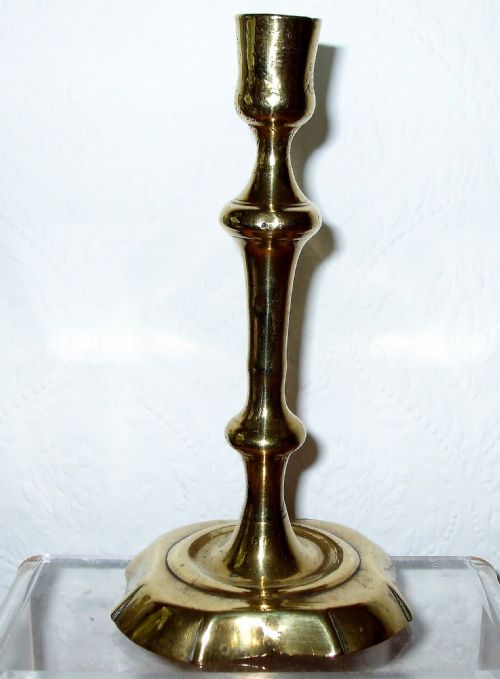
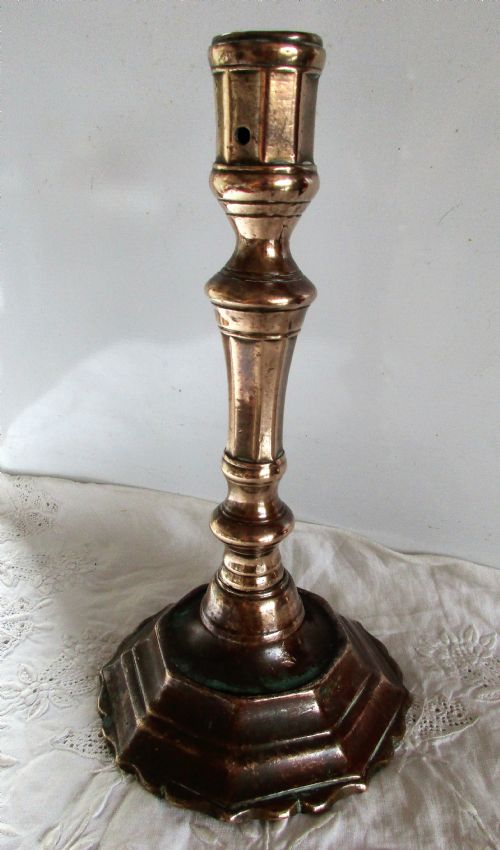
The inventory spans straightforward English brass alongside sophisticated continental gilt bronze and patinated metal alloys. Forms include hexagonal and octagonal bases, baluster stems, and specialised items incorporating side ejectors for removing spent wax.
How they were made
Maker workshops utilised casting techniques, often pouring molten brass or bronze into segmented moulds before finishing the components by hand on a lathe. Seamed examples reveal the historical practice of joining individual hollow brass sections together to form the stem and base.
Makers combined materials such as gilt bronze, ormolu, and patinated bronze, frequently pairing metal alloys with marble bases or mahogany accents. Ormolu elements required mercury gilding to impart a durable, brilliant golden surface onto the bronze substrate.
Listings feature brass, ormolu, bronze, and mahogany across Georgian, Regency, and Victorian periods.
What varies in quality
The distinction between standard domestic items and the top of the range lies in the crispness of the cast detail and the depth of the hand-chasing. Finer pieces exhibit sharp decorative motifs and securely fitted joints without visible crude remediation.
Quality also depends on the preservation of original fire gilding or patination, where worn surfaces alter the visual weight of the object. Weight, metal thickness, and the complexity of multi-light arm construction further separate utilitarian pieces from high-status decorative works.
The Period Brass Light Holder Glossary
- Ormolu
- Gilt bronze, created by applying an amalgam of gold and mercury to a bronze object and heating it to drive off the mercury. This technique produced a rich, enduring golden finish popular in French decorative arts.
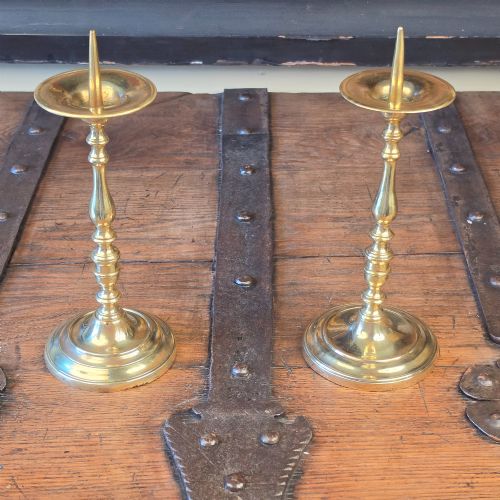
- Pricket candlestick
- A candle holder featuring a sharp metal spike at the centre of the drip pan to impale the wax candle rather than holding it inside a socket. This form appears frequently in ecclesiastical and formal settings.
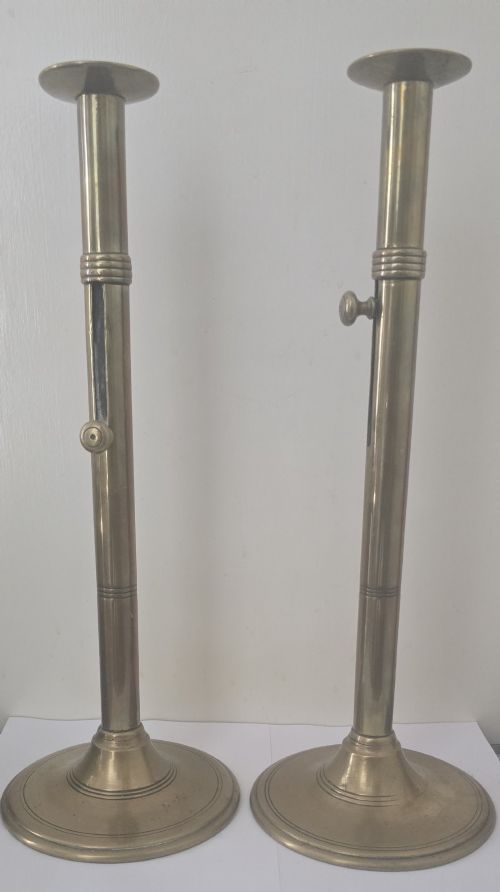
- Ejector
- A mechanical slide mechanism built into the shaft of a candlestick to push the remaining candle stump upward for easy removal. These were particularly common on Georgian brass examples.
- Chamber stick
- A low, portable candle holder fitted with a wide saucer base and a loop handle for carrying through dark rooms. They often include a detachable conical snuffer.
- Baluster
- A moulded, vase-shaped shaft architectural in origin, commonly utilised to form the central pillar of 18th-century and Victorian candlesticks.
Period Brass Light Holder: Frequently Asked Questions
How do I clean antique brass safely?
Dust the surface gently with a soft dry cloth to remove grit without disturbing the aged patina. Avoid harsh commercial chemical dips that strip away historical character.
Apply a microcrystalline wax if protection from atmospheric moisture is necessary, but refrain from aggressive polishing that reveals raw yellow metal underneath.
How do I date an 18th-century brass candlestick?
Examine the base construction for seaming lines, casting irregularities, and heavier metal gauge typical of early manufacturing methods. Octagonal and hexagonal stepped bases frequently indicate early production.
Compare the turned profile against known stylistic periods, noting the transition from heavy baluster stems to slender neoclassical columns toward the end of the century.
Were these holders used with wax or tallow candles?
Domestic lighting relied on both beeswax and rendered animal fat tallow candles depending on the household budget. Beeswax burned cleanly with less smoke, while tallow was common for everyday utilitarian use.
The presence of side ejectors or deep drip pans often reflects the practical need to manage softer, dripping tallow candles.