
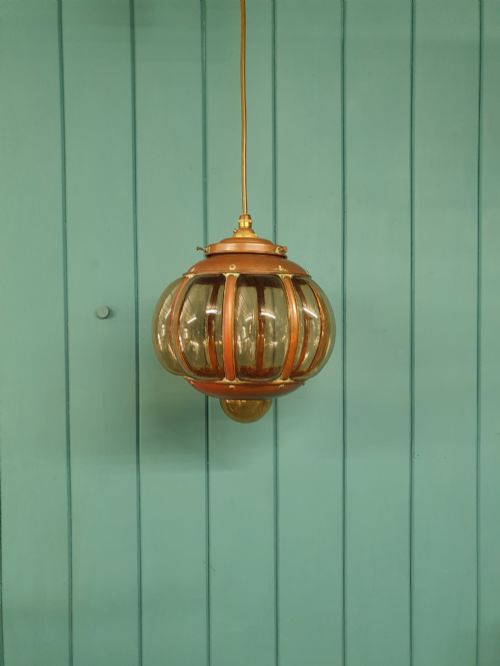


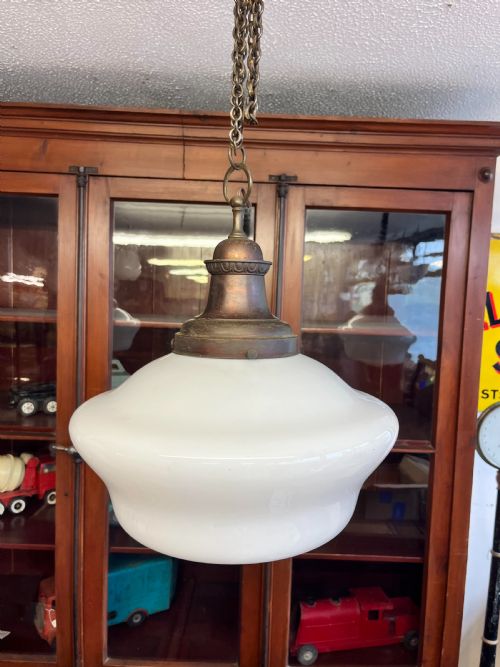
Industrial Glass Ceiling Light
These industrial glass ceiling light examples combine utilitarian strength with practical illumination, bringing genuine period character directly into modern spaces.
Industrial Glass Ceiling Light
An industrial glass ceiling light brings utility-driven design from factories, railways, and public buildings directly into domestic and commercial spaces. Buyers look for these pieces to anchor a room with authentic utilitarian heritage and functional overhead illumination.
The selections span diverse eras including Victorian, Edwardian, 1920, 1930, 1940, and the wider 19th Century. Pendant lights and ceiling lights form the core of what is available, offering direct functional overhead lighting.
Most pieces encountered on this page originate from commercial or industrial contexts such as factories, railway stations, and chapels. These environments demanded robust construction and maximum light distribution from durable glass and metal components.
Materials and Construction Techniques
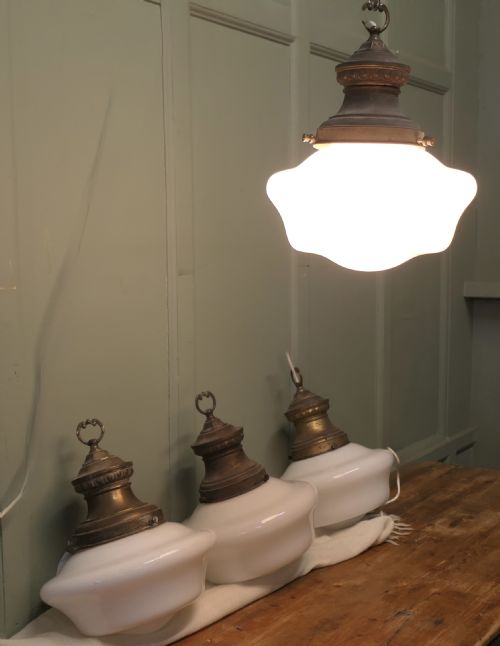
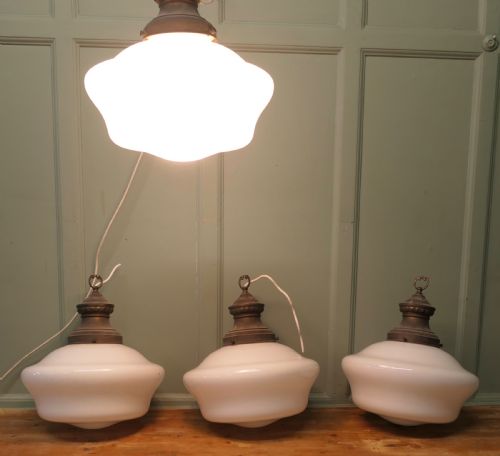
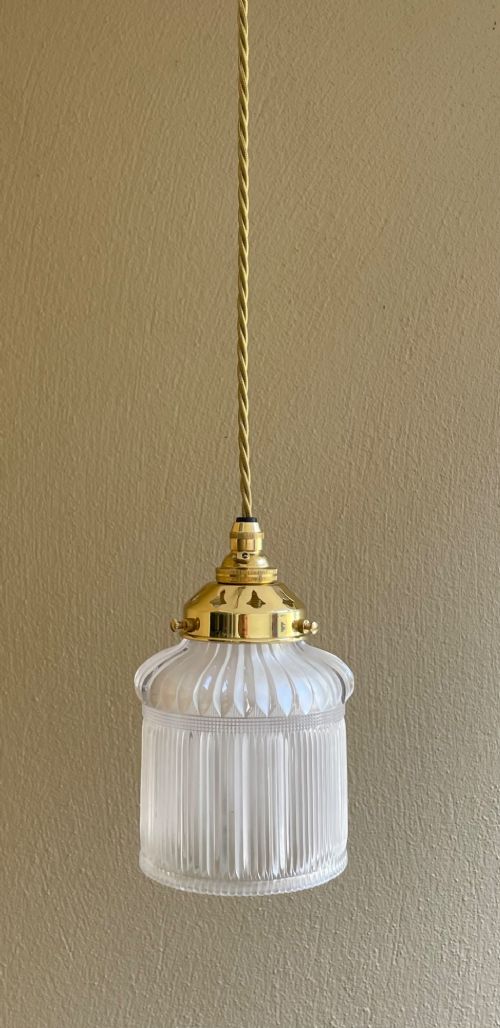
Shades are fashioned from glass, opaline glass, prismatic glass, mercury glass, and smoked glass, designed to diffuse light efficiently. These glass types range from milk-white opaline to complex prismatic ribs that bend and project illumination evenly across large spaces.
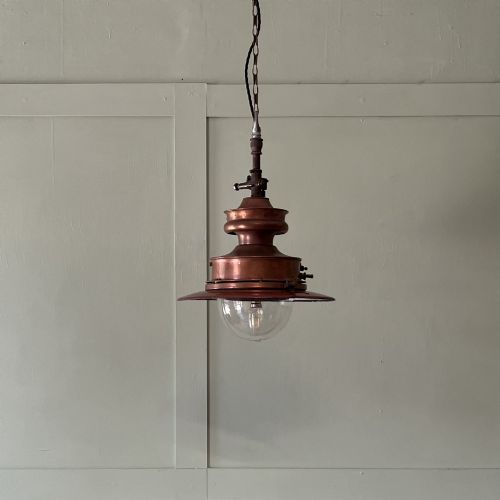
Fitters, galleries, and mounts utilise brass, copper, cast iron, chrome, and general metalwork to secure the heavy glass shades safely. These structural elements provide the necessary mechanical strength to support heavy glass bowls and pendants in demanding environments.
Chapel lights and railway lanterns occasionally retain stubborn factory soot trapped inside deep galleries, proving their honest working past.
Distinguishing Quality and Execution
The integrity of the glass shade separates standard utility items from finer examples, particularly where prismatic ribbing or mercury silvering remains crisp and intact. Heavier, thicker glass mouldings provide superior durability and clearer light refraction.
Metalwork execution in the galleries and fixings dictates the overall standard, with solid brass or copper components showing greater refinement than basic cast iron. Original patination on the metal surfaces adds depth and confirms period authenticity.
Holophane
The Industrial Glass Ceiling Light Glossary
- Prismatic Glass
- Glass moulded with geometric ribs or patterns designed to diffuse glare and maximise light output. This technique was patented and widely utilised in industrial settings.
- Opaline Glass
- An opaque white glass that softens light while diffusing it evenly across a space. It creates a warm glow without harsh shadows.
- Mercury Glass
- Double-walled blown glass silvered on the inner surface to create a mirrored appearance. It reflects ambient room light when unlit.
- Gallery
- The metal collar or mount that grips the upper rim of a glass shade and connects it to the suspension rod or chain. It forms the primary structural junction.
- Pendant Light
- A single light fixture suspended from the ceiling by a cord, chain, or metal rod. These units focus illumination downwards over work surfaces or central areas.
Industrial Glass Ceiling Light: Frequently Asked Questions
How do I hang an industrial glass ceiling light?
These fixtures suspend from ceilings using chains, cords, or rigid rods attached to structural joists. Professional electrical installation ensures the weight of the glass and metal components is supported safely.
Ceiling heights dictate the drop length required for pendants over tables or open floor spaces. Adjusting the suspension lets you position the light source for optimal illumination.
Where were these lights originally used?
Factories, railway stations, chapels, and maritime vessels utilised these robust fixtures for dependable illumination. Their durable construction withstood dust, moisture, and continuous daily operation.
Commercial environments required fittings that distributed light efficiently across large working areas. This utilitarian origin explains their functional design and sturdy materials.
How do I clean opaline and prismatic glass?
Gentle washing with warm soapy water removes accumulated dust and grime from smooth opaline surfaces. Avoid harsh abrasives that could scratch the delicate glass or damage the aged metal finish.
Prismatic shades with deep ribs benefit from soft brushes to clear dust from the textured grooves. Thorough drying prevents water spots from forming on the glass.
Can I use modern LED bulbs in these fixtures?
Standard modern LED bulbs fit most vintage lampholders, provided the wattage matches the historical rating. Low-heat LED options protect antique glass and metal components from thermal stress.
Choosing warm white bulbs preserves the ambient atmosphere intended by the original prismatic or opaline shades. Clear bulbs work well behind prismatic glass to showcase the light-bending patterns.