
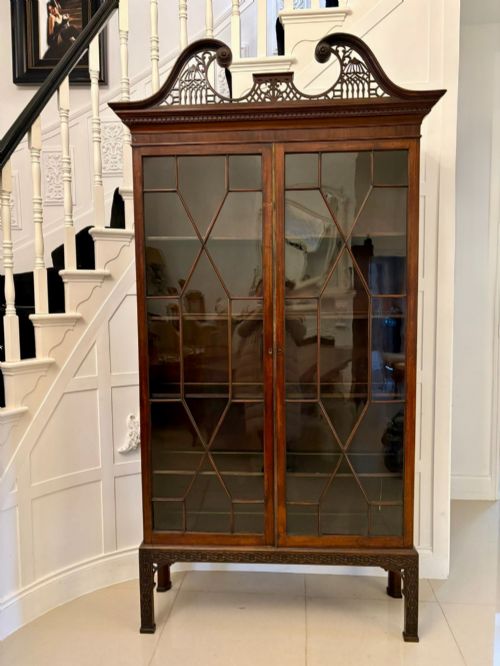
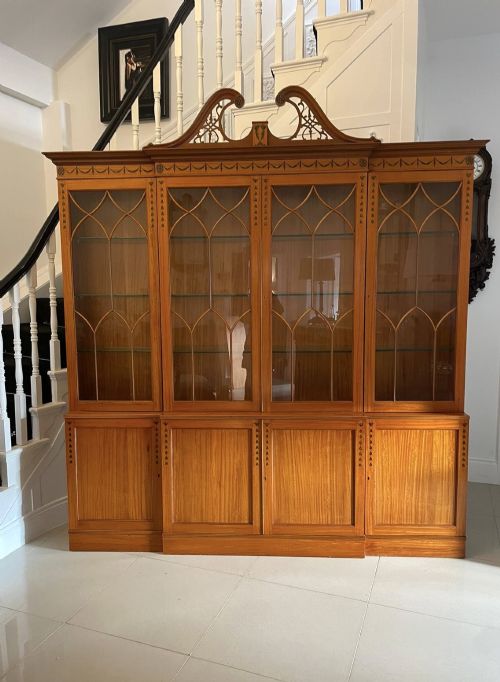
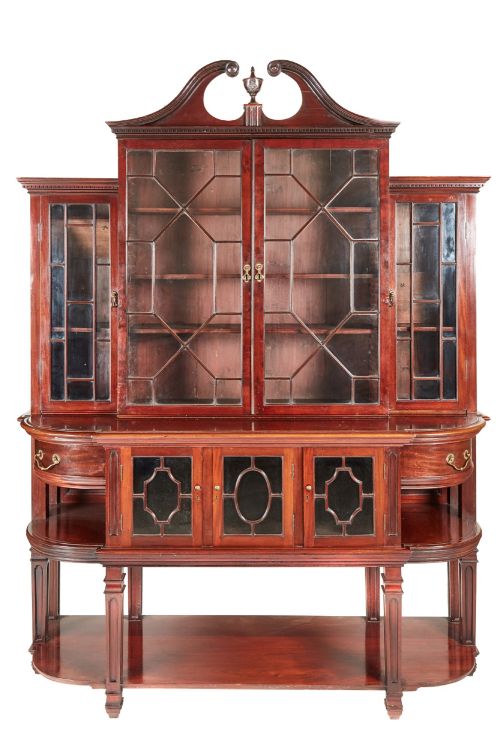
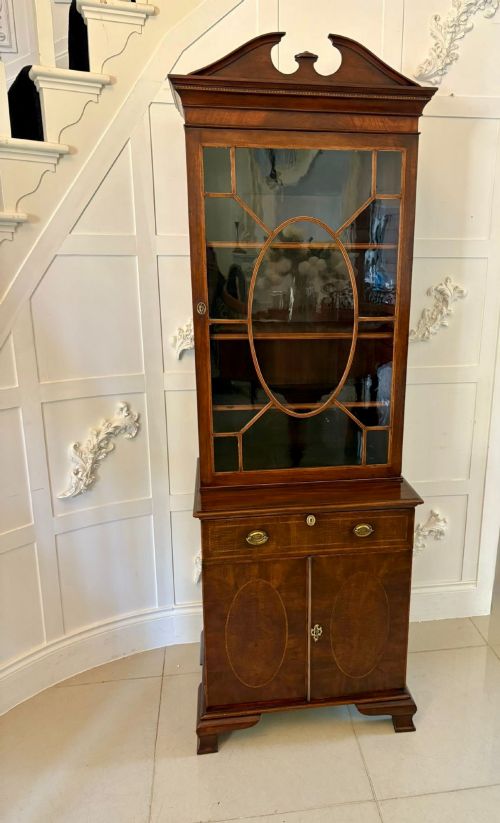

Pediment Glazed Bookcase
A pediment glazed bookcase is a tall timber cabinet with glass doors and a classical triangular or arched top, built to hold books while showing off fine wood and proportions.
Pediment Glazed Bookcase
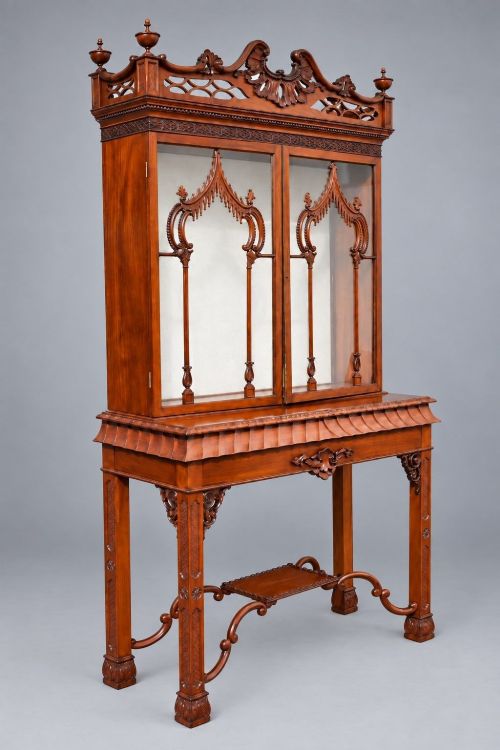
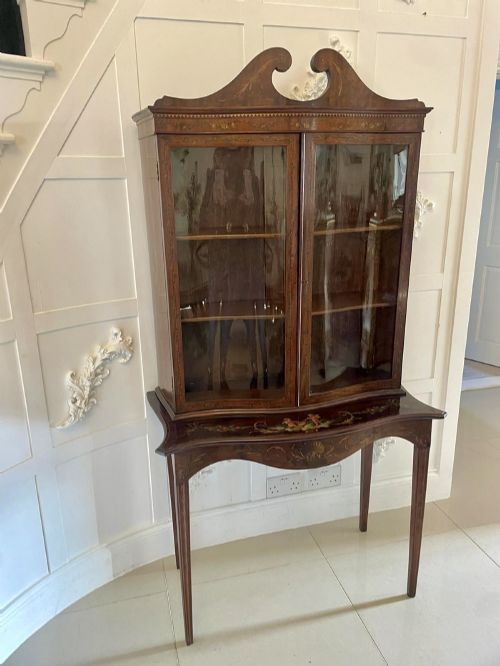
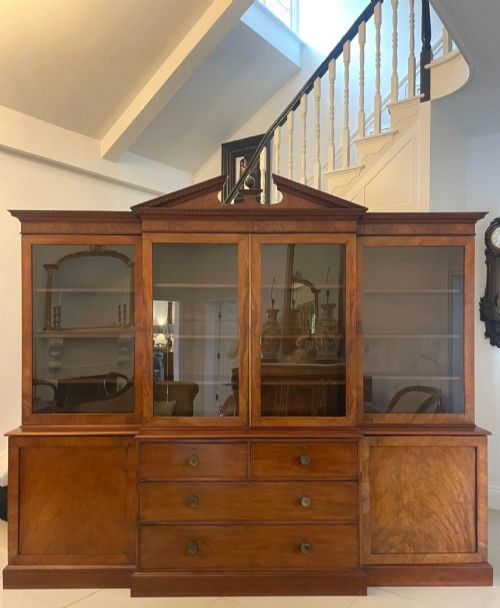
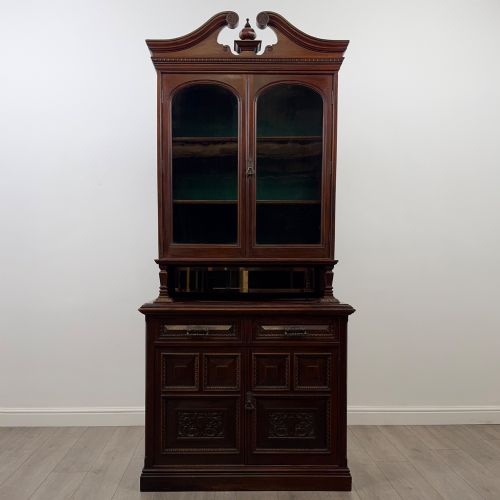
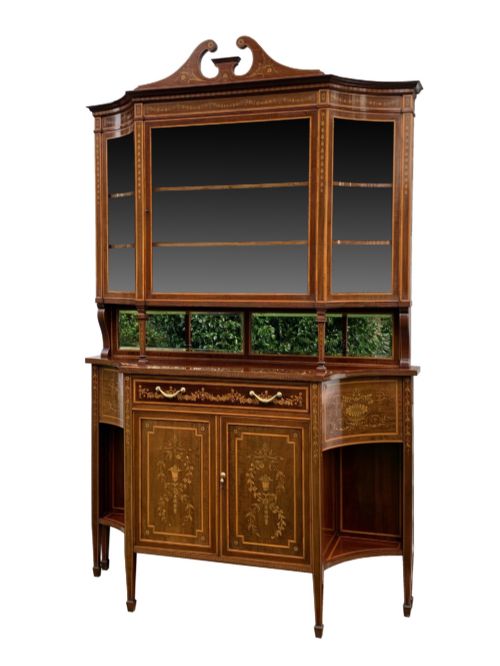
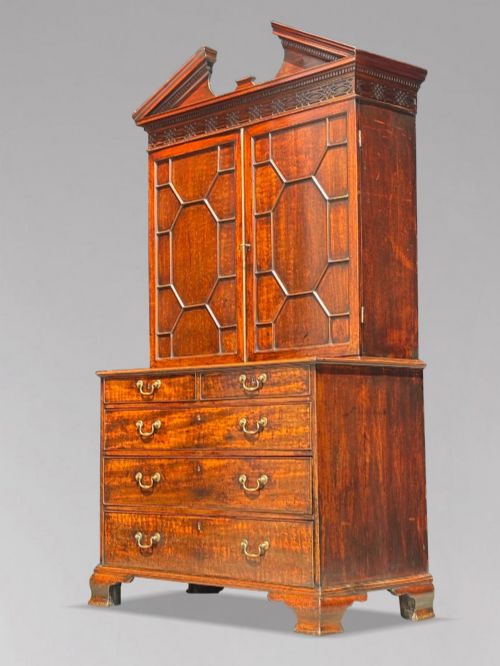
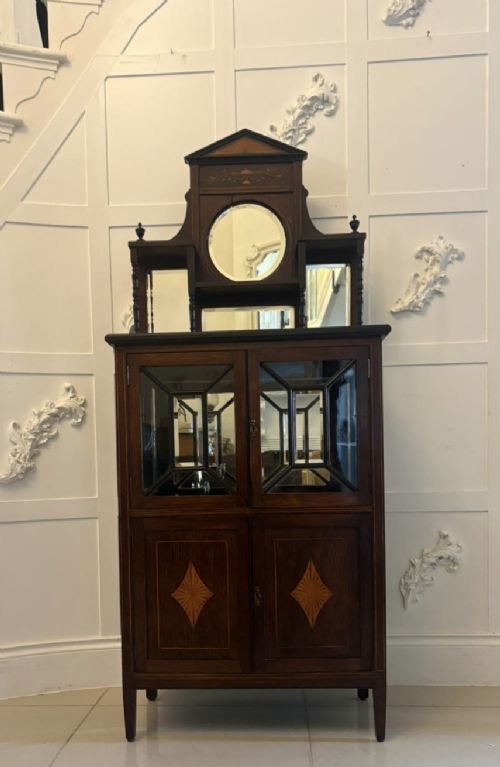
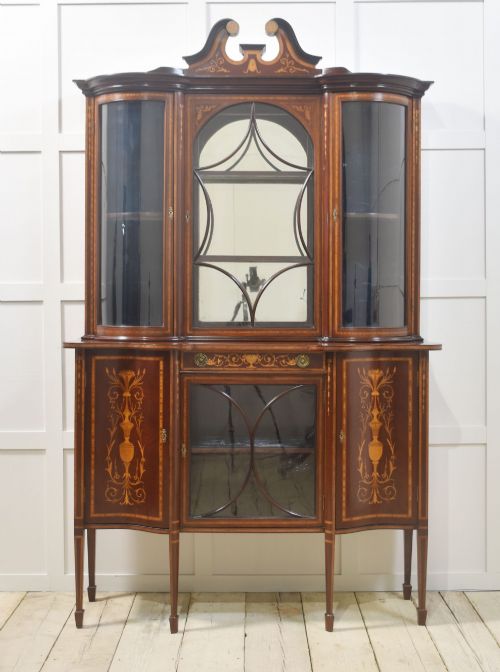
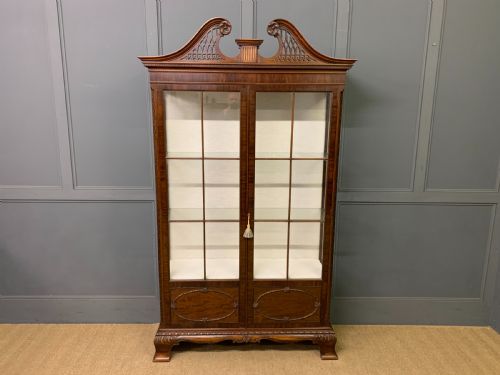
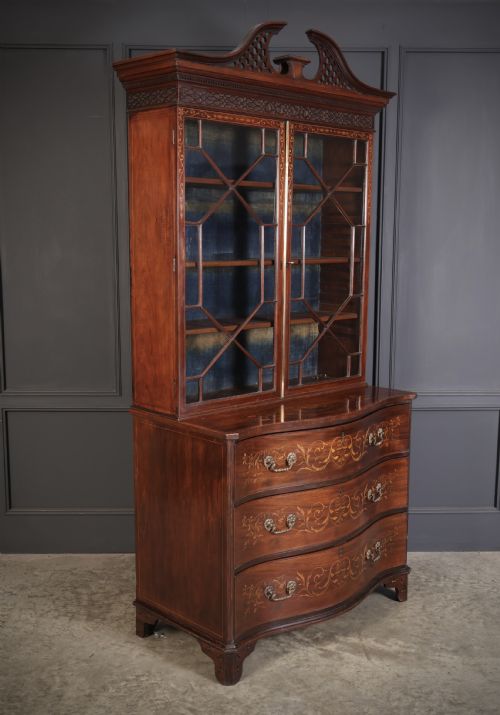
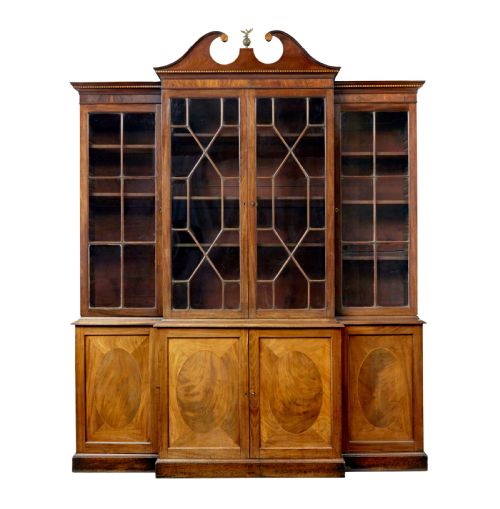
When you search for a pediment glazed bookcase, you encounter tall timber furniture designed for storing books and displaying volumes behind glass panes. These pieces take several forms on this page, including breakfront bookcases, bureau bookcases with fall-front desks, corner cabinets, and library bookcases.
The periods represented stretch from the 18th century through the Georgian, Regency, and Victorian eras into the Edwardian period. Mahogany remains the dominant timber across these centuries, alongside satinwood, walnut, and harewood, frequently decorated with marquetry, inlay, and brass hardware.
Forms range from compact corner cabinets and display cabinets to large breakfront bookcases and secretaire bookcases. The glazing itself varies from simple astragal or astral bars dividing the glass panes to more ornate configurations seen in revival styles.
What varies in quality
Quality rests upon the selection and matching of timber veneers and solid grain across large expanses like breakfront doors and bureau fronts. Finer pieces demonstrate precision in the joinery of the glazed doors and the crispness of inlaid marquetry work.
The architectural ambition of the pediment and the refinement of internal fittings, such as adjustable shelving and fitted secretaire drawers, separate standard cabinet work from exceptional library pieces.
Swan neck pediments give classical book collections a lofty architectural crown to live under.
Edwards and Roberts·Thomas Chippendale·S and H Jewell London
The Pediment Glazed Bookcase Glossary
- Astragal glazing
- Glass doors divided into smaller panes by narrow wooden bars. These bars create geometric patterns across the front of the bookcase.
- Breakfront
- A cabinet design where the central section projects forward from the flanking wings. This creates depth and architectural presence.
- Secretaire bookcase
- A tall cabinet incorporating a pull-down writing drawer with small pigeonholes and internal drawers. It combines a desk with upper bookshelves.
- Marquetry
- Decorative patterns formed by fitting together small pieces of tinted or contrasting wood veneers. It appears frequently on panels and friezes.
- Pediment
- The triangular or arched architectural crown positioned at the very top of the bookcase. It draws inspiration from classical building design.
Pediment Glazed Bookcase: Frequently Asked Questions
What is a pediment glazed bookcase used for?
These cabinets serve primarily to store and protect libraries while displaying leather-bound volumes and decorative objects behind glass doors. Bureau variants also provide a fold-down writing surface with internal compartments for correspondence.
The enclosed shelving keeps dust away from books, making them practical for active collections as well as formal display in a study or drawing room.
How do I identify a Georgian bookcase?
Georgian pieces generally exhibit dense, rich mahogany timbers, understated classical proportions, and hand-cut joinery without modern mechanical fasteners. Look for architectural pediments and traditional astragal glazing bars.
Craftsmanship from this period prioritises structural honesty and balanced design over heavy surface ornamentation or revival styling.
Are the shelves adjustable?
Many antique bookcases feature fixed shelving or early forms of adjustable shelf supports such as wooden tooth-racks or brass notches. The interior configuration depends entirely on the original maker's design and the intended use of the cabinet.
Examining the interior reveals whether shelves were built to hold specific folio volumes or adapted for general display purposes over time.
How do I care for antique mahogany?
Maintain mahogany furniture by keeping it away from direct sunlight and sudden temperature shifts that can dry out the timber and crack veneers. Apply bees wax periodically to nourish the surface and preserve the natural lustre.
Avoid using modern silicone sprays or abrasive cleaning products, which damage the aged patina and finish of the wood.