

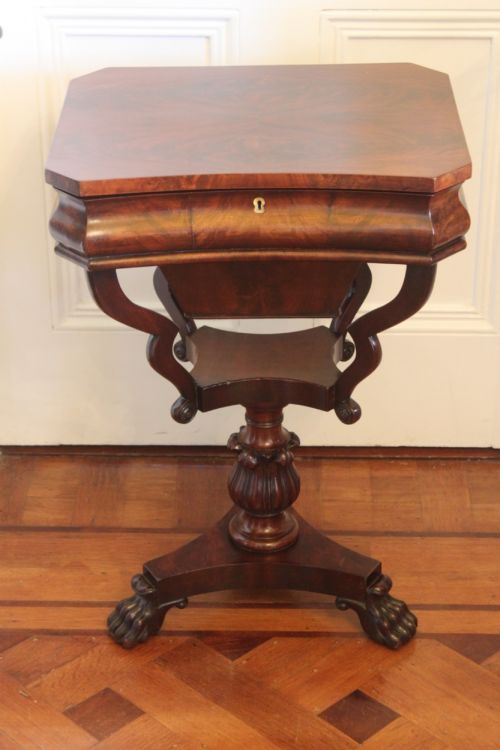
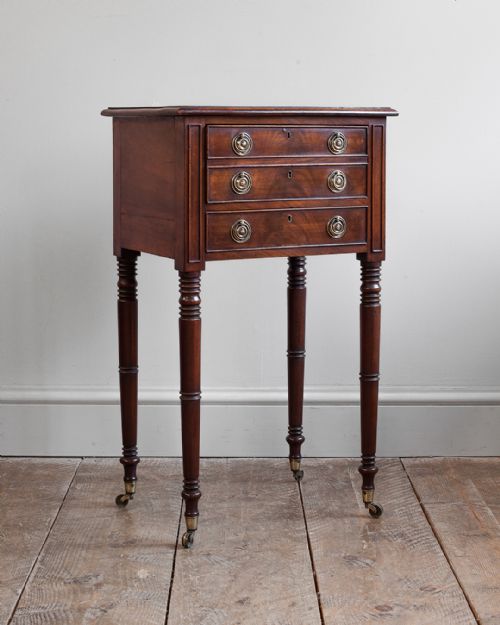


Pedestal Work Box Table
A pedestal work box table combines a practical sewing compartment with a sturdy central pillar, offering both storage and elegance for the parlour.
Pedestal Work Box Table
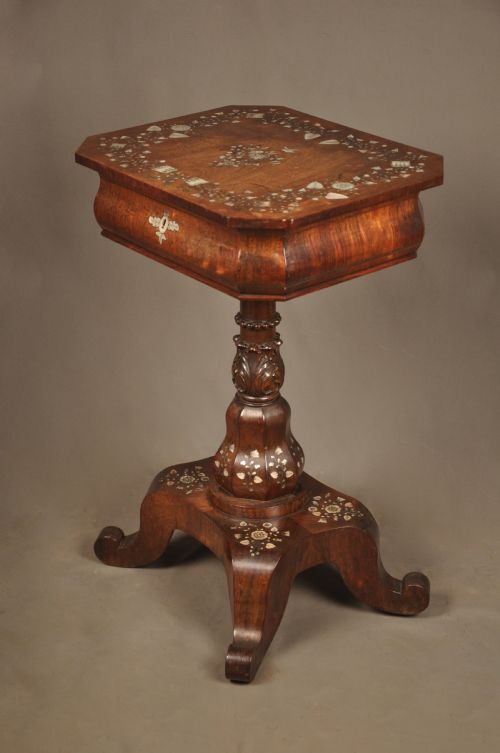
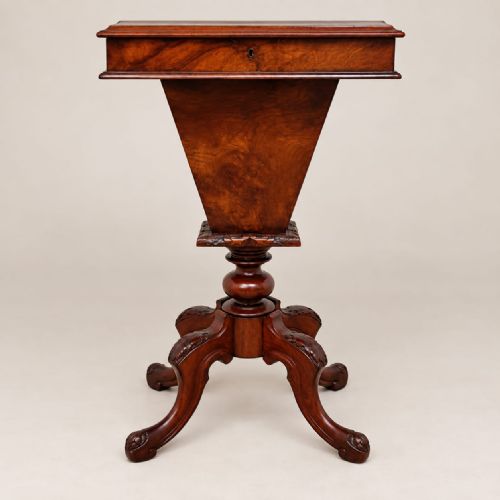
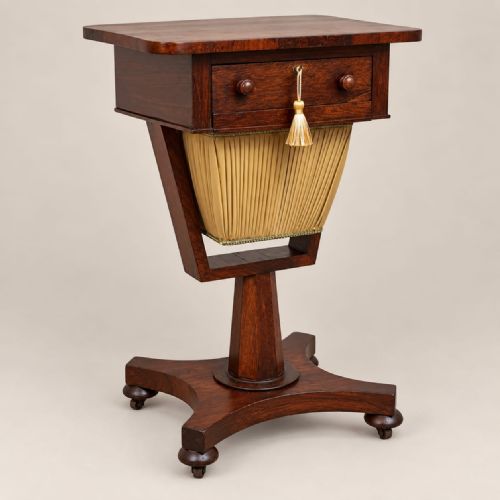
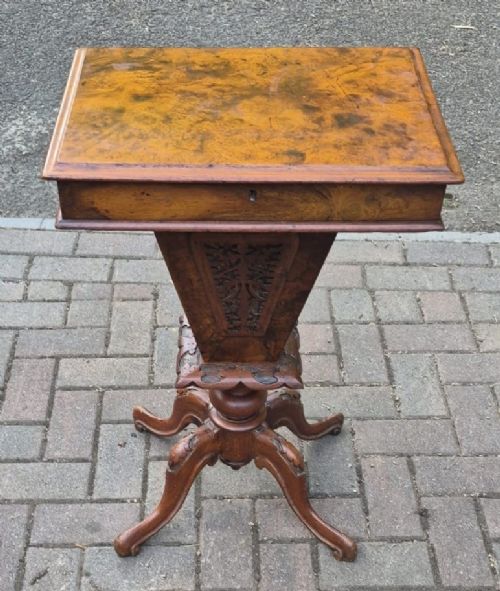
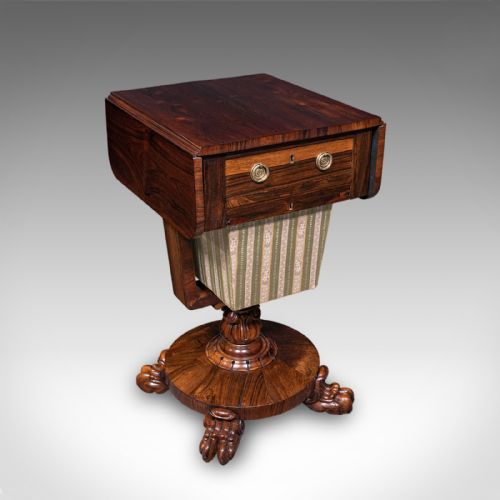
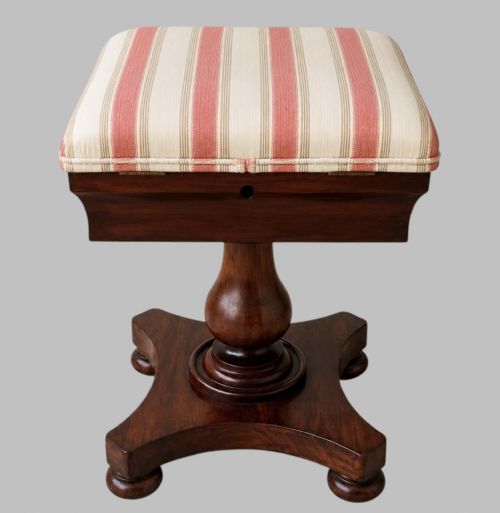
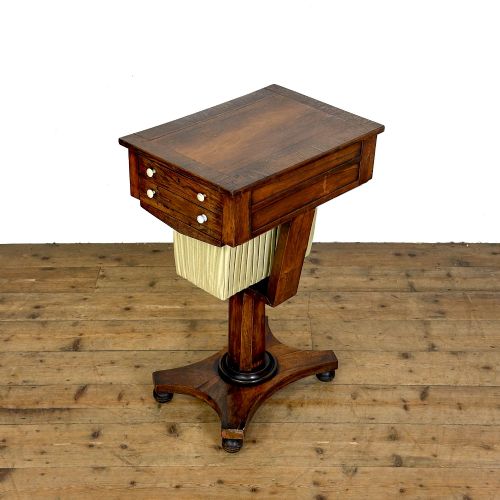
A pedestal work box table is designed for domestic sewing and needlework, featuring a fitted storage box mounted upon a central column and a stable platform base. These pieces appear frequently from the Regency, William IV, and Victorian periods, reflecting the heavy domestic utility of nineteenth-century craftsmanship.
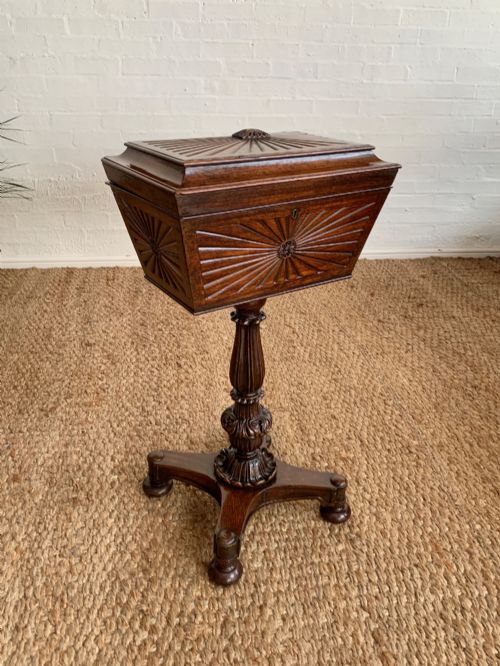
The assortment on this page leans heavily towards variations executed in mahogany and rosewood, alongside burr walnut and inlaid treatments. Forms range from drop-leaf sewing tables and games combinations to fitted teapoys and freestanding stands with internal compartments.
Collectors encounter distinct stylistic accents such as sunburst carvings, caddy tops, and marquetry details that indicate the specific design language of the workshop. Each iteration adapts the core pedestal form to serve as an occasional table, lamp stand, or dedicated ladies hobby station.
Materials and construction
Cabinet makers utilised dense timbers like mahogany, rosewood, and walnut to build the foundational structures, often selecting flame mahogany or burr walnut veneers for visual depth. Wood inlay, brass fittings, and intricate marquetry were applied to surfaces to enhance the decorative scheme of the parlour.
Internal storage relied on fitted compartments and drop-leaf mechanisms integrated directly into the box section above the pedestal. These functional elements required precise joinery to ensure the lids, drawers, and sewing bags operated smoothly alongside the heavy central pillar.
Some nineteenth-century makers thoughtfully included hidden compartments beneath the sewing box lid to keep stray pins from escaping during vigorous needlework sessions.
Assessing quality and craftsmanship
The hierarchy of quality rests upon the selection of figured wood veneers, the crispness of carved details such as sunburst motifs, and the structural integrity of the central pedestal and its base. Superior examples exhibit tightly grained rosewood or burr walnut, balanced proportions, and seamless integration of drop leaves and internal storage trays.
Lesser pieces present plain timber stocks with minimal decorative carving and simpler joinery methods that lack the refinement seen in works attributed to notable cabinet makers. The presence of sophisticated additions like integrated games boards, papier-mâché bodies, or complex caddy tops signals a higher tier of original manufacture.
The Pedestal Work Box Table Glossary
- Pedestal
- A central supporting column that rises from a platform or footed base to elevate the table box. This design allows for knee clearance while maintaining structural stability.
- Teapoy
- A small stand or box designed originally for holding tea, frequently associated with nineteenth-century work tables due to similar internal compartment layouts. These pieces often feature rosewood or mahogany construction.
- Caddy top
- A hinged lid style reminiscent of tea caddies, featuring stepped or moulded edges. It provides secure closure for the top storage compartment of a sewing table.
- Marquetry
- The art of applying pieces of veneer to a structure to form decorative patterns and pictures. Makers utilised contrasting timbers to create elaborate surface designs on the lid.
- Drop leaf
- A hinged flap at the side of a table top that can be raised to extend the surface area or lowered when space is constrained. It offers flexibility in smaller parlour settings.
Pedestal Work Box Table: Frequently Asked Questions
What is a pedestal work box table used for?
These tables served primarily as dedicated workstations for nineteenth-century needlework, storing threads, needles, and fabric scraps inside an integrated compartment or suspended bag. The upper surface doubled as a writing desk or a convenient spot for small lamps and decorative items.
Today, they function effectively as occasional tables in living spaces, keeping clutter concealed within their historical boxes while providing a sturdy central pillar design.
How do I distinguish Regency from Victorian examples?
Regency pieces often display cleaner classical lines, architectural brass mounts, and rich flame mahogany or rosewood surfaces reflecting early nineteenth-century tastes. They frequently incorporate bold pedestal bases with paw feet or platform supports.
Victorian models tend toward heavier ornamentation, utilising burr walnut, elaborate marquetry, and rich carvings such as the popular sunburst motif. The proportions also shift slightly as manufacturing techniques evolved later in the century.
Were these tables only made for sewing?
While primarily built as sewing or work tables, many examples featured dual purposes such as integrated games boards for chess or backgammon on the reverse of the lid. Some variants acted as teapoys or simple occasional lamp stands for the parlour.
The internal fitted boxes could accommodate letters, writing materials, or small trinkets just as easily as embroidery tools.
How do I care for a rosewood or mahogany work table?
Keep nineteenth-century timber pieces away from direct sunlight and strong heat sources to prevent the rosewood or mahogany veneers from drying out or splitting. Gentle dusting with a dry, soft cloth preserves the polished finish without harming the historic surface.
Avoid placing damp items directly onto the antique wood, and occasionally apply appropriate wax polish to nourish the grain.