

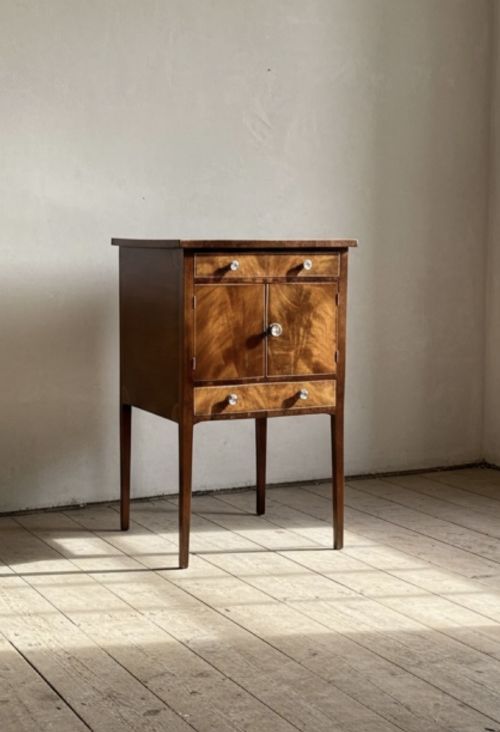
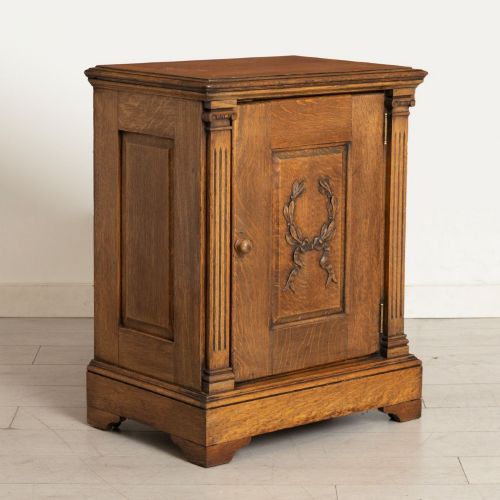


Pedestal Washstand Cabinet
These pedestal washstand cabinet pieces bring timber craft and period practicality to a room.
Pedestal Washstand Cabinet
A pedestal washstand cabinet is a utilitarian form spanning several periods, most commonly encountered in Victorian and Georgian incarnations. These pieces function as bedside tables, night stands, or washstands, often housing a cupboard space beneath a surface.
The materials seen in these listings range from mahogany and flame mahogany veneer to oak, satinbirch, and occasional satinwood inlay. Makers utilised marble tops and ceramic elements on specific washstands, whilst brass hardware appears across multiple styles.
Forms vary from bow front bedside cabinets to shaving stands with mirrors and classical architectural designs. Pieces emerge in styles such as Victorian, Georgian, Aesthetic Movement, Gothic Revival, Regency, Edwardian, and William IV.
How They Were Made
Makers constructed these cabinets primarily in timber, employing solid mahogany, oak, and satinbirch alongside flame mahogany veneer for decorative surface grain. Flame mahogany veneer provides a rich visual pattern across doors and panels.
Selected washstands incorporate inset marble tops and ceramic components to handle water usage during the 19th century. Brass hardware, including handles and hinges, finishes the construction of drawers and cupboard doors.
Joinery and structural detailing align with the respective periods, from Georgian proportions to the classical architectural forms of William IV pieces and the decorative details of the Aesthetic Movement.
Pedestal Washstand Cabinet Retail Price Guide 2026
Typical asking prices for pedestal washstand cabinet among the pieces listed under this phrase on Sellingantiques today, from the lower quarter to the upper quarter. They describe what is for sale here now, not the wider market.
Some gentlemen's shaving stands arrive equipped with adjustable mirrors for the meticulous Victorian morning routine.
What Varies in Quality
The distinction between standard examples and superior pieces rests on timber selection and veneer choice. Flame mahogany veneer and satinwood inlay demonstrate a higher level of decorative ambition than plain secondary woods.
Incorporate elements such as marble tops and ceramic inserts elevate specific washstands above simpler timber-topped bedside cupboards. The integration of architectural forms and period style details, such as Gothic or Aesthetic elements, separates ordinary utilitarian items from refined examples.
James Shoolbred
The Pedestal Washstand Cabinet Glossary
- Flame mahogany veneer
- A thin slice of timber applied to a core structure, showing a distinctive flickering flame pattern in the grain. This technique enhances the visual appeal of 19th-century cabinet doors.
- Pot cupboard
- A compact bedside cabinet designed originally to house a chamber pot behind a single door. These pieces double as night stands in modern rooms.
- Satinbirch
- A pale, lustrous timber with a fine grain utilised in Victorian furniture making. It provides a lighter alternative to dark mahogany.
- Aesthetic Movement
- A late 19th-century design style focusing on visual beauty rather than narrative function. Pieces from this movement display distinct artistic decoration.
Pedestal Washstand Cabinet: Frequently Asked Questions
What is a pedestal washstand cabinet used for?
These pieces function as bedside storage or washing stations depending on the specific form. Cabinets and cupboards provide concealed space for personal items.
Washstands with marble tops accommodate basins and toiletries, reflecting 19th-century bedroom routines.
How do I identify a Georgian piece?
Georgian examples display classical proportions, timber choices like mahogany, and clean lines without heavy ornamentation. Bow front shapes and subtle mouldings typify the era.
Construction methods and interior timber species align with 18th-century workshop practices.
How do I care for marble top washstands?
Marble surfaces require gentle cleaning with non-acidic solutions to protect the stone from etching. Regular dusting keeps the polished finish intact.
Wooden frames benefit from standard beeswax or polish appropriate for period timbers.