

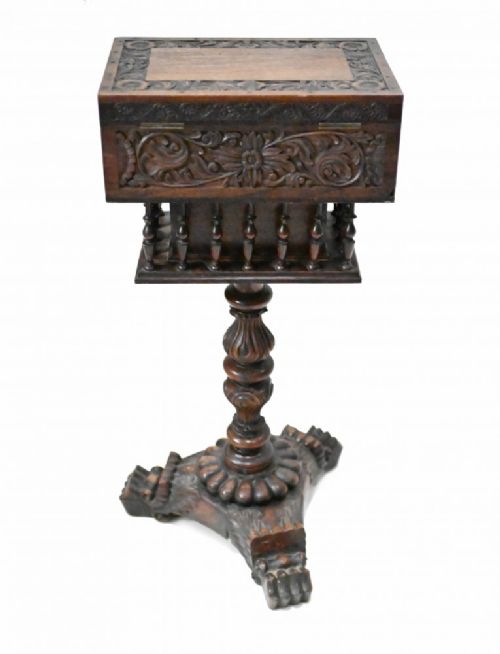


Pedestal Tea Chest Table
A pedestal tea chest table combines the secure storage of precious leaf with the elegance of a refined occasional stand.
Pedestal Tea Chest Table
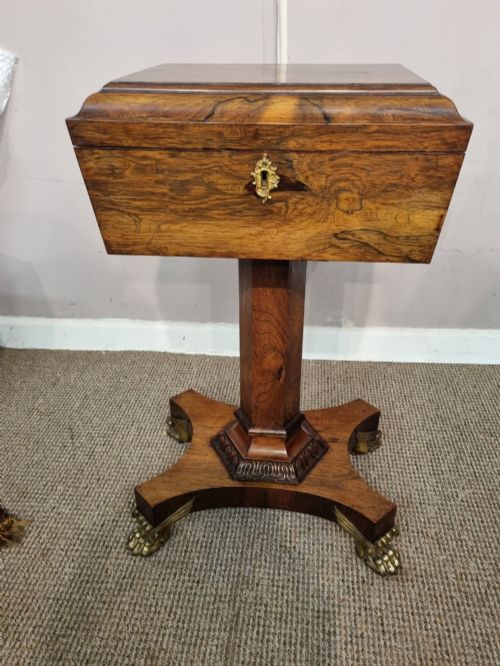
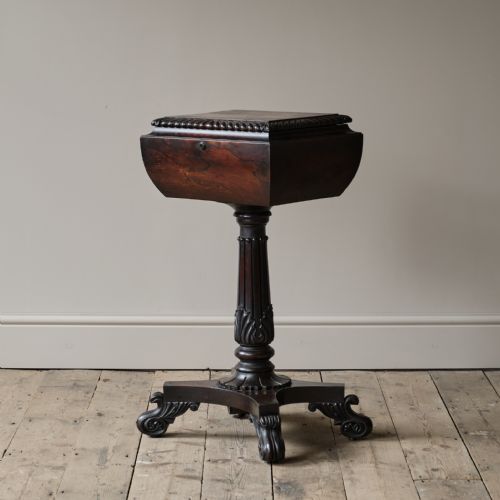
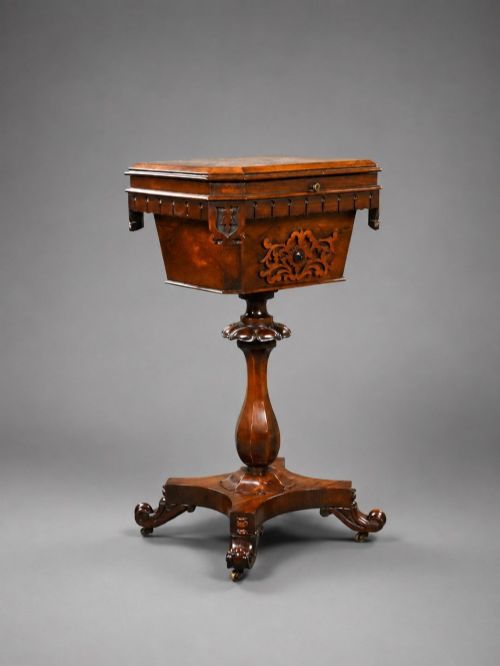
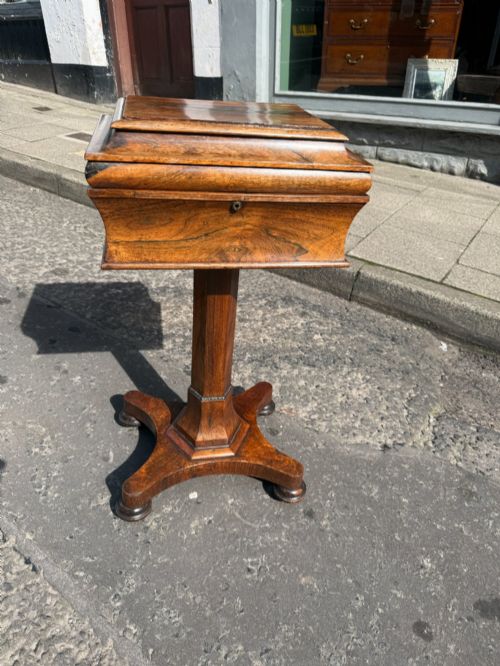
A pedestal tea chest table, also known as a teapoy, serves as a specialised container for storing leaf tea alongside mixing bowls and canisters. These pieces combine a lidded box with a central pillar and supporting base, functioning primarily as both a secure store and an occasional table.
The versions met on this page date from the Georgian, Regency, William IV, and Victorian periods, with materials ranging from rosewood and mahogany to burr walnut and padouk. Forms vary from sarcophagus-shaped boxes to carved columnar stands and inlaid surfaces.
Materials and construction
Cabinetmakers utilised rich timber veneers such as rosewood, flame mahogany, and burr walnut over sturdy secondary woods, applying marquetry inlay and brass details for ornamentation. Carved elements appear on pedestals and feet, showcasing skilled joinery and turning.
Interior compartments frequently retain small caddies and mixing bowls, demonstrating the meticulous fitting required to keep precious dry goods sealed and organised.
Pedestal Tea Chest Table Retail Price Guide 2026
Typical asking prices for pedestal tea chest table among the pieces listed under this phrase on Sellingantiques today, from the lower quarter to the upper quarter. They describe what is for sale here now, not the wider market.
Listings feature pieces from the Georgian, Regency, William IV, and Victorian periods, constructed in rosewood, mahogany, walnut, and padouk.
Assessing quality
The choice of timber grain and the precision of the cabinetwork distinguish finer examples from simpler workshops. Figured veneers, well-matched panels, and crisp carving on the central pillar indicate superior execution.
The presence of original fitted interiors and internal canisters elevates a piece, as does the stability of the pedestal base and the retention of working locks and keys.
Gillows
The Pedestal Tea Chest Table Glossary
- Teapoy
- A small stand or table designed to hold tea canisters and a mixing bowl. The term evolved from Anglo-Indian origins to describe these lidded pedestal chests.
- Sarcophagus
- A box shape featuring a domed or sloping lid with panelled sides, resembling a stone coffin. Cabinetmakers adopted this architectural form for grand Regency tea containers.
- Padouk
- A heavy tropical hardwood with a dense grain, utilised in Anglo-Indian colonial furniture. Its reddish-brown tone darkens with age.
- Veneer
- A thin layer of decorative wood applied to a softer base timber. Skilled makers selected figured grains like burr walnut to create striking exterior patterns.
- Caddy
- A small container designed to hold loose tea leaves securely. Multiple caddies often sit inside the main box alongside a glass mixing bowl.
Pedestal Tea Chest Table: Frequently Asked Questions
What is a teapoy used for?
A teapoy functioned as a secure container for storing valuable dry tea leaves in the parlour or drawing room. The lidded box kept the contents fresh while seated on a central pedestal.
Inside, compartments held individual canisters and a central bowl for blending infusions. Today, these pieces serve as distinctive occasional tables or decorative work boxes.
How do I date a pedestal tea chest table?
Dating relies on observing the timber choice, box shape, and pedestal style relative to prevailing design periods. Georgian and Regency examples often feature sarcophagus boxes in rosewood or mahogany with brass inlay.
Later Victorian versions introduce burr walnut and bolder turned columns. Foot designs and interior fittings also provide clear chronological markers.
Are original interiors common?
Many examples retain their original internal compartments, wooden caddies, and glass mixing bowls. These fitted components add significantly to the character of the piece.
Some interiors were altered or emptied during the Victorian era for general storage use. Finding a complete layout with functioning lids remains a desirable trait for collectors.
Where were these tables placed?
Tea chests stood in reception rooms where hosts prepared and served hot drinks to guests. The central pillar allowed the box to sit comfortably beside seating areas.
Their compact footprint made them versatile for placement near hearths or windows. When closed, they functioned as ordinary decorative stands.
How do I care for rosewood and mahogany?
Maintenance requires keeping the timber away from direct sunlight and steady heat sources to prevent veneer splitting. Dusting with a soft, dry cloth preserves the polished surface.
Occasional applications of appropriate wax feed the antique wood without building up residue. Checking the stability of the central pedestal joint ensures safe everyday use.