

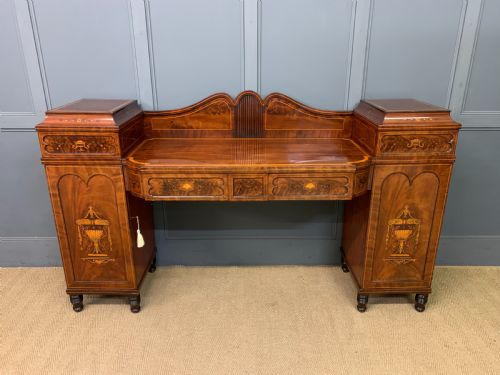


Pedestal Serving Table
These pedestal serving table examples bring substantial mahogany and classical proportion to dining spaces, offering heavy sideboards and dumb waiters built for formal hospitality.
Pedestal Serving Table
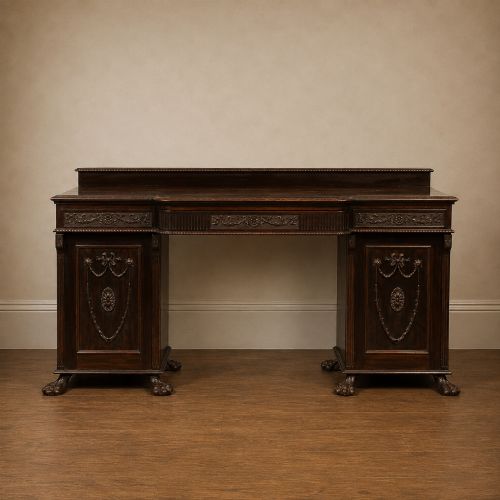
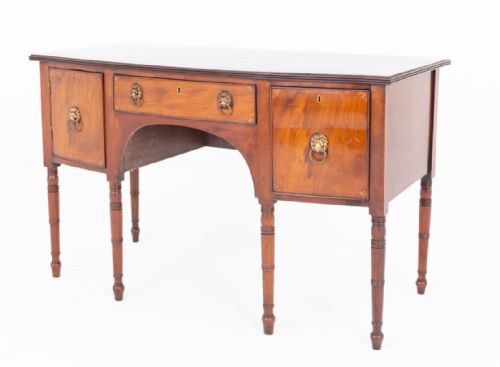
A pedestal serving table search leads directly to heavy mahogany sideboards, breakfront furniture, and tiered dumb waiters designed for dining room service. These pieces emerge primarily from Georgian, Regency, Victorian, and Edwardian periods.
The layout on this page divides cleanly between large pedestal sideboards featuring flame mahogany veneer or boxwood inlay and smaller mechanical serving items like dumb waiters. Most examples anchor themselves in the nineteenth century.
Makers and designers of the era deployed classical revivals, seen in Adam Revival details, paw feet, and country house proportions, giving these serving tables distinct architectural weight.
Materials and construction methods
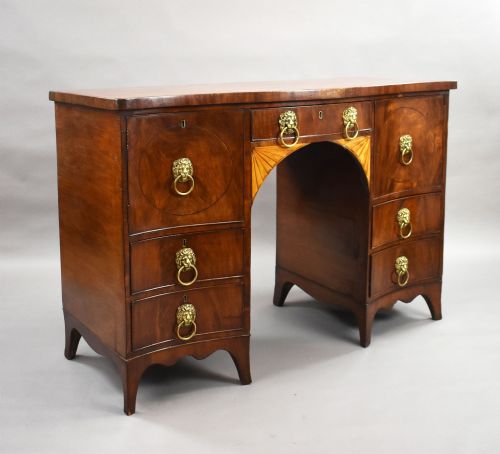
Makers relied heavily on solid mahogany and flame mahogany veneer, often enhanced with contrasting boxwood and satinwood stringing or inlay. Timber selection dictated the visual rhythm of the front elevation.
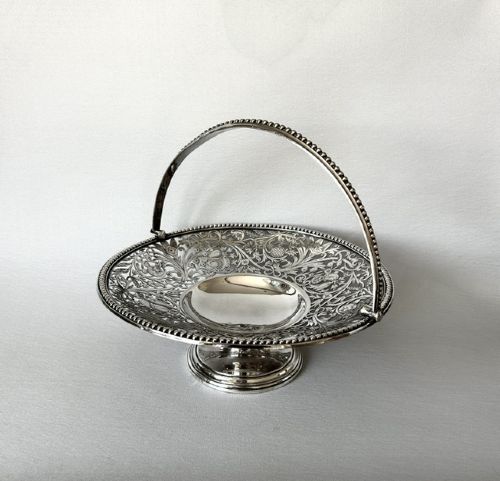
Silver plate, sterling silver, and electroplated nickel silver appear frequently in the accompanying serving vessels, shaped through piercing, transfer printing, and traditional silversmithing techniques.
Materials span solid mahogany, flame mahogany veneer, burr walnut, satinwood, and boxwood alongside sterling silver and electroplated nickel silver.
Separating ordinary service pieces from exceptional work
Quality rests in the depth of timber figure, particularly the lively grain of flame mahogany and burr walnut veneers against secondary woods. Finer examples display meticulous attention to classical proportions and crisp carving on feet and pedestals.
The integration of mechanical elements, such as folding sides on dumb waiters or fitted drawers within pedestal sideboards, marks the distinction between standard utilitarian items and masterworks.
Daniel and Arter of Birmingham·Elkington & Co·William Bennett·Birchall and Hayne·James Mein of Kelso·Holland and Sons
The Pedestal Serving Table Glossary
- Pedestal sideboard
- A large dining room furnishing featuring central sections flanked by heavy pedestals or cupboards. These units provide substantial surface space for food presentation and storage.
- Dumb waiter
- A tiered freestanding serving stand fitted with revolving or fixed trays. These pieces held dishes and wine near the dining table without requiring constant servant attendance.
- Breakfront
- A cabinet or sideboard whose central section projects forward from the flanking wings. This architectural arrangement creates depth and shadow across the front elevation.
- Flame mahogany
- Timber cut to expose a vivid, flickering grain pattern resembling tongues of fire. Cabinet makers prized this veneer for the most prominent display surfaces.
Pedestal Serving Table: Frequently Asked Questions
What is a pedestal serving table?
A pedestal serving table is a large dining room sideboard or serving piece supported by distinct pedestals or cupboards, designed for presenting food and storing dining accessories.
These items date predominantly from the Georgian, Regency, and Victorian eras, utilising dense hardwoods like mahogany to achieve grand proportions.
How do I identify a Regency pedestal piece?
Regency pedestal pieces display classical architectural influences, crisp mahogany veneers, and restrained ornamentation drawn from Greek and Roman design.
They often incorporate bold pedestals flanking central sections, distinguishing them from later Victorian interpretations that favour heavier carvings and darker finishes.
Where were dumb waiters used?
Dumb waiters stood in formal dining rooms to hold dishes, glassware, and wine bottles close to the dining table during extended meals.
The tiers and folding sides allowed diners to access food and drink independently without relying constantly on household servants.