


Pedestal Mirror Stand
A pedestal mirror stand offers a functional addition to a dressing room, combining glass and timber in formats dating from the nineteenth century onward.
Pedestal Mirror Stand
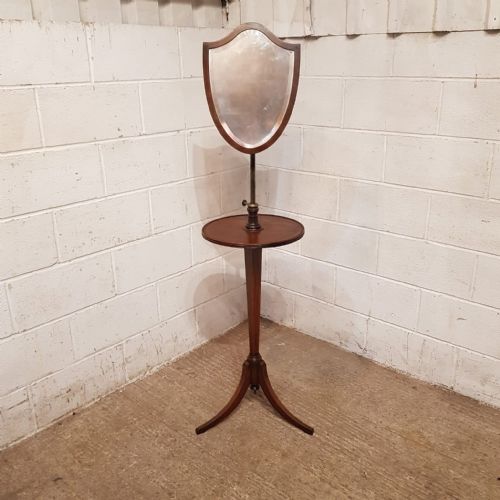
A pedestal mirror stand serves as a dedicated glass surface supported by a column, tripod, or table base, appearing frequently in Victorian and Edwardian iterations. Buyers seek these pieces for their practical adjustable mirrors and integrated stands designed for grooming and daily use.
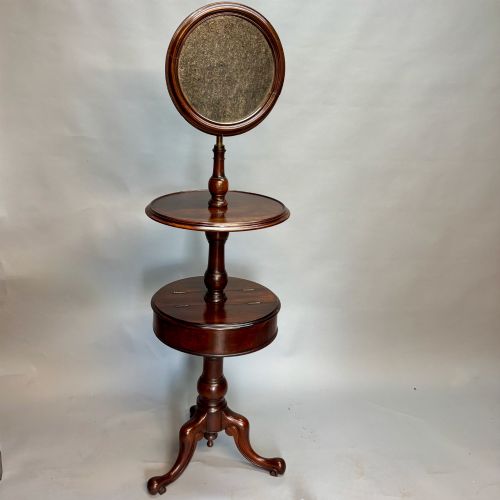
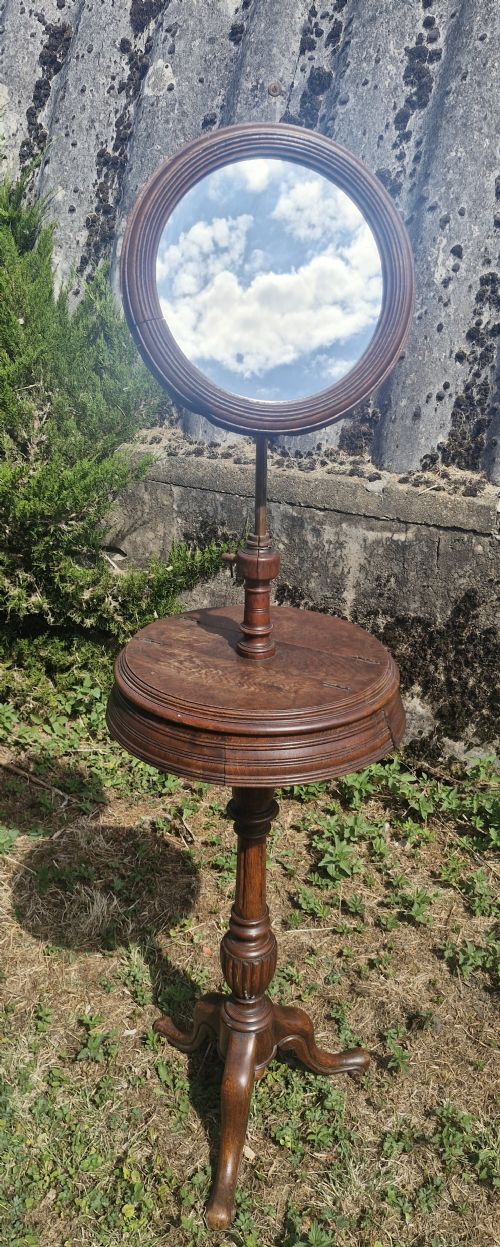
The selections range from mahogany and walnut shaving stands to French bronze and ormolu table mirrors. Shaving stands form a significant portion of the available items, often featuring telescopic adjustments and small storage compartments or platforms.
Origin variations span from British Victorian workshops to French Empire creations and Art Deco chrome designs. The common thread is the combination of a reflective plate with a raised or pedestal mounting.
How pedestal mirror stands were made
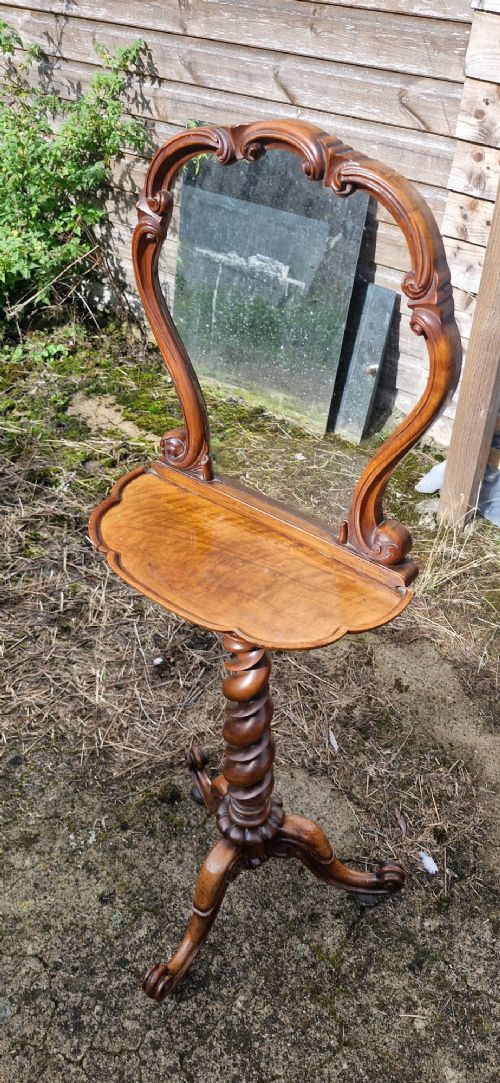
Cabinet makers utilised dense hardwoods such as mahogany, walnut, and oak to construct the main vertical supports and tripod bases. These timbers were turned, carved, or polished to highlight natural grain patterns.
Metal components including brass, bronze, ormolu, and silver plate form the adjustable joints, frames, and decorative mounts. Glass provides the reflective surface, occasionally mounted on marble or specialised wood tops.
The listings span from the 1850s to the 1930s, featuring materials like mahogany, walnut, oak, marble, brass, ormolu, bronze, and glass.
What varies in quality
The standard of timber selection and the precision of the turning on the central pedestal dictate much of the initial value. Finer examples display seamless mechanical adjustments for the mirror angle without slack in the brass fittings.
Decorative embellishments such as ormolu mounts, hand-painted details, or Vernis Martin finishes distinguish standard utility pieces from high-end salon or dressing room furnishings.
James Shoolbred
The Pedestal Mirror Stand Glossary
- Cheval mirror
- A full-length plate glass mirror suspended on a frame with two vertical pillars. This allows the glass to tilt back and forth on pivots.
- Shaving stand
- A specialised furniture piece incorporating a mirror, often adjustable, alongside a small surface or drawer for grooming implements. These emerged strongly during the Victorian era.
- Ormolu
- Gilded bronze applied to furniture mounts and decorative objects during the eighteenth and nineteenth centuries. It provides a rich gold-coloured metallic finish.
- Vernis Martin
- A type of simulated Japanese lacquer developed in France during the eighteenth century. It utilises multiple layers of varnish to achieve a glossy decorative surface.
Pedestal Mirror Stand: Frequently Asked Questions
What is a pedestal mirror stand used for?
These pieces were originally designed for personal grooming, offering an adjustable reflective surface combined with a stable base or small table. Gentlemen utilised shaving stands for morning routines, while dressing table mirrors served broader vanity purposes.
Today, they function as practical decorative accents in bedrooms and hallways, providing height and reflection without requiring permanent wall mounting.
How do I identify a Victorian shaving stand?
Victorian examples typically feature solid mahogany, walnut, or oak construction with heavy turned columns, tripod bases, or small cabinet doors. Many incorporate brass adjustment screws to tilt the glass plate.
Look for functional additions like small ledges for soap or shaving cups, alongside period specific joinery and patination on the timber.
What is the difference between a cheval mirror and a table mirror?
A cheval mirror stands independently on the floor, supported by a tall frame and four feet or a heavy base. It provides a full-length reflection.
A table mirror or pedestal mirror sits upon a piece of furniture, such as a chest of drawers or a dedicated pedestal stand, focusing on upper body reflection.
Are Art Deco mirror stands different from Victorian ones?
Art Deco pieces from the 1920s and 1930s favor chrome plating, geometric walnut or kingwood veneers, and streamlined silhouettes. They lack the ornate carvings and heavy turned wooden columns typical of Victorian designs.
The materials shifted towards industrial metals and modern glass presentations, matching the interior design trends of the interwar period.