




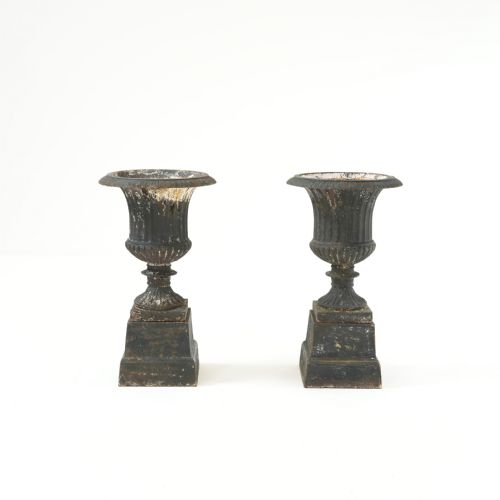


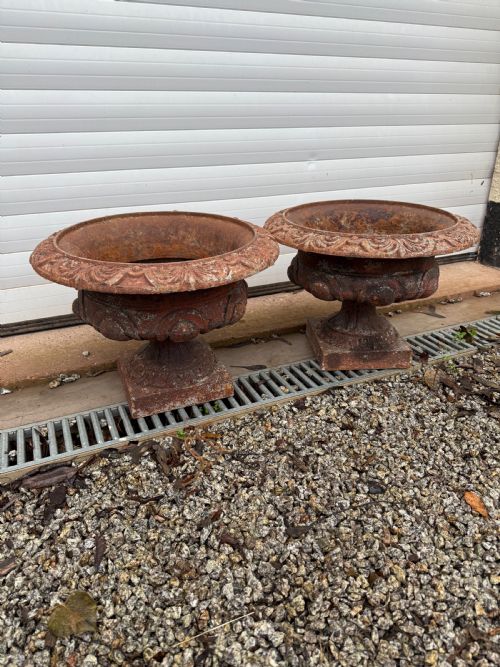

Pedestal Garden Urn Pair
A pedestal garden urn pair brings classical dignity to outdoor spaces, offering matched symmetry for formal paths and terrace focal points.
Pedestal Garden Urn Pair
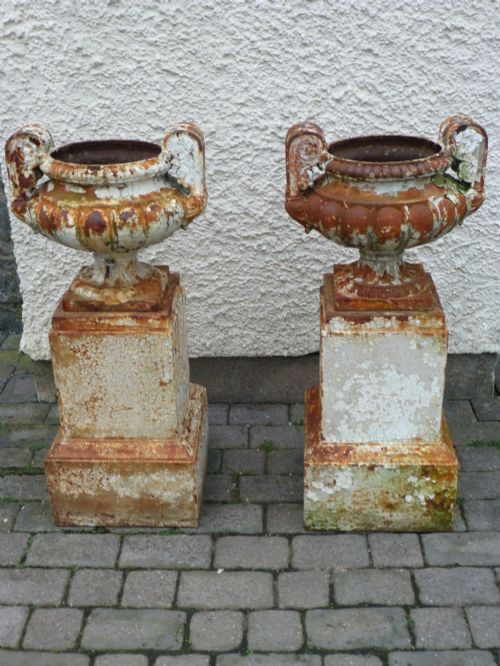
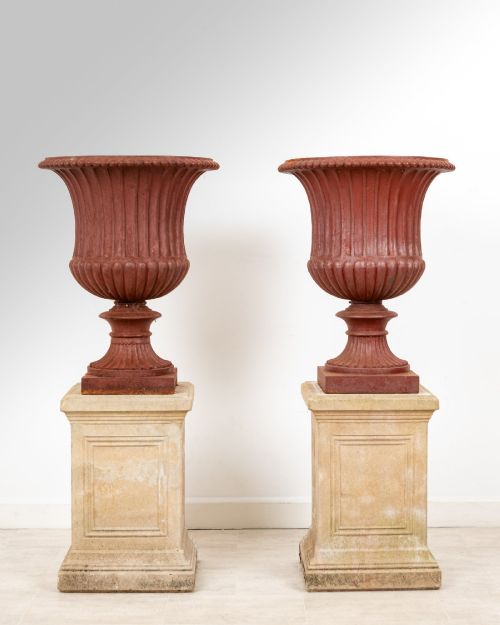
A pedestal garden urn pair consists of matching vessels raised on dedicated columns, plinths or stands, designed specifically for symmetrical outdoor display. These assemblies combine the upward lift of a classical base with the flared bowl of an urn or planter, creating balanced architectural accents for lawns, entrances and formal gardens. The evidence shows these matched sets appearing across the nineteenth century, the Edwardian era and the nineteen-twenties, predominantly taking the form of campana-shaped vessels paired with stone or iron supports.
Buyers encountering this group will find materials spanning heavy cast iron, terracotta, limestone, marble, salt-glazed stoneware and various composite stones. Styles range from strict Regency and Neoclassical interpretations to Gothic Revival and Victorian classical designs, reflecting the enduring popularity of classical antiquity in British and European landscaping. Many examples unite iron bowls with stone pedestals or present fully integrated stone and terracotta compositions designed to weather gracefully out of doors.
Assessing quality in matched sets
Quality rests upon the crispness of the casting or carving, where sharply defined classical motifs, clean lines and well-executed relief work distinguish superior examples from simpler production pieces. The harmony between the urn and its designated plinth also dictates the visual success of the pair, as mismatched replacements diminish the architectural integrity of the ensemble.
Material density and structural integrity separate robust outdoor installations from fragile alternatives, with heavier cast iron, dense limestone and thick-walled terracotta demonstrating greater longevity. The natural weathering process further enhances superior surfaces, turning uniform paint or raw stone into patinated textures that reveal the underlying quality of the original material.
Pedestal Garden Urn Pair Retail Price Guide 2026
Typical asking prices for pedestal garden urn pair among the pieces listed under this phrase on Sellingantiques today, from the lower quarter to the upper quarter. They describe what is for sale here now, not the wider market.
Listings feature nineteenth-century, Edwardian and nineteen-twenties periods, utilising cast iron, terracotta, limestone, marble and composite stone.
Dunfermline Clay Company·Falkirk Carron foundry·Coalbrookdale
The Pedestal Garden Urn Pair Glossary
- Campana urn
- A bell-shaped garden vessel with an everted rim and a tapering lower body, frequently mounted on a short stem and square foot before sitting atop a taller pedestal. This classical silhouette originates from ancient Roman marble prototypes discovered at Hadrian's Villa.
- Plinth
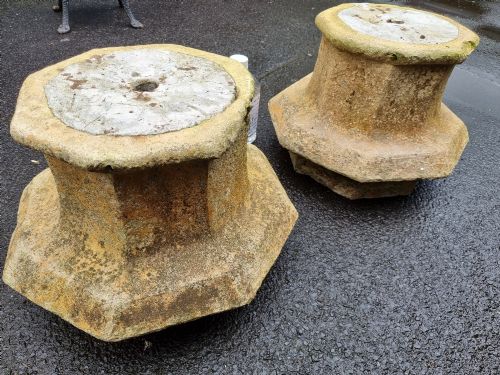
- A heavy rectangular or square base block that elevates an urn above ground level, providing a stable foundation and distinct architectural presence. Plinths often feature panelled sides, moulded cornices or fluted details matching the style of the vessel above.
- Salt glaze
- A vitreous coating formed by throwing common salt into the kiln during high-temperature firing, producing a durable, slightly pebbled surface texture on stoneware ceramics. This impermeable finish protects the clay body from frost damage in outdoor settings.
- Tazza
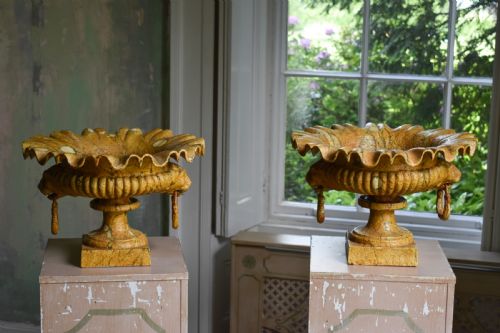
- A shallow cup or bowl-shaped vessel set upon a pedestal foot, used in garden settings as an ornamental planter or low-profile basin. Italian marble examples emphasise shallow proportions and classical decorative turning.
- Composite stone
- A durable manufactured material combining crushed stone, aggregate and binding agents moulded to replicate natural cut stone or carved masonry. This technique allowed nineteenth-century manufacturers to produce heavy architectural garden ornaments with consistent structural reliability.
Pedestal Garden Urn Pair: Frequently Asked Questions
How do I secure tall urns outdoors?
Heavy pedestal sets generally rely on their substantial weight to remain stable on level ground, though iron and stone components can be securely dowsed or pinned with mortar where high winds prevail.
Ensuring a flat, level foundation prevents uneven settling and protects both the plinth and the vessel from structural stress over time.
Can cast iron urns stay outside all winter?
Cast iron withstands low temperatures effectively, provided the interior drainage holes remain clear so that accumulated rainwater does not freeze and expand against the metal walls.
Applying protective coatings periodically helps preserve the painted or oxidized surface finish against persistent moisture and frost.
What plants suit campana urns best?
Trailing foliage, architectural evergreens and seasonal bedding plants complement the flared rim and elevated height of campana bowls by cascading gracefully over the edges.
Providing adequate soil depth and proper drainage ensures that root systems thrive despite the restricted environment of a raised garden vessel.
How do I distinguish Victorian from Regency examples?
Regency pieces often display restrained classical austerity with clean geometric lines, whereas Victorian designs frequently incorporate heavier ornamentation, Gothic revival motifs or exuberant floral relief work.
Examining the casting seams, mounting hardware and weathering patterns alongside the stylistic vocabulary helps clarify the period of manufacture.