



Pedestal Base Card Table
A pedestal base card table is a foldable surface designed for parlour games and tea, bringing tactile warmth and period form to a room.
Pedestal Base Card Table
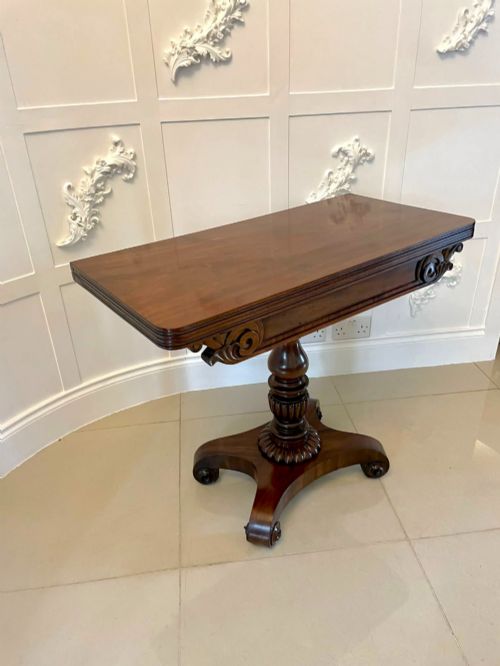
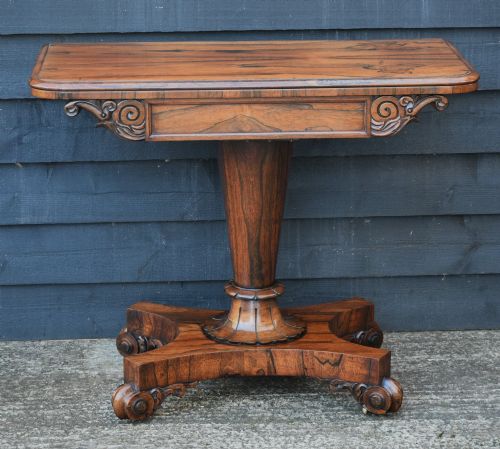
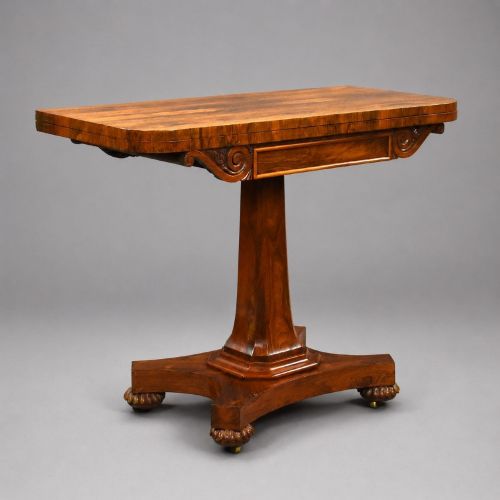
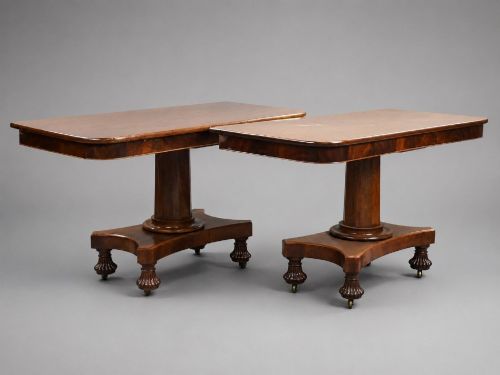
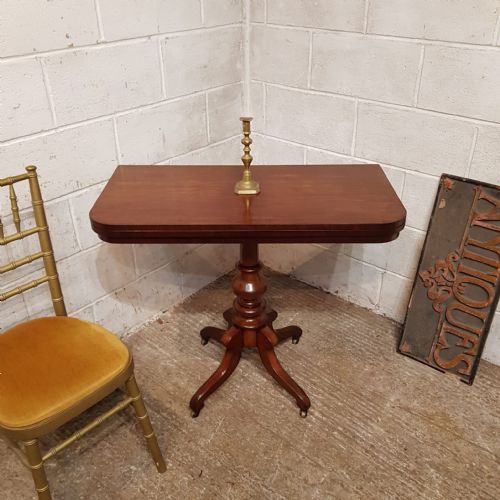
A pedestal base card table appears most commonly from the Regency, William IV, and Victorian eras, taking the form of a fold-over top supported by a central column. These pieces function as card tables, tea tables, or games tables, transitioning from compact console units to expanded play surfaces.
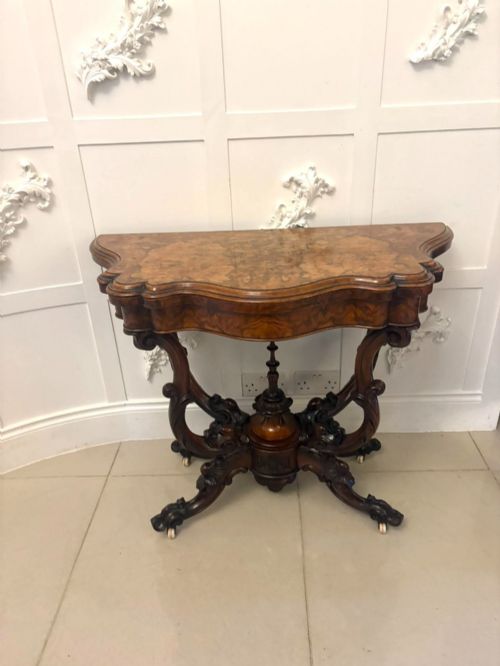
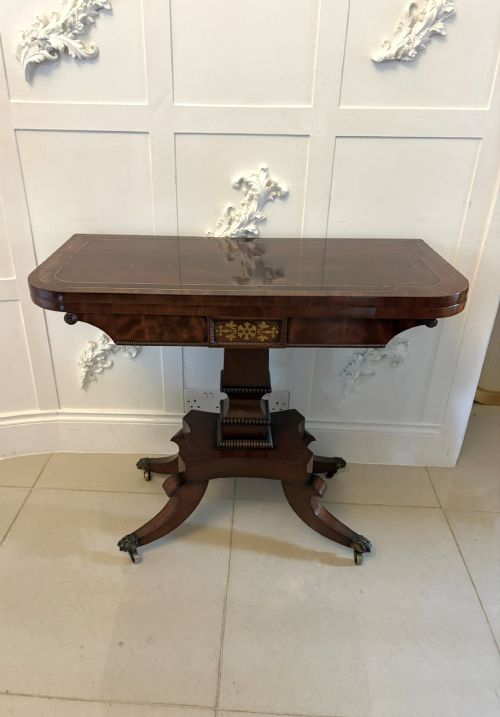
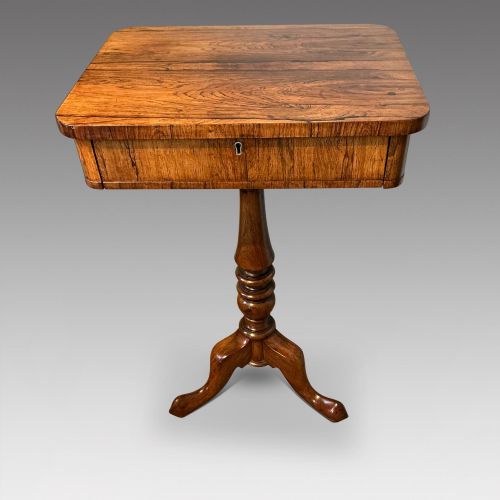
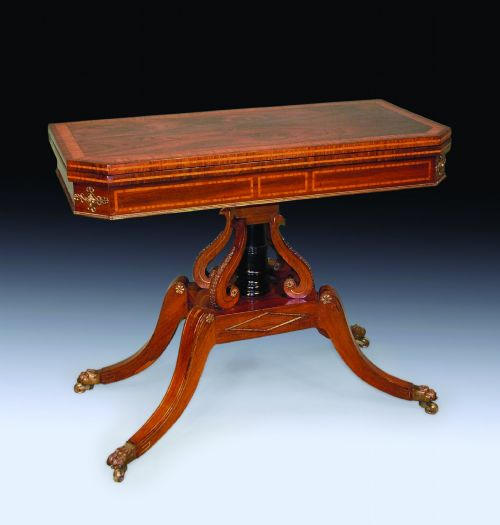
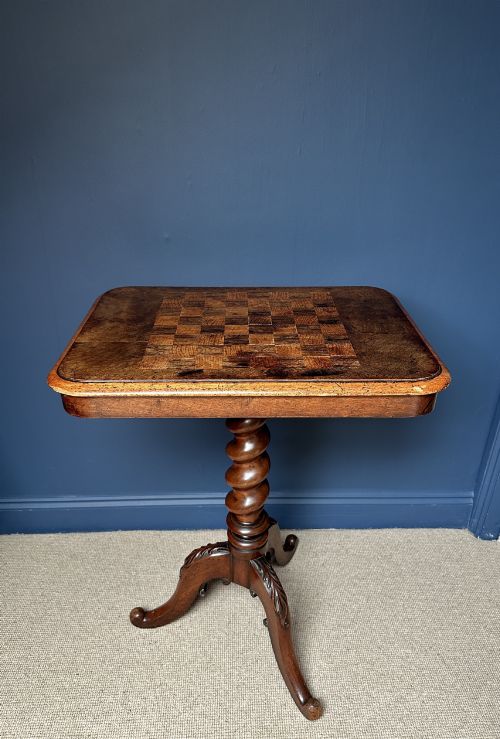
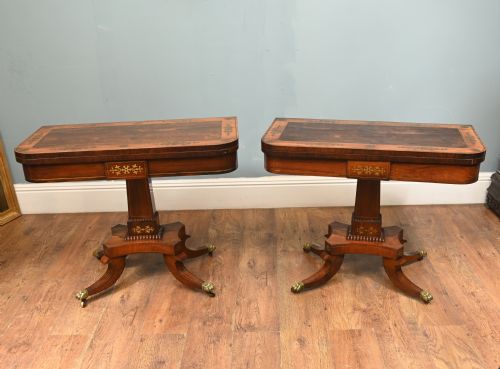
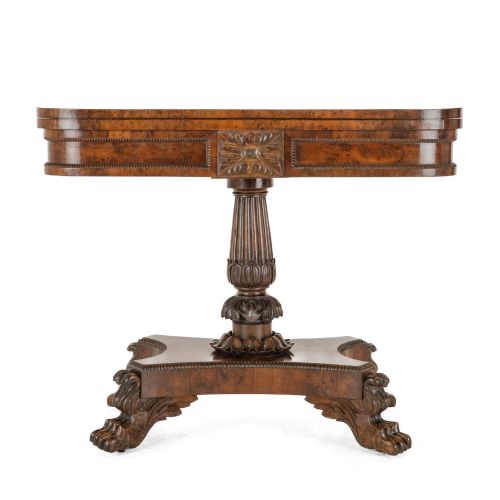
Makers constructed these tables in mahogany, rosewood, and walnut, often incorporating satinwood or brass inlay. The primary version seen on this page rests upon a circular, octagonal, or carved pedestal base, frequently featuring scroll or dolphin motifs.
Examples span from the late eighteenth century through the mid-nineteenth century, including George IV and early Victorian variants. They serve equally as side tables and centre tables when the leaves remain closed against a wall or in the middle of a room.
Materials and construction
Cabinet makers utilised dense timber stocks like mahogany, rosewood, and burr walnut, often applying veneers over secondary woods to create figured surfaces. These woods respond well to polishing, which highlights the natural grain patterns across the fold-over tops.
Carved wooden details on the pedestals and bases required skilled hand-chiselling, particularly on scroll and dolphin supports. Brass inlay and satinwood stringing were set directly into the timber surfaces to form geometric or botanical borders.
Listings feature rosewood, mahogany, and burr walnut most frequently, alongside brass inlay and satinwood.
Judging the work
Quality rests in the choice of timber and the precision of the veneer matching across the fold-over top. Superior examples display richly figured mahogany, burr walnut, or rosewood that aligns seamlessly when the leaves open.
The sculptural ambition of the pedestal and the crispness of any carved wooden elements separate standard pieces from finer ones. Well-executed scrollwork, dolphin bases, or inlaid brass stringing indicate a higher grade of workshop production.
The Pedestal Base Card Table Glossary
- Fold-over top
- A hinged wooden surface that doubles the table area when opened for games or tea. It pivots on the pedestal frame to reveal a baize-lined interior.
- Pedestal base
- A central pillar rising from a platform or feet to support the table weight. This design replaces traditional four-leg frames to allow more legroom for seated players.
- Tilt-top mechanism
- A hinge and catch assembly allowing the tabletop to pivot into a vertical position for storage. This mechanism saves space when the table is not in use.
- Console table
- A piece designed to stand flat against a wall, often serving as a side table until opened into a card table. It maintains a decorative presence in a hallway or parlour.
- Stringing
- Thin lines of contrasting timber or brass inlaid into the primary wood surface. This technique creates geometric borders around the edges of the top.
Pedestal Base Card Table: Frequently Asked Questions
How do I use a card table daily?
A pedestal base card table functions effectively as a console against a wall or as a centre table in a living space. Opening the fold-over top creates a stable surface for writing, games, or holding lamps.
Keep the timber away from direct heat sources and moisture to protect the polished finish and veneer. Regular dusting with a dry cloth maintains the lustre of the mahogany or rosewood surfaces.
How do I tell Regency from Victorian tables?
Regency and George IV tables often display cleaner architectural lines, brass inlay, and satinwood accents dating from the early nineteenth century. They frequently utilise rosewood with restrained brass mounts.
Victorian pieces, emerging around 1850 and later, lean towards heavier proportions, burr walnut veneers, and elaborate carved basket or scroll pedestals. The rosewood and walnut used in these later eras often show denser grain figuring.
What is a gaming well?
A gaming well is a recessed compartment built beneath the folding top of certain Victorian tables. It stores cards, counters, and chess pieces safely out of sight.
Tables with this feature provide practical storage while maintaining a clean silhouette when closed. They highlight the multifunctional nature of nineteenth-century parlour furniture.
Are all these tables made of solid wood?
Most pieces feature timber veneers applied over a stable secondary wood core. This technique prevented warping on large surfaces like fold-over tops while displaying decorative grain patterns.
Solid timber was typically reserved for structural elements such as pedestals, feet, and edge mouldings. The use of fine veneers distinguishes higher quality cabinet work from plain construction.