

Pearl and Gemstone Necklace
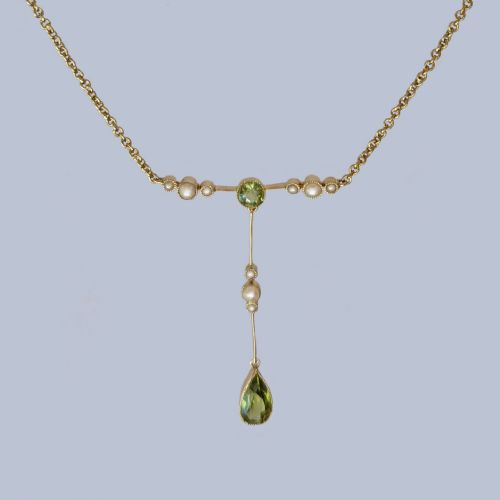
A pearl and gemstone necklace combines lustrous organic pearls with colourful stones in settings spanning the Victorian to mid-century periods.
Pearl and Gemstone Necklace
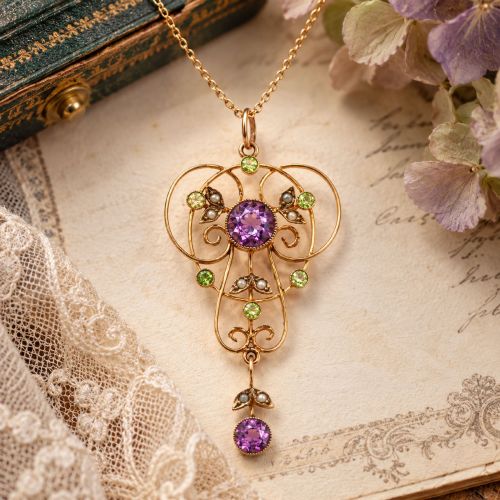
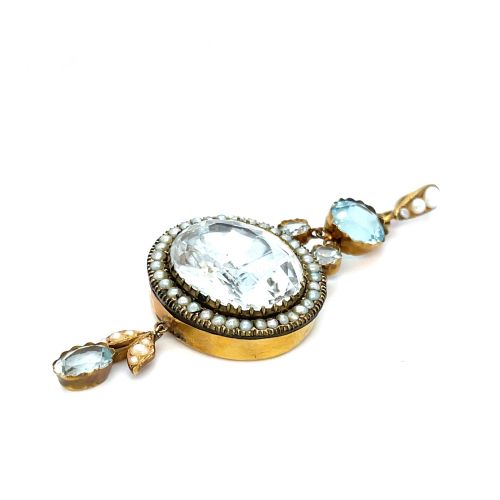
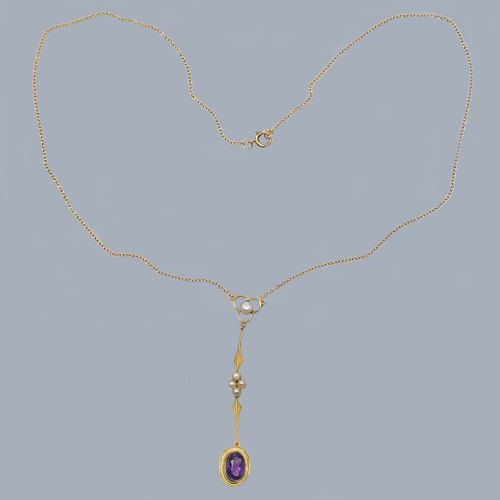
A pearl and gemstone necklace unites pearls with coloured stones such as amethyst, peridot, aquamarine and tourmaline, mounted on gold or silver chains. The pearl and gemstone necklace forms a distinct category spanning Victorian, Edwardian, Art Nouveau and mid-century designs.
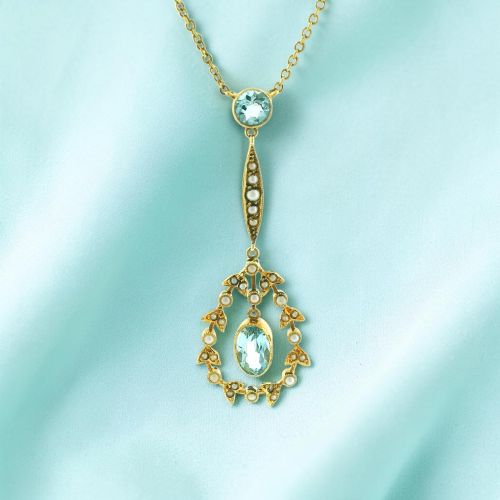
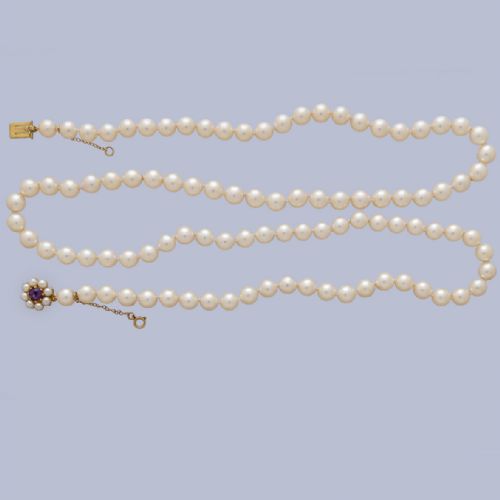
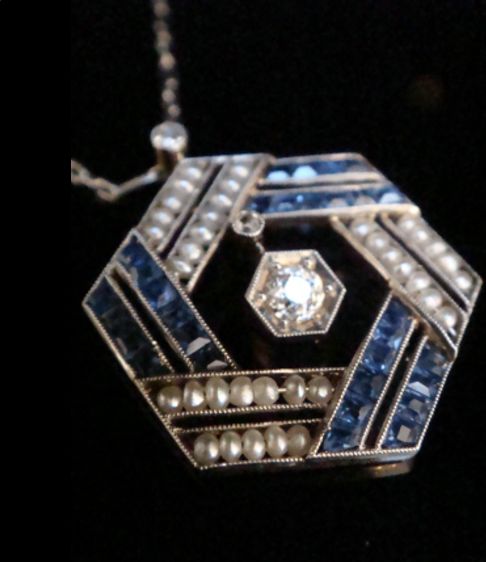
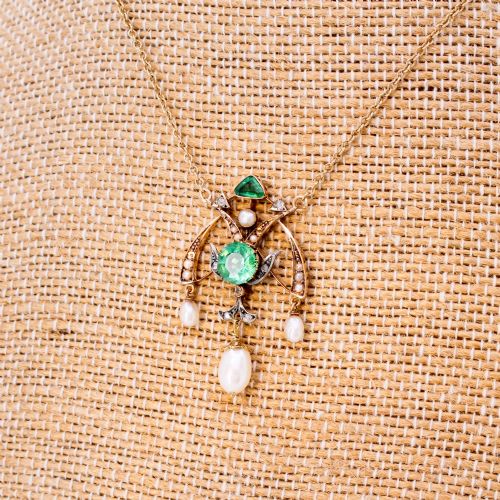
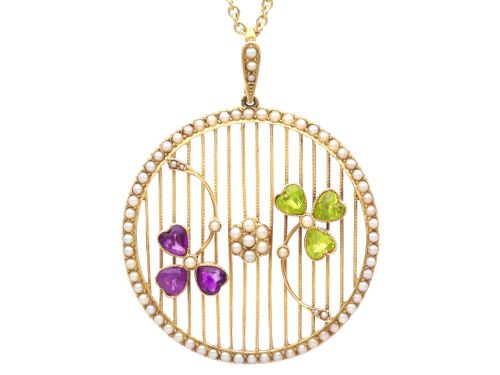
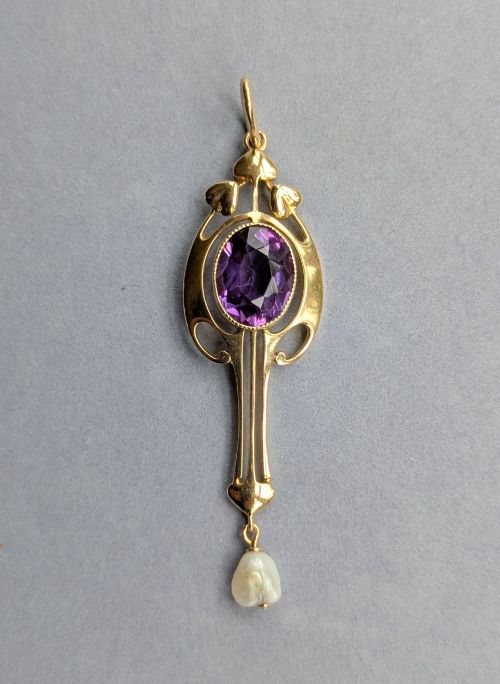
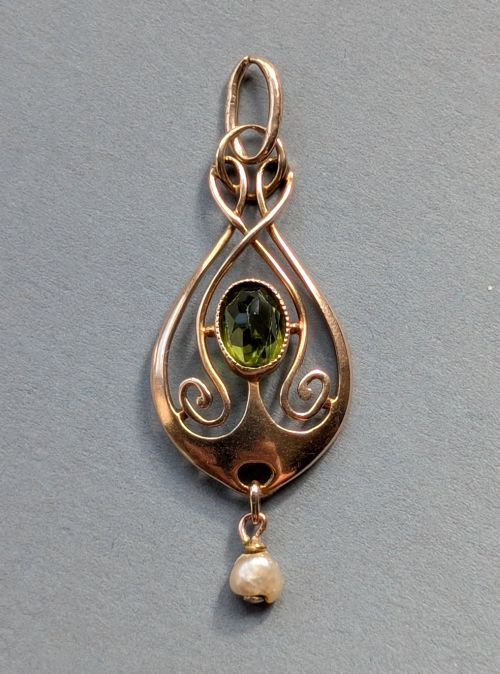
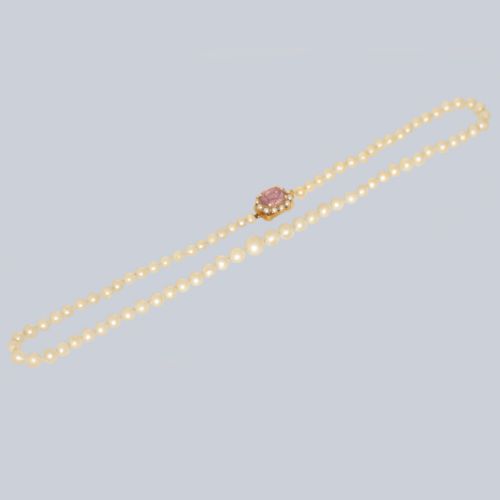
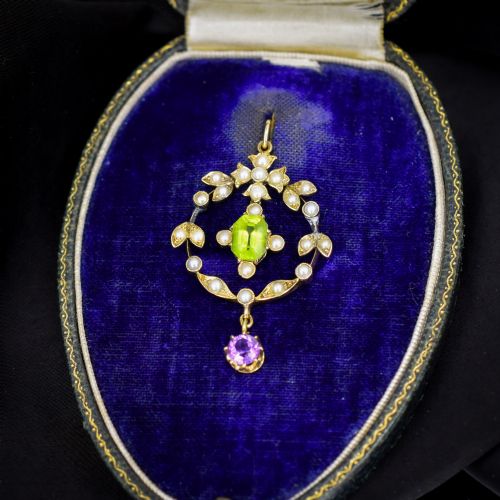
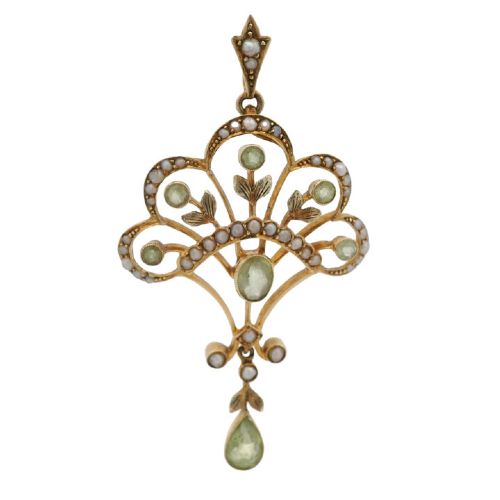
Edwardian and Art Nouveau examples frequently feature delicate lavalier drops or intricate openwork frames set with seed pearls alongside peridots or amethysts. Victorian and later twentieth-century pieces often present bolder single-stone pendants or multi-strand cultured pearl configurations with gem-set clasps.
The most common formats on this page range from short pendant necklaces to longer lavallières and multi-strand chokers. These pieces demonstrate how jewellers paired the soft lustre of pearls with the sharp brilliance of faceted minerals across successive eras.
Materials and construction
Craftsmen utilised fifteen-carat and nine-carat yellow and rose gold, alongside platinum and silver, to construct the settings for these necklaces. Metalwork techniques included delicate wire-work, granulation and pierced gallery frames typical of the Arts and Crafts and Edwardian periods.
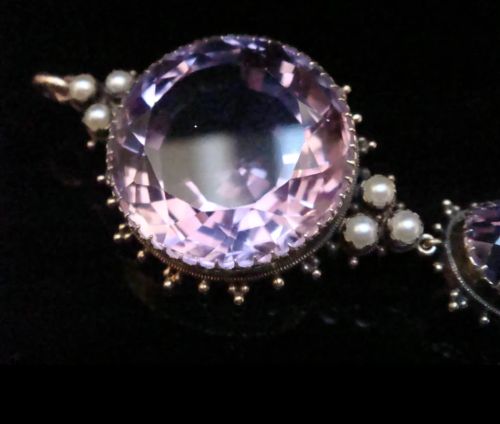
Natural and cultured pearls, including tiny seed pearls, were meticulously drilled and secured on pins or strung on silk threads alongside calibrated gemstones. Gemstones such as amethyst, peridot, emerald and sapphire were predominantly bezel or collet set, often complemented by small accent diamonds.
Pearl and Gemstone Necklace Retail Price Guide 2026
Typical asking prices for pearl and gemstone necklace among the pieces listed under this phrase on Sellingantiques today, from the lower quarter to the upper quarter. They describe what is for sale here now, not the wider market.
Listings span the Victorian, Edwardian and mid-century periods, incorporating amethysts, peridots, diamonds and gold.
Assessing quality and execution
Quality rests upon the harmony of the design and the precision of the metalwork, particularly in handmade Edwardian and Art Nouveau openwork frames. Maker attribution, such as work originating from established workshops like Murrle Bennett, elevates the standing of a piece.
The choice of stones dictates the upper tier of the range, where well-matched natural pearls accompany cleanly cut, vibrant amethysts, peridots or emeralds. Original boxes and verifiable hallmarks provide further indicators of historical integrity.
Murrle Bennett·S. Blanckensee & Son·Hamilton & Co
The Pearl and Gemstone Necklace Glossary
- Seed pearl
- A very small, naturally occurring or cultured pearl, typically under two millimetres in diameter. These tiny pearls were frequently used in dense pavé settings or delicate swags during the Edwardian era.
- Lavalier
- A pendant necklace featuring a central drop stone suspended below a smaller motif or chain connector. This style gained immense popularity during the Edwardian and Art Nouveau periods.
- Collet setting
- A collar of metal that encircles the girdle of a gemstone and is pushed or hammered over the edge to secure it. This method provides a clean, finished appearance around the stone.
- Foil back
- A technique where a thin sheet of reflective metallic foil is placed behind a gemstone within a closed-back setting to enhance its colour and brilliance. This is commonly observed in Victorian pieces.
- Trombone catch
- A tubular mechanical clasp favoured in fine antique jewellery, particularly during the Edwardian era. The pin inserts into a sliding cylinder that locks securely.
Pearl and Gemstone Necklace: Frequently Asked Questions
How do I date an Edwardian pearl pendant?
Edwardian pendants typically feature platinum-topped gold, delicate filigree wirework and combinations of seed pearls with peridots or amethysts. The lightness of the metalwork reflects the technological shift toward platinum use around nineteen hundred.
Examining the clasp type, such as a trombone catch, and checking for hallmarks can help confirm the precise decade of manufacture.
What is the difference between seed pearls and cultured pearls?
Seed pearls are exceptionally small pearls that occurred naturally or grew as byproducts in oyster fisheries, widely utilised in Victorian and Edwardian clusters. Cultured pearls are grown with human intervention by introducing a nucleus into the mollusc.
Mid-century necklaces predominantly feature cultured pearls matched for uniform size and lustre, whereas antique pieces rely on the irregular charm of natural seed pearls.
How should I care for antique pearl jewellery?
Pearls are organic gems sensitive to acids, cosmetics, perfumes and household chemicals. Wipe them gently with a soft cloth after wearing and store them separately to prevent scratching from harder gemstones.
Avoid submerging antique threaded necklaces in water, as moisture weakens historical silk cords over time.
What defines an Art Nouveau pearl and gemstone necklace?
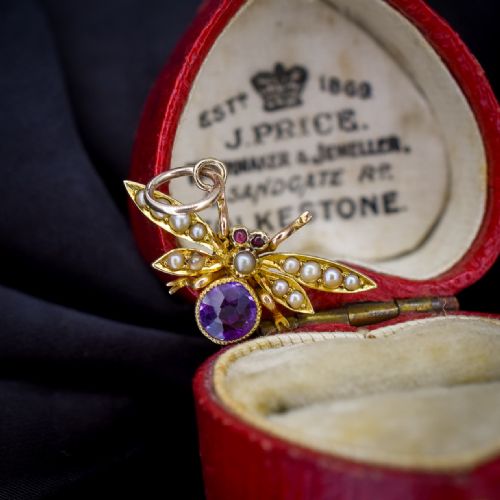
Art Nouveau pieces showcase asymmetrical, flowing organic lines inspired by natural forms such as plants, insects and vines. These designs frequently incorporate enamel work alongside amethysts, opals and seed pearls.
The metalwork often frames the stones in sinuous, whiplash curves rather than strict geometric symmetries.