




Paw Foot Console Table
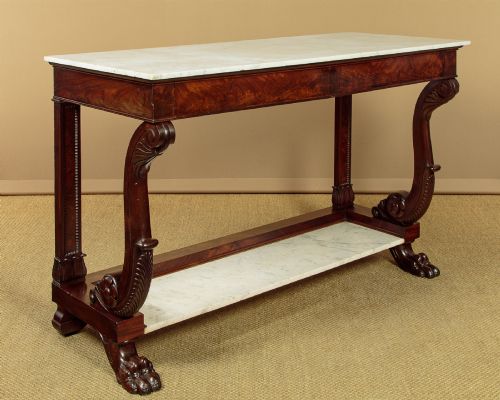
A paw foot console table brings neoclassical weight to a hallway or drawing room through robust carved supports and rich timber.
Paw Foot Console Table
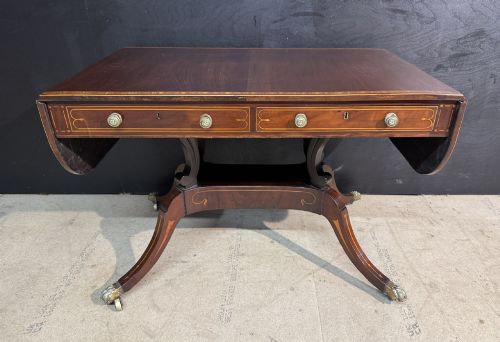
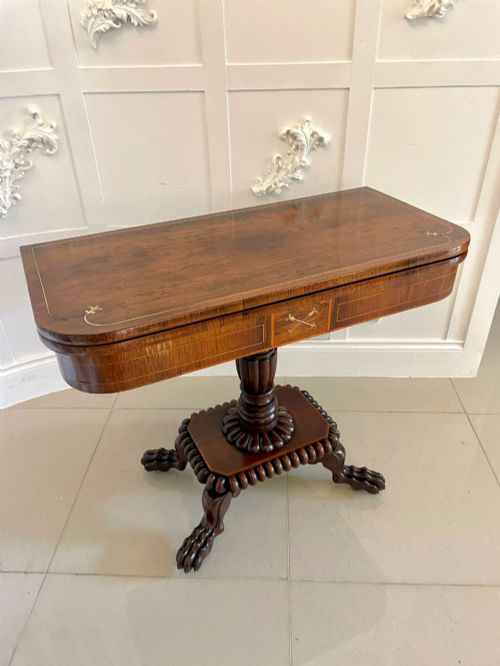
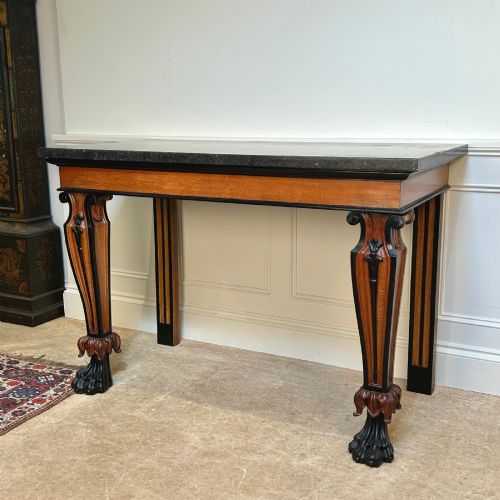
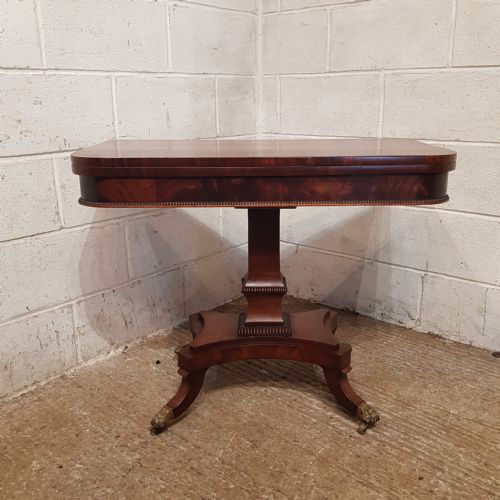
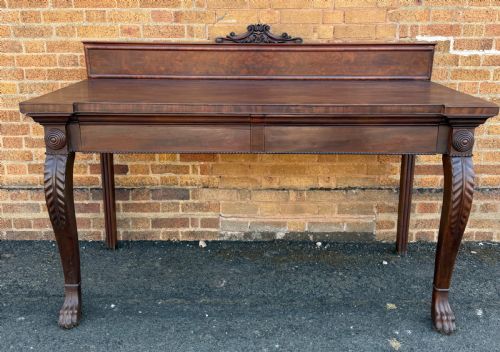
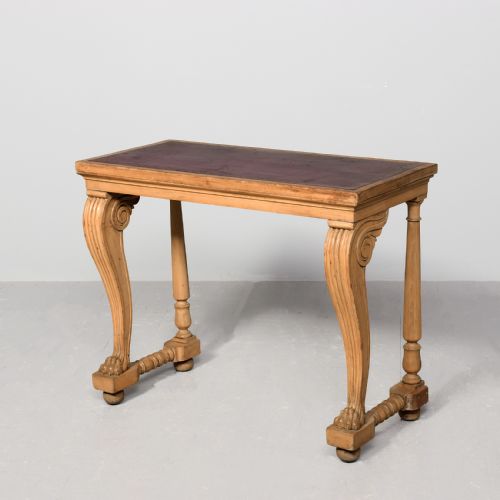
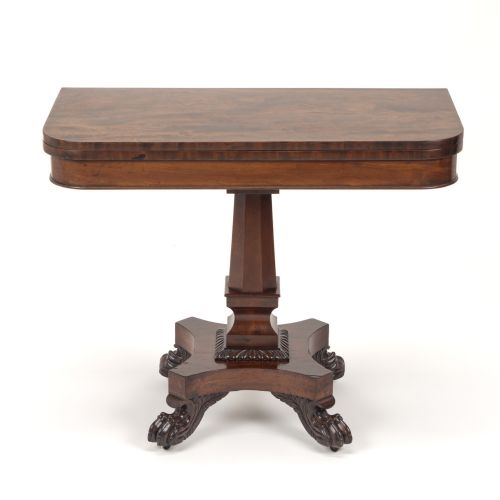
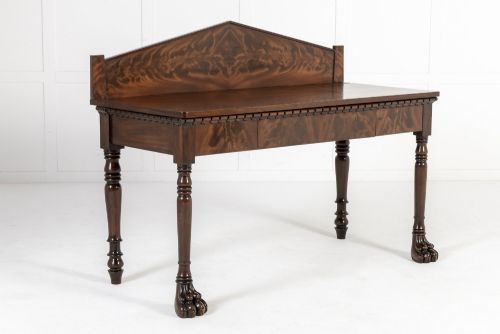
A paw foot console table combines structural stability with classical decorative vocabulary, frequently appearing across Regency, Georgian and nineteenth century periods. These tables emerge in diverse forms including serving tables, card tables and sofa tables designed to stand against walls or in open spaces.
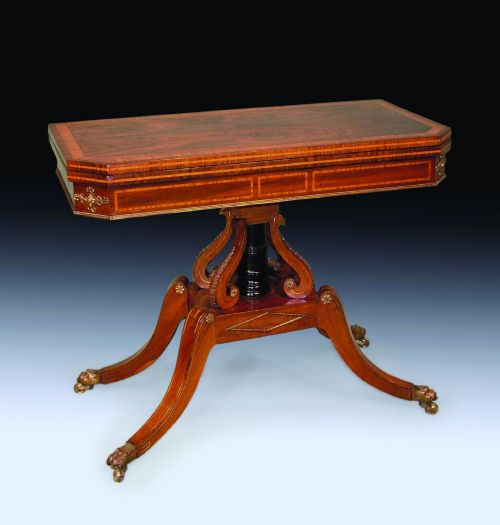
The selection on this page leans heavily toward Regency and nineteenth century examples executed in mahogany and rosewood, often incorporating brass inlay and gilded mounts. Buyers encounter both English country house designs and continental interpretations such as French Empire revival pieces.
Makers utilised architectural proportions and substantial timber reserves to create practical surfaces for display, dining or card games. The inclusion of carved paw feet anchors the design visually, connecting the vertical supports directly to the floor.
Materials and construction methods
Cabinet makers constructed these pieces using solid timbers like mahogany, oak and rosewood, frequently applying flame mahogany veneer or burr birch to create striking surface patterns. Secondary woods provided structural framing beneath the decorative exterior layers.
Decoration relied on brass inlay, parcel gilding and cast brass mounts applied to pedestals, friezes and table edges. Timber was hand carved to form detailed lion masks, scroll pedestals and the characteristic paw feet.
Crossbanding and ebonised wood details created contrast against lighter woods like satinwood, while marble inserts provided durable, cool upper surfaces on specific console variations.
Paw Foot Console Table Retail Price Guide 2026
Typical asking prices for paw foot console table among the pieces listed under this phrase on Sellingantiques today, from the lower quarter to the upper quarter. They describe what is for sale here now, not the wider market.
Carved wooden paws sometimes conceal tiny hidden castors, allowing heavy Regency tables to glide silently across the drawing room.
Assessing craftsmanship and execution
Quality rests in the crispness of the hand carving on the paw feet and structural mounts, where deep chisel work separates superior workshops from routine production. The precision of brass inlay and the selection of figured mahogany veneers also dictate the visual standard.
Proportion and scale govern the architectural success of each piece, distinguishing balanced compositions from heavy or awkward assemblies. Timber selection, grain matching and the retention of original patination further separate standard examples from finer works.
James Mein of Kelso·Jean-Joseph Chapuis·John McLean
The Paw Foot Console Table Glossary
- Console table
- A table designed to stand against a wall, frequently secured to it with brackets or balanced on heavy pedestal bases.
- Crossbanding
- A border of veneer laid around the edge of a table top with the grain running at right angles to the main surface.
- Parcel gilt
- Portions of a carved wooden or metal surface highlighted with applied gold leaf.
- Sofa table
- A rectangular occasional table, typically fitted with drop leaves and twin pillar supports, originally designed to stand in front of a sofa.
- Biedermeier
- A central European style of furniture from the nineteenth century focusing on utilitarian comfort and clean lines utilising native timbers.
Paw Foot Console Table: Frequently Asked Questions
Where should I place a console table?
These tables suit entrance halls, drawing rooms or narrow reception spaces where a shallow surface is required for lamps or decorative objects.
Because many examples were originally designed to stand against walls or behind sofas, they fit neatly into traffic paths without blocking movement.
How do I care for rosewood and mahogany surfaces?
Maintain timber surfaces by dusting with a soft, dry cloth and avoiding direct sunlight that can fade deep polish and veneers.
Applying a traditional beeswax polish occasionally nourishes the wood and helps preserve the historic patination accumulated over centuries.
What is the difference between a console table and a serving table?
Console tables typically feature decorative brackets or wall fixings and focus on visual presence in formal rooms, whereas serving tables are built heavier for dining utility.
Both forms frequently share architectural traits like carved paw feet and heavy mahogany construction from the Regency period.
Are these tables suitable for everyday use?
Solid construction in dense timbers like mahogany and oak allows these tables to withstand normal daily demands in modern homes.
Care should be taken with folding leaves on card or sofa tables to protect the internal hinges and mechanism from undue strain.