


Paw Feet Sofa Table
A paw feet sofa table brings classical proportion and practical drop-leaf surfaces together, making it an enduring centrepiece for a drawing room.
Paw Feet Sofa Table
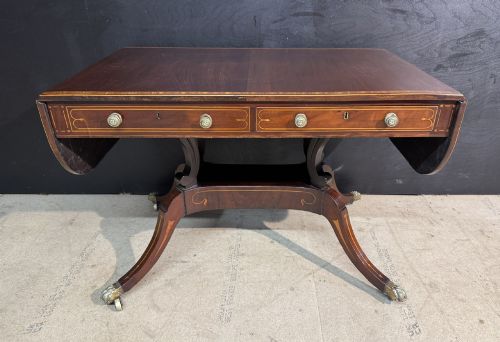
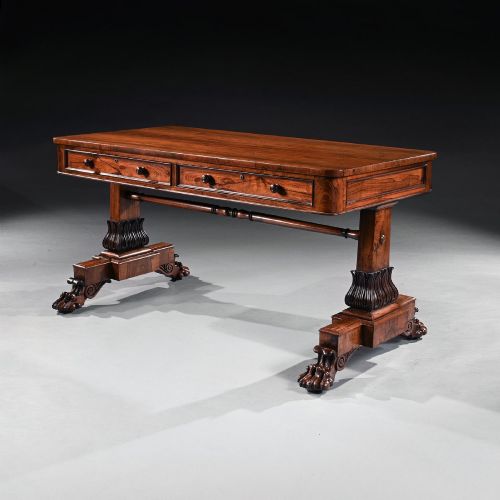
A paw feet sofa table is defined by its oblong drop-leaf top, twin drawers, and characteristic low supports resting upon carved or cast paw feet. These pieces frequently emerge from the Georgian, Regency, and William IV periods, showcasing the classical revival styles of the nineteenth century.
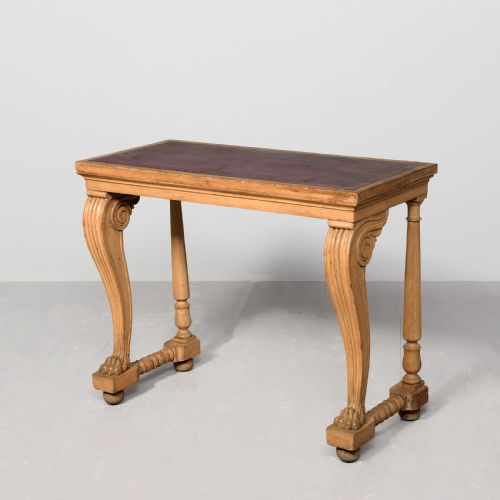
The version most commonly met on this page is executed in rich timber such as mahogany or rosewood, often enhanced with brass mounts, inlay, or pedestal ends. Alongside standard sofa tables, related forms like library tables, writing desks, and card tables share the same characteristic stance and proportions.
Materials and construction
Cabinetmakers utilised dense native and exotic timbers, framing carcasses in solid mahogany or rosewood and applying figured veneers such as flame mahogany, burr birch, or birdseye maple to the broad surfaces. Timber selection governed the visual weight and grain pattern of each drop-leaf top.
Metalwork played a structural and decorative role, with brass inlays, gilded mounts, ormolu, and castors supporting the carved wooden paws. Joinery relied on traditional dovetailed drawer construction and robust pedestals or end supports designed to bear the weight of the hinged leaves.
The listings on this page span the Georgian, Regency, and Victorian eras, alongside later nineteenth and twentieth-century revival pieces.
Distinctions in quality
The upper tier of these tables is distinguished by the depth of figure in the timber veneer and the precision of brass inlay or carved detail on the paw feet. Master workshops invested heavily in the crispness of classical motifs and the harmonious matching of grains across the top and drop leaves.
Construction integrity and proportion also separate finer examples from standard production, seen in the smooth operation of drawers and the stability of the central pillar or end supports. Superior pieces retain balanced proportions when the leaves are fully extended or dropped.
James Mein of Kelso·Jean-Joseph Chapuis·John McLean·Gillows
The Paw Feet Sofa Table Glossary
- Sofa table
- A rectangular table traditionally designed to stand in front of a sofa, featuring drop leaves on opposite sides and usually two small drawers.
- Drop leaf
- A hinged flap at either end of a table top that can be raised to extend the surface area or lowered when space is required.
- Ormolu
- Gilded bronze applied as a decorative mount, frequently seen on Regency and Empire furniture pieces.
- Biedermeier
- A Central European style spanning the nineteenth century, known for utilitarian comfort and clean lines utilising native wood veneers.
- Pollard oak
- Oak timber taken from pollarded trees, prized by cabinetmakers for its clustered, knotty grain patterns.
Paw Feet Sofa Table: Frequently Asked Questions
Where were sofa tables placed?
These tables were originally designed to stand directly behind a sofa in the middle of a room, allowing easy access to the writing surface or drawers.
In modern interiors, they function equally well as freestanding console tables or against a wall where space is tighter.
How do I spot a Regency period table?
Regency pieces often display classical architectural influences, including lyre ends, brass stringing, and rosewood or mahogany veneers.
Look for crisp carving on the paw feet and the characteristic use of castors to move the heavy timber structure.
What is flame mahogany?
Flame mahogany is a highly figured veneer sliced from the point where branches join the main trunk, creating a distinct flickering flame pattern.
Cabinetmakers reserved this prized material for the primary display surfaces of top-tier tables.
Can the drop leaves support weight?
The hinged flaps are supported by swing brackets or wooden arms operating from beneath the table top.
While sturdy enough for books and lamps, they were originally intended for light paperwork and sewing rather than heavy dining.