

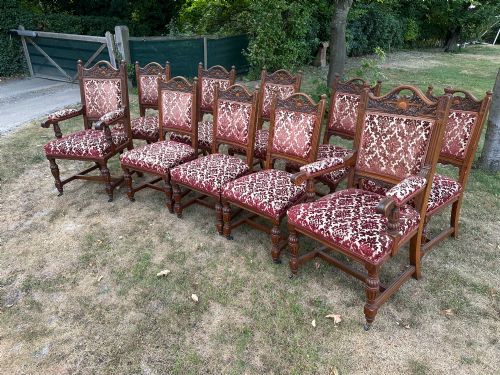
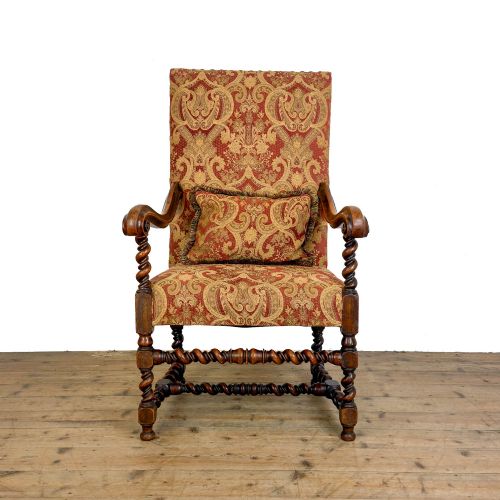


Patterned Red Seat Chairs
Patterned red seat chairs bring warmth and distinct texture to a room, spanning the Victorian and Edwardian periods in robust timber and rich textile.
Patterned Red Seat Chairs
Patterned red seat chairs encompass dining chairs, armchairs, and occasional seating originating from the nineteenth and early twentieth centuries. These pieces combine wooden frames in oak, walnut, mahogany, and beechwood with patterned fabric upholstery. Buyers searching for patterned red seat chairs encounter diverse forms, from robust Victorian Gothic hall chairs to comfortable Edwardian armchairs.
The selection on this page leans heavily towards Victorian and Edwardian examples, alongside pieces dating to nineteen-ten and nineteen-twenty. Forms range from sets of dining chairs to individual elbow chairs and campaign folding chairs. Each piece displays distinct period characteristics in its woodwork and textile choice.
How they were made
Makers constructed these frames using traditional timbers such as mahogany, walnut, oak, and beechwood, often incorporating carved details. Joinery techniques varied according to the form, from sturdy dining chair frames to folding campaign structures. Metal elements like brass sometimes appeared in structural or decorative capacities.
Upholstery involved textiles including cotton, velvet, and patterned fabric secured over padded seats and backs. Pieces such as nineteenth-century armchairs utilised deep springing and layered stuffing beneath the outer cover to ensure comfort.
Patterned Red Seat Chairs Retail Price Guide 2026
Typical asking prices for patterned red seat chairs among the pieces listed under this phrase on Sellingantiques today, from the lower quarter to the upper quarter. They describe what is for sale here now, not the wider market.
Listings feature periods from the nineteenth century up to nineteen-twenty, including Victorian and Edwardian examples.
What varies in quality
Quality rests in the integrity of the timber frame and the precision of the carving or joinery. Substantial frames in walnut or oak demonstrate greater durability than lighter beechwood alternatives.
The execution of the upholstery and the choice of textile also separate standard examples from finer works. Pieces associated with notable makers display superior handling of materials and more refined proportions.
Gillows·Howard and Sons
The Patterned Red Seat Chairs Glossary
- Elbow chair
- A wooden seating piece with low arms, designed for occasional use or dining. These chairs often feature carved woodwork and upholstered seats.
- Campaign chair
- A portable folding chair designed for travel and military use in the nineteenth century. These items combine practical folding mechanisms with compact frames.
- Carolean Revival
- A decorative style from the late nineteenth century imitating seventeenth-century English furniture. Pieces in this manner typically feature turned legs and elaborate carving.
- Beechwood
- A dense, pale hardwood utilised for interior framing and turned chair parts. It accepts staining and carving readily.
Patterned Red Seat Chairs: Frequently Asked Questions
What periods do these chairs represent?
The listings span the nineteenth century, the Victorian era, the Edwardian period, and the early decades of the twentieth century. This covers diverse stylistic revivals and functional seating forms.
Craftsmanship and materials shifted across these decades, moving from heavier carved timber frames towards lighter domestic seating arrangements.
Which woods appear in the frames?
Makers utilised timbers such as mahogany, walnut, oak, and beechwood. Each wood offered different properties for carving, turning, and structural support.
Durability and grain pattern varied depending on the chosen timber, influencing the overall appearance of the seating.
How do dining chairs differ from armchairs?
Dining chairs were built as sets for table use, featuring upright backs and compact seats. Armchairs provided relaxed seating with structural side supports.
Scale and upholstery depth separate these forms, with armchairs generally offering more substantial padding and broader proportions.
What textiles cover the seats?
Upholstery materials recorded in the listings include cotton, velvet, and patterned fabric. These textiles provided durable surfaces for daily seating.
Patterned designs on the fabric added visual contrast to the polished timber frames beneath.