
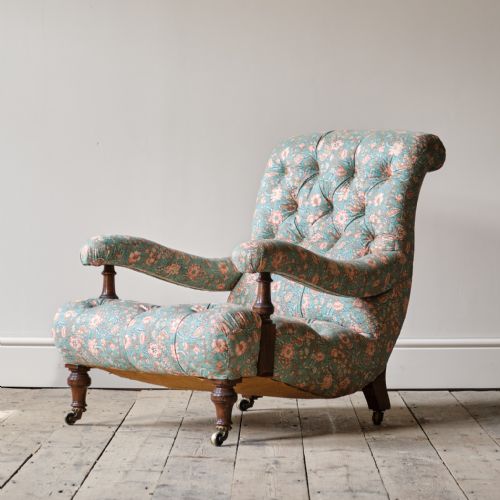


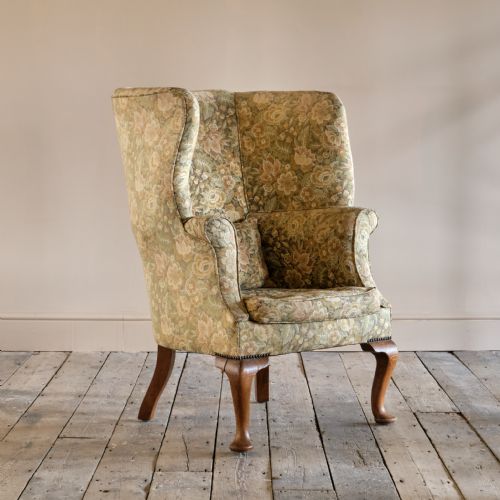


Patterned Floral Armchair
A patterned floral armchair brings colour and deep upholstery to a room, offering a comfortable seat shaped by centuries of English and continental seating traditions.
Patterned Floral Armchair
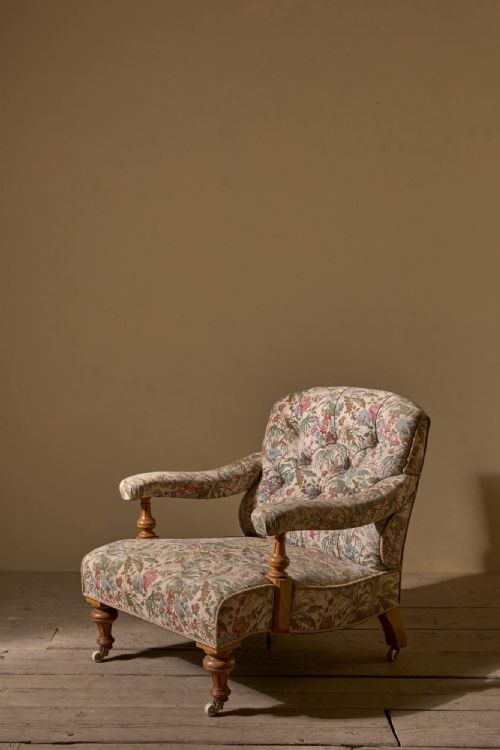
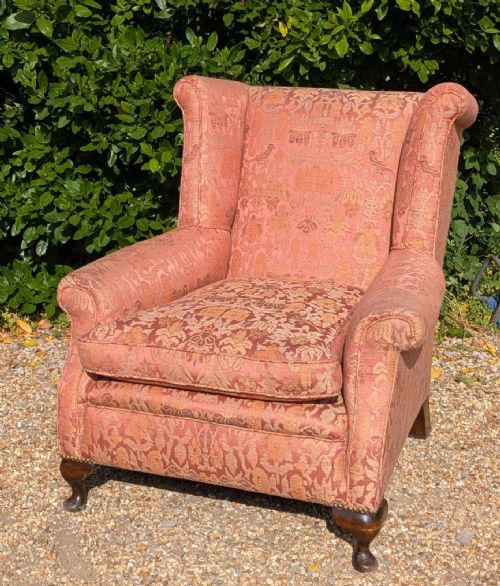
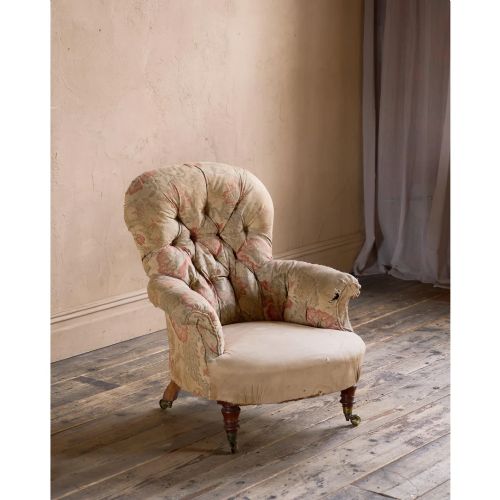
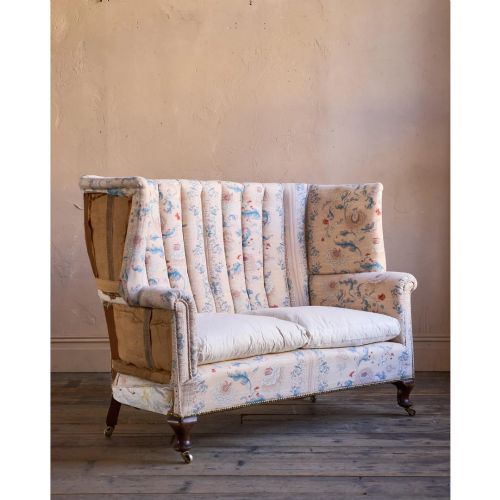
When you search for a patterned floral armchair, you are looking at seating covered in textiles featuring botanical motifs, spanning periods from the eighteenth century to the mid twentieth century. These chairs appear in forms such as open armchairs, spoon backs, barrel backs, and high back wing chairs.
The pieces on this page draw on Victorian, Edwardian, and Regency traditions, alongside country house and revival styles. You will frequently encounter examples upholstered in tapestry fabric, velvet, or William Morris textiles, framed in mahogany, walnut, oak, or other hardwoods.
Makers such as Howard and Sons and Holland & Sons appear among the listings, alongside country house pieces and French Empire or Napoleon III imports. Whether you choose a low slipper chair or a large wing fireside armchair, each piece combines structural woodwork with patterned textile covering.
Materials and construction
The frames are built from dense timbers including mahogany, walnut, oak, rosewood, and general hardwoods, providing a solid internal structure that supports heavy upholstery. Brass components appear on castors or hardware details, while the primary aesthetic impact comes from the fabric layer.
Upholstery techniques rely on textile coverings such as tapestry fabric, velvet, and woven floral patterns, often filled with materials like feathers for softness. Wood frames are shaped into cabriole legs, fluted supports, scroll backs, and exposed wooden arms depending on the period.
Hall porters chairs wrapped their sitters in high, enclosed hoods to keep out castle drafts before central heating existed.
Factors of quality
Quality rests in the integrity of the hardwood frame and the sophistication of the joinery beneath the fabric. Finer pieces demonstrate careful carving on mahogany or walnut, balanced proportions, and robust internal stuffing that maintains its shape.
The distinction between standard production and top-tier seating also lies in the provenance and the textile quality. Pieces bearing maker stamps from workshops like Howard and Sons or retaining original tapestry and Morris fabrics command greater attention from collectors.
Holland and Sons·Howard and Sons
The Patterned Floral Armchair Glossary
- Spoon back
- A padded chair back shaped like the bowl of a spoon, popular in nineteenth-century seating. This design curves to fit the human spine.
- Wingback
- An armchair with side panels designed to shield the sitter from drafts. These wings extend from the upholstered arms up to the backrest.
- Knowle sofa
- A traditional English settee featuring hinged or adjustable sides tied with cords. It provides a deep seat suited to country house interiors.
- Slipper chair
- A low-seated bedroom chair originally designed to help women put on shoes. These chairs sit close to the floor without arms.
Patterned Floral Armchair: Frequently Asked Questions
How do I date an armchair?
Dating relies on combining the timber species, the frame style, and the upholstery technique. Earlier pieces show hand-carved mahogany or walnut frames, while later Edwardian and twentieth-century chairs often use lighter hardwoods and different spring systems.
Examining the structural joinery beneath the fabric reveals construction methods specific to distinct decades and revival periods.
Are these chairs comfortable for daily use?
Many antique armchairs are built with generous proportions and soft fillings like feathers, making them suitable for everyday seating. Their deep seats and high backs provide substantial support.
Some decorative pieces, such as slipper chairs or hall porters, prioritize compact form over deep lounging comfort.
How do I identify Howard and Sons chairs?
Howard and Sons pieces often feature maker stamps on the wooden frame or castors, alongside high-quality upholstery materials. Their chairs frequently employ distinctive fabric choices, such as William Morris textiles.
Checking for stamped markings under the feet or beneath the upholstery lining is the standard method of verification.