





Patterned Blue Sofa
A patterned blue sofa brings rich colour and enduring comfort into a room, offering both traditional character and practical daily seating.
Patterned Blue Sofa
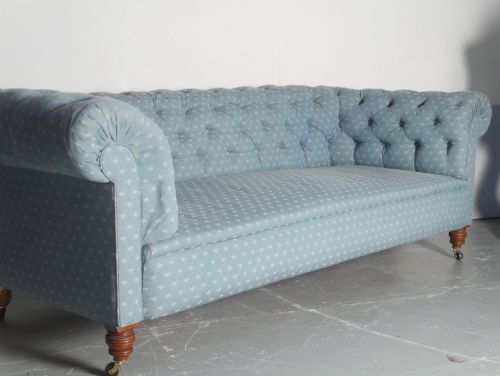
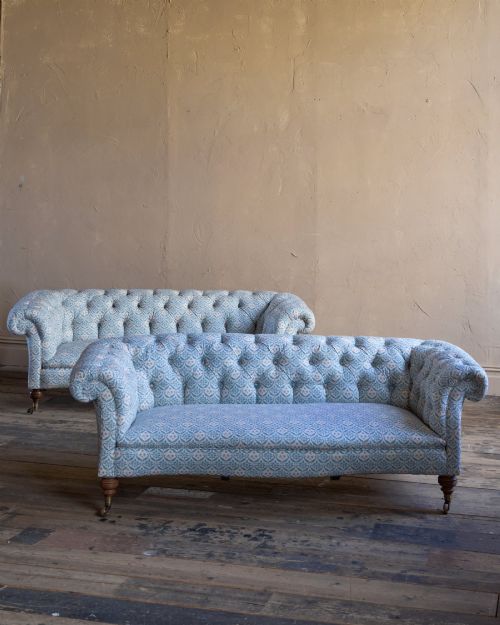
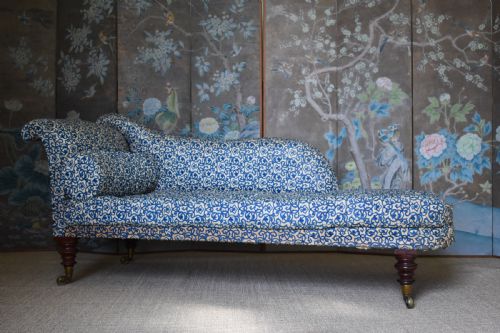
When you search for a patterned blue sofa, you encounter nineteenth-century and Victorian seating designed for formal reception rooms and comfortable parlours. The selection spans substantial chesterfields, elegant settees, and occasional day beds dressed in rich upholstery.
Most examples originate from the nineteenth century, reflecting periods such as the Victorian era and turn-of-the-century English design. Forms range from button-back canapes and serpentine frames to timber-supported couches with turned legs and brass castors.
Makers and workshops of the period utilised durable frames of walnut, mahogany, and timber to support generous padding and decorative textiles. These pieces combine traditional craftsmanship with distinctive patterned fabrics to anchor a traditional interior.
How they were made
Makers constructed robust foundational frames from solid hardwoods like walnut and mahogany, often shaping timber into serpentine curves and turned legs. Brass castors were frequently fitted to heavier settees and day beds to assist movement across heavy carpets.
Upholstery combined durable interior stuffing with patterned exterior textiles, including cotton and specialised upholstery fabric. Button-backed upholstery techniques and detailed joinery required skilled hands to achieve both structural support and enduring comfort.
Patterned Blue Sofa Retail Price Guide 2026
Typical asking prices for patterned blue sofa among the pieces listed under this phrase on Sellingantiques today, from the lower quarter to the upper quarter. They describe what is for sale here now, not the wider market.
Listings feature nineteenth-century pieces incorporating walnut, mahogany, brass, and upholstery fabric.
What varies in quality
Quality rests upon the structural integrity of the underlying timber frame and the precision of the joinery. Pieces retaining their original turned legs, solid framing, and intact castors represent superior craftsmanship.
The sophistication of the upholstery work and the character of the woodwork differentiate standard seating from exceptional examples. Finer pieces demonstrate careful attention to detail in both the exposed timber elements and the finished textile covering.
Howard and Sons·Hampton and Sons
The Patterned Blue Sofa Glossary
- Chesterfield
- A large upholstered sofa traditionally featuring deep buttoning and arms of the same height as the back. This form provides formal seating with generous proportions.
- Canape
- An ornamental sofa or settee from the eighteenth or nineteenth century designed with an exposed wooden frame. It offers lighter proportions than a standard stuffed sofa.
- Chaise Longue
- An upholstered long chair designed for reclining, featuring a backrest at one end. These pieces served as relaxed seating in nineteenth-century salons.
- Castor
- A small wheel fitted to the base of furniture legs to ease movement across floors. They are frequently cast in brass on nineteenth-century seating.
- Tub Settee
- A compact sofa featuring a rounded, enclosed backrest that curves directly into the arms. This style offers an enveloping and supportive seat.
Patterned Blue Sofa: Frequently Asked Questions
What is a Victorian settee?
A Victorian settee is a nineteenth-century upholstered seating option designed for multiple occupants in a formal parlour or sitting room. These pieces typically feature carved wooden frames and patterned fabric coverings.
Craftsmen built them to combine decorative presence with practical durability, utilising timber supports and traditional upholstery methods.
How do I identify a nineteenth-century couch?
Nineteenth-century couches are identified by their solid timber frames, often made of walnut or mahogany, combined with period upholstery techniques. Look for turned wooden legs and traditional joinery.
Many examples also incorporate original brass castors beneath the legs to aid movement across nineteenth-century floor coverings.
Where were these sofas used?
These seating pieces primarily furnished the principal reception rooms, drawing rooms, and studies of nineteenth-century British homes. They provided both comfortable daily seating and a decorative focal point for entertaining guests.
Smaller pieces like day beds and chaise longues were also placed in private dressing rooms or parlours for resting.
What woods were used in these frames?
Cabinet makers utilised sturdy timbers such as mahogany and walnut to construct the structural frames of these sofas and settees. These woods offered the necessary strength to support heavy padding and daily use.
Exposed wooden sections were often polished to highlight the natural grain of the timber.