
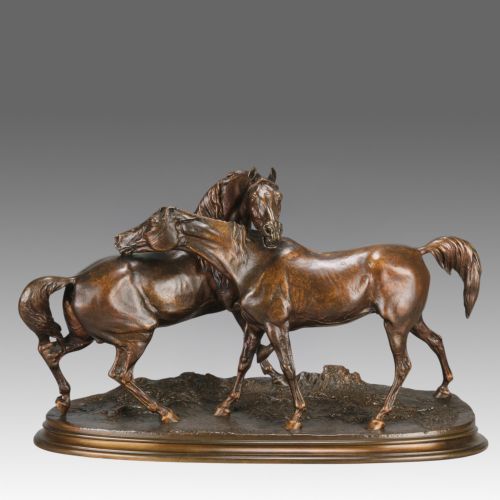
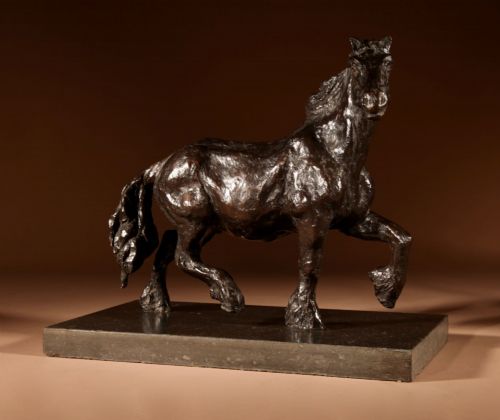
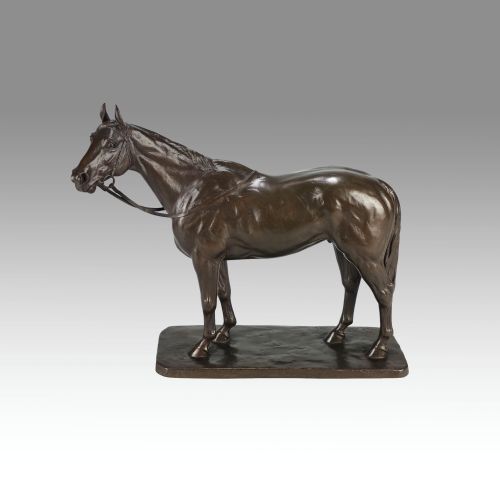
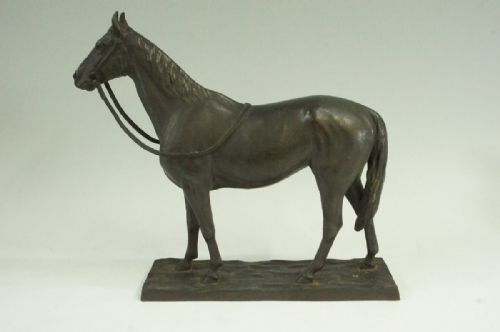
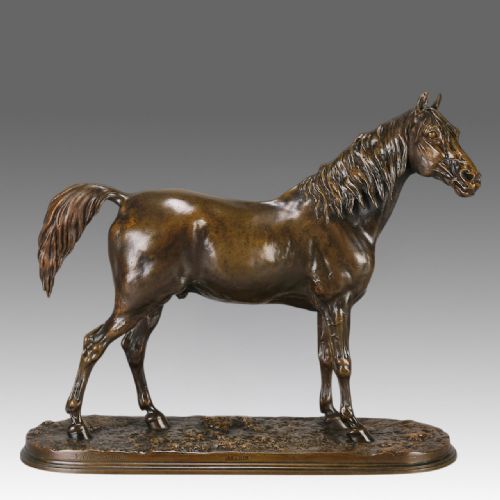


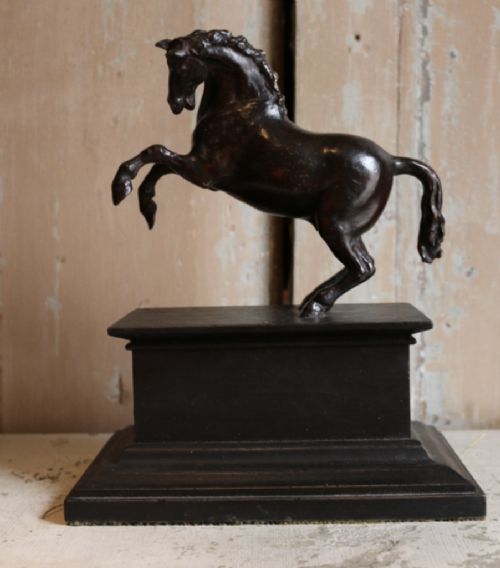

Patinated Horse Sculpture
A patinated horse sculpture captures equine strength through metalwork, offering collectors dynamic forms from the nineteenth and twentieth centuries.
Patinated Horse Sculpture
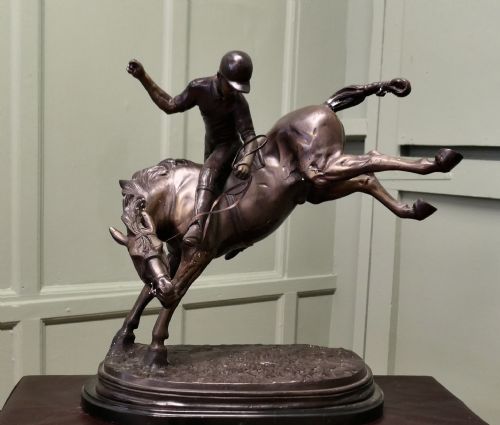
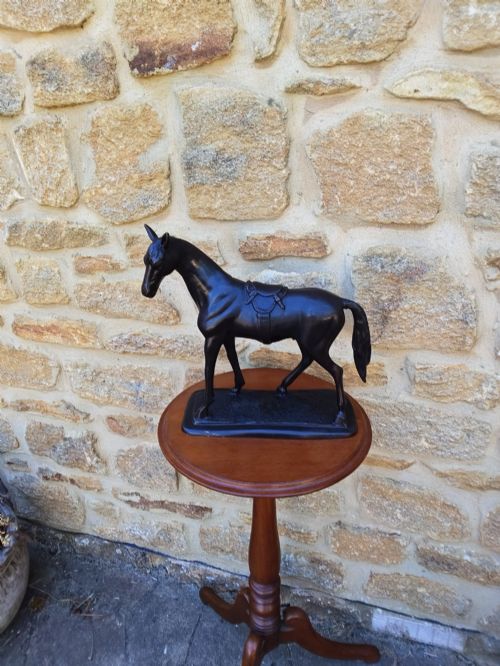
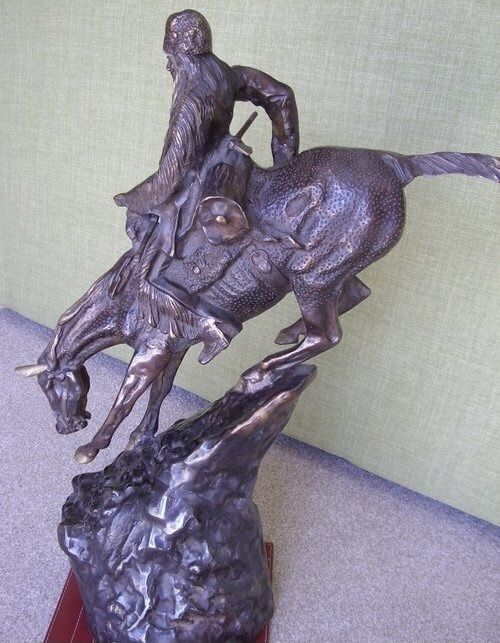
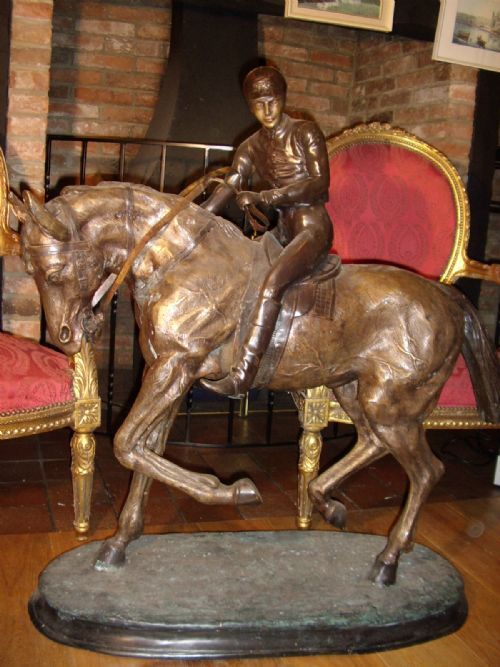
Buyers seeking a patinated horse sculpture will encounter various depictions of equines, ranging from standing figures and racing thoroughbreds to mythological pairs and mounted riders. The selections span French Animalier studies, Victorian castings, and Art Deco interpretations produced across the nineteenth and twentieth centuries.
Most examples originate from European foundries, though Japanese Meiji and Showa period works also appear alongside English brass doorstops. These pieces take the form of tabletop bronzes, substantial statues mounted on marble bases, and sculptural fragments.
The assortment reflects diverse sculpting traditions, uniting classical European foundry practices with Eastern metalworking techniques. Pieces frequently depict specific actions, such as rearing, bucking, drinking, or pulling carts.
Materials and casting methods
Foundries primarily utilised bronze, often finished with chemical treatments to create rich patinations ranging from deep brown to verdigris. Supporting elements frequently incorporate green marble, stone, or wood bases.
Many items rely on traditional lost-wax casting methods to capture fine anatomical details, muscles, and harness fittings. Some utilitarian pieces utilise cast brass or painted bronze constructions.
Makers applied patination liquids to heated metal surfaces to alter the exterior tone and simulate age. Chasing tools refined the manes, tails, and surface textures after the initial metal cooling process.
Even a stray bronze horse nostril survives in the record, proving that dedicated collectors save every fragment.
Assessing quality in equine bronzes
The depth and consistency of the patination contribute significantly to a piece's visual impact, with professional chemical finishes ageing harmoniously over time. Furthermore, the quality of the mounting - such as fitted marble bases or secure attachment pins - indicates the original tier of production.
Pierre Jules Meme·Renee Sintenis·Kunio Ito·Luigi Secchi·Charles Crozatier·Pierre Lenordez·Sakai Kozan·Xavier Raphanel·John Willis Good·E. Drouot
The Patinated Horse Sculpture Glossary
- Animalier
- A nineteenth-century artistic movement focusing on the realistic portrayal of animals. Sculptors in this tradition studied live specimens in menageries to achieve precise anatomical accuracy.
- Patination
- The chemical or natural alteration of a metal surface over time, resulting in coloured oxide layers. Artisans apply specific acids and heat to achieve desired decorative tones.
- Lost-wax casting
- A metalworking process where a molten metal is poured into a mould that has been created by means of a wax model. The wax is melted and drained away prior to pouring.
- Marly Horses
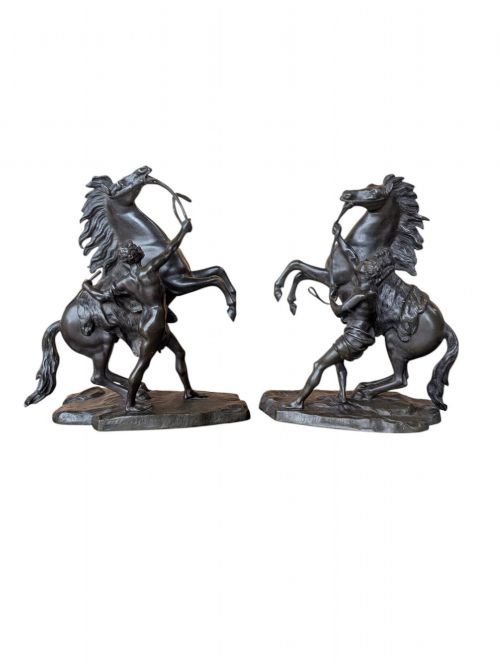
- Large sculptural groups depicting wild horses restrained by grooms, originally commissioned for Louis XV. These iconic compositions were frequently replicated by nineteenth-century bronze founders.
- Grand Tour
- A cultural journey undertaken by wealthy young Europeans to view classical antiquities. Portable bronzes were often purchased as souvenirs during these travels.
Patinated Horse Sculpture: Frequently Asked Questions
What is an animalier bronze horse?
An animalier bronze horse is a nineteenth-century sculpture focused on the realistic depiction of equine anatomy and behaviour. These works concentrate on natural movement rather than idealised forms.
Artists observed horses in motion, resulting in energetic representations of racing, rearing, or resting animals. Foundries then cast these models in bronze using traditional methods.
How do I identify a Marly horse sculpture?
Marly horse sculptures depict rearing animals restrained by handlers, derived from famous French monumental works. They usually appear in pairs showing muscular horses struggling against ropes.
These symmetrical pairs served as decorative ornaments for nineteenth-century interiors. They are distinguished by the dynamic tension between man and beast.
What is patination on bronze?
Patination is the surface treatment applied to bronze to create varied tones and protect the metal. It results from chemical applications or natural ageing processes.
Foundries used acids and heat to produce dark brown, black, or greenish finishes. This coloration highlights the sculptural details and adds depth to the metal surface.
Where were antique bronze horses made?
Antique bronze horses were primarily produced in European foundries, particularly in France during the nineteenth century. Major artistic centres in Paris created numerous animalier bronzes for international markets.
Other notable production centres included Japanese workshops during the Meiji and Showa periods, as well as English foundries producing utilitarian items and sporting groups.