
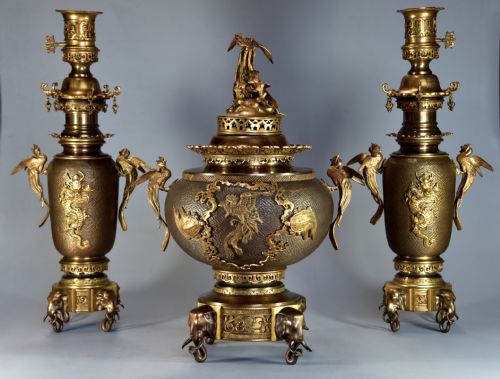


Patinated Bronze Garniture Set
A patinated bronze garniture set brings heavy nineteenth century presence to a mantel, pairing dark metal with gilt highlights and stone.
Patinated Bronze Garniture Set
A patinated bronze garniture set comprises a central mantel clock flanked by matching candlesticks, vases, or incense burners designed to coordinate visually as an ensemble. The pieces on this page stem primarily from the nineteenth century, including the Victorian era and the Regency period.
Most examples originate from French workshops, embracing styles such as French Empire, Rococo Revival, Japonisme, and Neoclassical design. Forms range from large clock sets featuring mythological or literary themes to symmetrical pairs of candlesticks and bronze dragon vases.
Buyers seek these matching assemblages to anchor a grand interior with period authenticity and unified metallic craft. The central timepiece and its matching side pieces share a distinct decorative vocabulary spanning classical motifs and exotic influences.
How they were made
Maker foundries employed traditional metal casting techniques to shape the bronze components, applying chemical patination to darken the surfaces while preserving intricate relief details. Gilt bronze, ormolu, and enamel accents were then integrated to create strong visual contrast against the dark patinated metal.
Many sets incorporate structural elements of white or black marble and slate, which served as heavy, stable bases for the metallic figures and clock housings. Skilled artisans combined these dense stone plinths with chased bronze mounts and glass components to complete each coordinated group.
Materials span patinated bronze, gilt bronze, ormolu, marble, black slate, and enamel.
What varies in quality
The sophistication of the casting and the crispness of the chased surface detail separate ordinary assemblages from exceptional works. Foundry signatures, such as those by known Paris makers, indicate superior workshop standards and precision in the mechanical clock movements.
The harmony of the materials also dictates the standing of a set, particularly where patinated bronze meets fine marble, enamel dials, and fire gilt ormolu. Weight, proportion, and the preservation of the original chemical patination determine the overall integrity of the ensemble.
Raingo Fres Paris·Deniere Paris
The Patinated Bronze Garniture Set Glossary
- Patinated bronze
- Bronze that has been treated with chemical solutions to alter its surface colour to dark brown, green, or near black. This finish protects the metal and accentuates raised sculptural details.
- Garniture set
- A coordinated decorative arrangement of three or more matching objects designed to be displayed together on a mantelpiece or sideboard. It typically consists of a central clock flanked by candlesticks, vases, or urns.
- Ormolu
- Finely chopped gold-mercury amalgam applied to a bronze base, heated to drive off the mercury, and left with a rich golden finish. Often used alongside patinated bronze to create contrasting metallic tones.
- Japonisme
- A nineteenth century Western artistic movement heavily influenced by Japanese art and design. Objects in this style feature asymmetric compositions and motifs drawn from nature.
- Clock garniture
- A specific type of garniture set where the central object is a working mantel clock accompanied by matching side ornaments. The ensemble shares a uniform design language and period aesthetic.
Patinated Bronze Garniture Set: Frequently Asked Questions
What is a patinated bronze garniture set?
A patinated bronze garniture set is a matching arrangement of nineteenth century decorative objects designed for a mantelpiece, usually featuring a central clock and side pieces like candlesticks or vases.
These ensembles combine dark patinated bronze with materials like marble, slate, and gilt ormolu to create a unified sculptural display.
How do I identify the style?
Styles are identified through ornamental motifs, ranging from classical columns and Neoclassical figures to ornate Rococo curves and Japanese inspired dragon forms.
The overall silhouette and the integration of specific periods like the French Empire or Victorian eras define the visual character of each set.
Where were they made?
The majority of these coordinated metal assemblages originated in French workshops and Parisian foundries during the nineteenth century.
Renowned makers based in Paris produced many of the high quality clock sets and matching ornaments seen in period interiors.
What materials are used?
Sets primarily feature cast bronze with a dark chemical patina, frequently complemented by gilt bronze or ormolu highlights.
Many examples also incorporate structural components of white or black marble, glass, enamel dials, and slate bases.