


19th Century Bronze Censer
A 19th century bronze censer brings rich patination, ritual gravity and sculptural weight to a room.
19th Century Bronze Censer
A 19th century bronze censer is a solid metal vessel originally designed for burning incense in domestic or ceremonial settings. The pieces gathered under this phrase range from scholarly scholar's desk items to monumental lidded vessels with dragon handles.
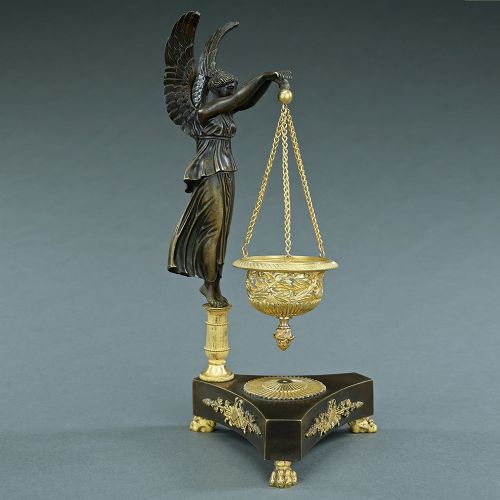
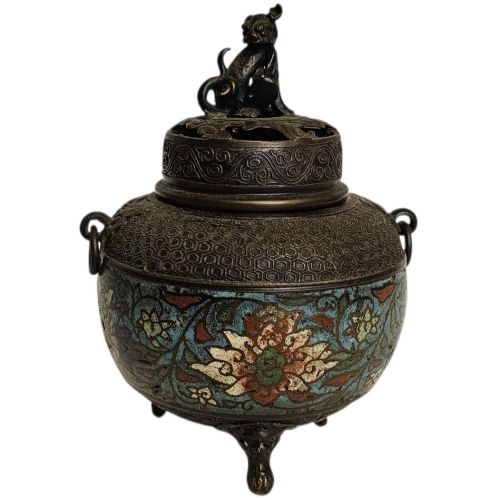
You are most likely to meet Chinese examples produced during the Qing Dynasty, frequently cast with tripods, Foo Dogs, qilin lions or mask handles. European variations from the Regency, Empire and Japonisme periods also appear alongside these Asian works.
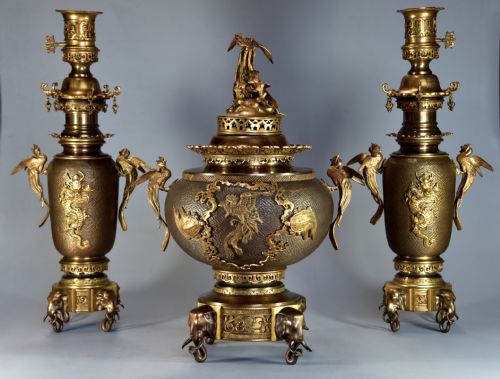
Forms extend beyond traditional tripod bowls to include sectional jardinieres, bamboo-moulded cylinders, and garniture sets. The heavy cast weight and resonant bell-metal alloy define the group as much as the vessel shape itself.
Materials and casting methods
Makers utilised bronze, brass and copper alloys, frequently pairing the heavy metalwork with gold gilding or intricate cloisonne enamel decoration. Some pieces combine patinated bronze with green marble bases or stands.
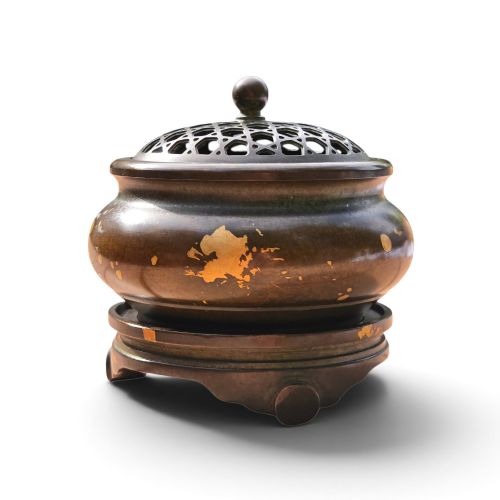
Molten metal was poured into complex moulds to achieve thick walls and crisp relief details such as dragon motifs, bamboo segments or animal figures. Secondary surface finishes include selective gold-splashing and controlled patination to deepen the metallic tone.
The listings combine 19th Century, 18th Century, 1880, Georgian and Regency periods across bronze, brass, cloisonne enamel and green marble materials.
Judging the work
Quality rests in the crispness of the cast relief and the density of the metal relative to the vessel size. Superior examples show purposeful finishing around handles and feet rather than hasty cleanup from the mould.
The integrity of the surface patina dictates the visual success of the piece. Subtle gold-splashing, even wear and undisturbed patination elevate a utilitarian vessel into a work of cabinet art.
Lefebvre of Belgium
The 19th Century Bronze Censer Glossary
- Cloisonne enamel
- Metal wire soldered to a bronze body to create cells filled with vitreous paste before firing. This technique produces intricate colourful surface patterns.
- Patinated bronze
- Metal chemically treated or aged to achieve a dark or nuanced surface colour. It protects the base alloy while adding visual depth.
- Tripod
- A vessel supported by three distinct feet. This configuration provides stable elevation for traditional incense burning.
- Garniture set
- A matched group of ornamental vessels designed for symmetrical display on a mantelpiece or sideboard. They often include a central censer flanked by matching vases or beakers.
- Gold-splashed
- A decorative surface treatment where patches of gold are applied directly onto the bronze ground during or after casting. It creates a speckled metallic contrast.
19th Century Bronze Censer: Frequently Asked Questions
What were 19th century bronze censers used for?
These vessels served primarily as burners for aromatic incense in domestic interiors, temples and scholarly studios. Their substantial weight helped stabilise them on desks or tables during ritual use.
Over time, many functioned purely as decorative objects or centrepieces due to their sculptural quality and fine patination.
How do I care for a bronze censer?
Dust the surface gently with a dry, soft cloth to prevent the accumulation of grit in relief crevices. Avoid using commercial metal polishes, which can strip away the historic patina.
Keep the vessel away from damp environments to protect the metal alloy and any associated enamel or marble elements.
How do I distinguish Chinese from European pieces?
Chinese pieces often feature traditional iconography such as qilin lions, Foo Dogs, and dragon handles linked to Qing Dynasty production. They frequently utilise bronze, cloisonne and gold-splashed surfaces.
European examples from the Regency or Empire periods lean towards classical urn shapes, gilt accents and integrated marble bases.
Why do some censers have heavy casting marks?
Heavy casting was intentional to provide thermal stability during incense burning and to create a resonant bell-metal tone when struck. Master casters controlled the thickness of the walls to ensure structural durability.
These robust walls also allowed deep relief carving of mask handles and animal figures without compromising the integrity of the vessel.