
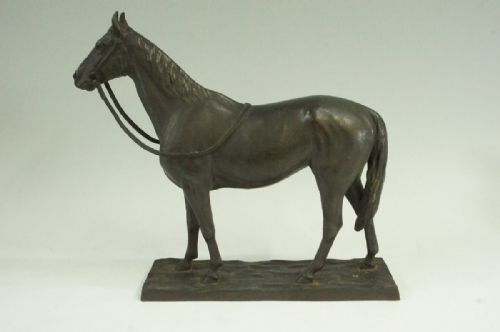
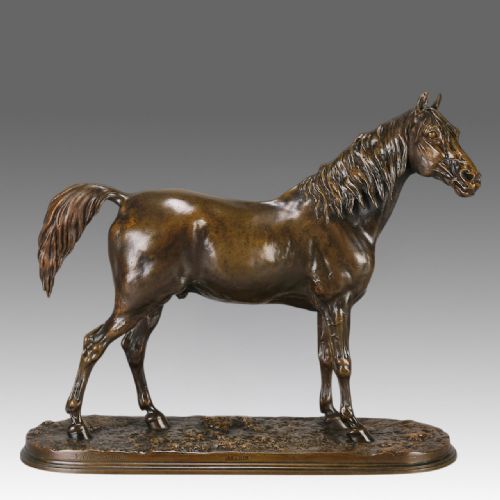


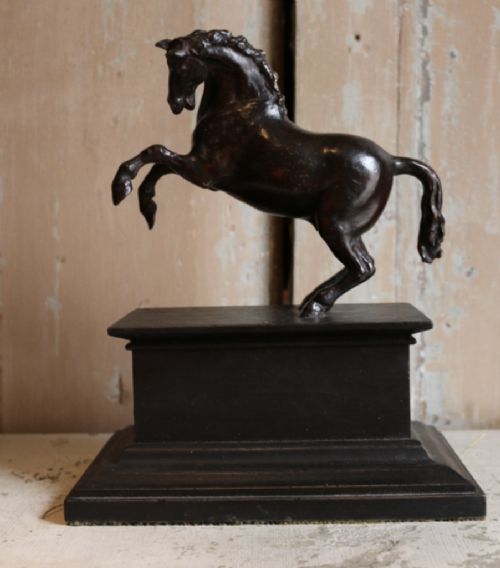

Patinated Bronze Equestrian Sculpture
A patinated bronze equestrian sculpture captures rider and mount in metal, offering collectors dynamic motion and sculptural depth.
Patinated Bronze Equestrian Sculpture
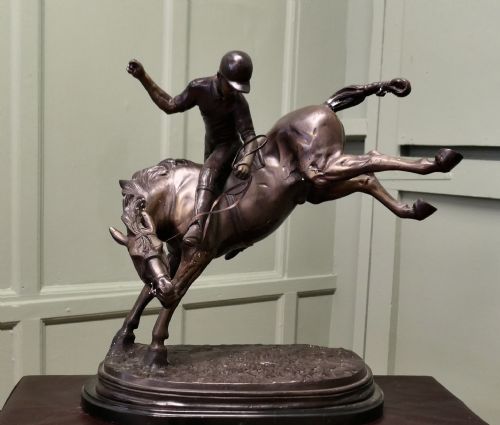
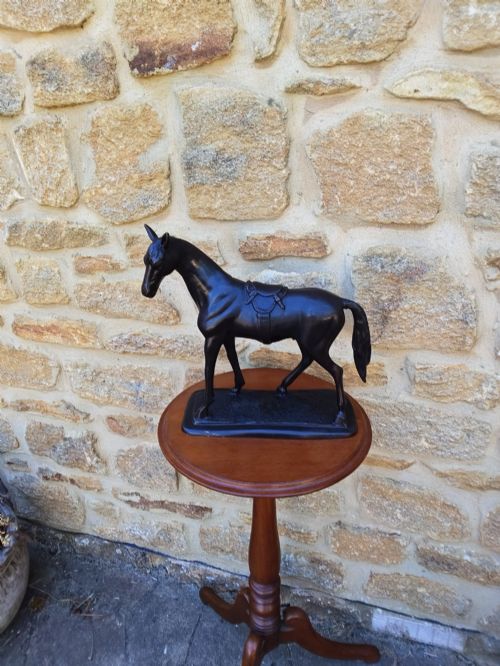
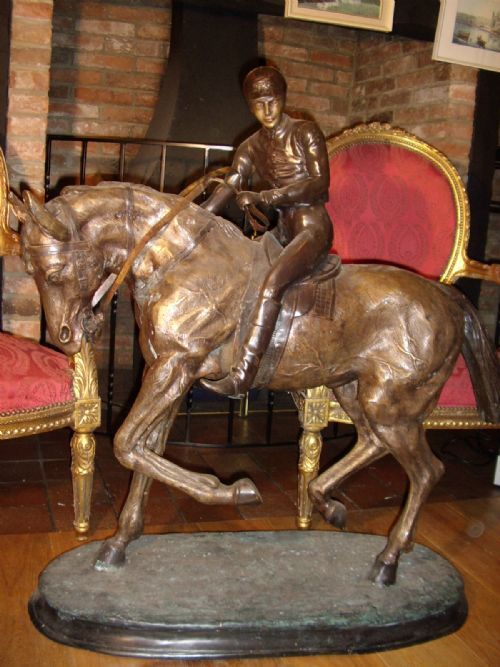
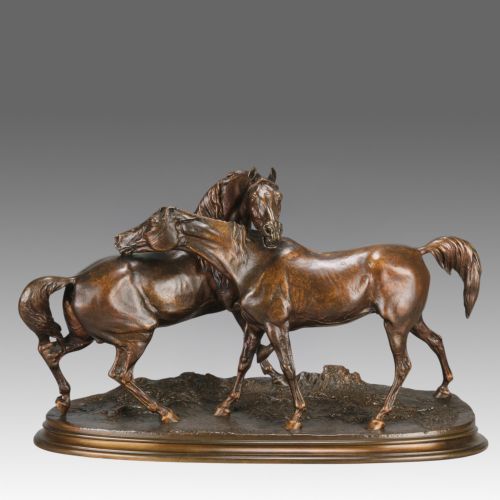
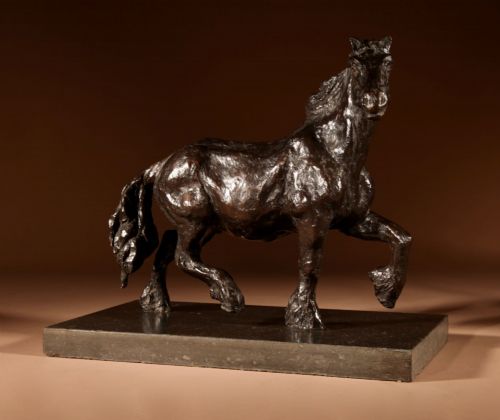
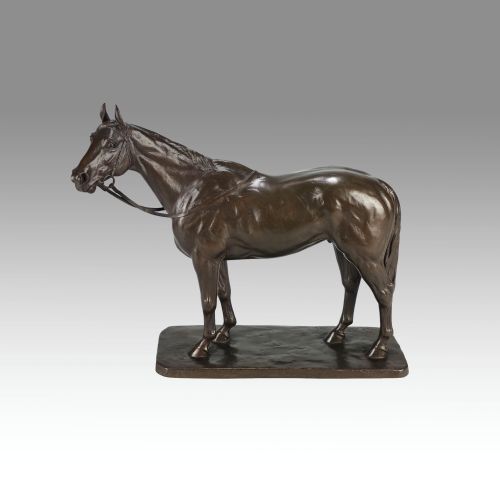
A patinated bronze equestrian sculpture depicts horses and riders, or horses alone, cast in metal and treated with chemical or natural surface finishes. These pieces range from compact tabletop studies to large exhibition figures originating across European, Asian, and American foundries.
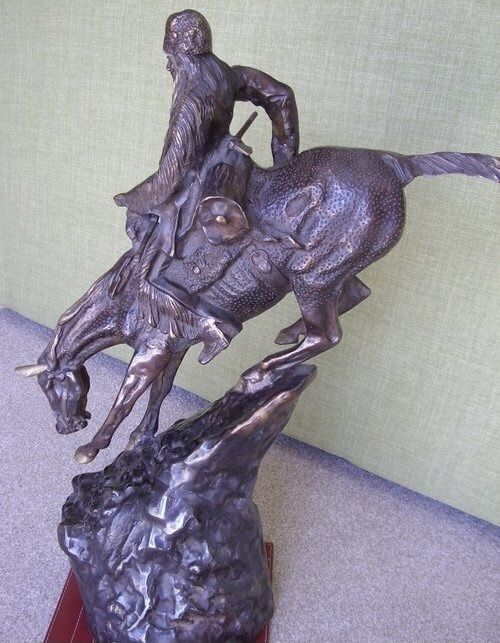
Buyers browsing this page frequently encounter nineteenth-century French Animalier works, Art Deco athletic stallions, and Japanese Meiji period castings. The subjects span racing thoroughbreds, polo players, cowboys on bucking mounts, and classical mythological groupings.
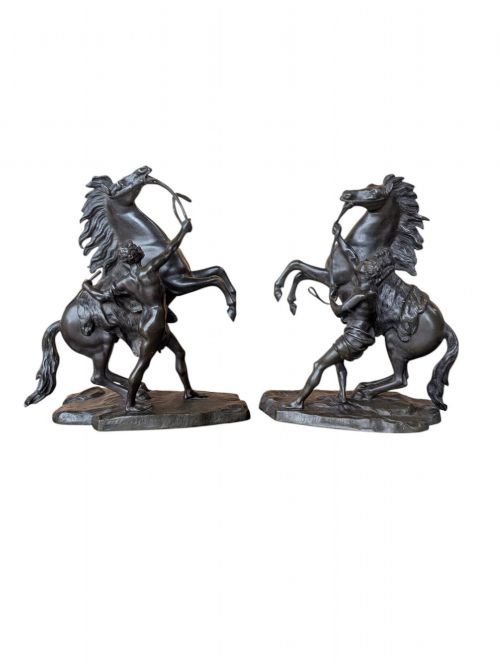
Formats vary from single mounted riders and rearing horses to grand pairs after classical monuments. Bases of marble, wood, or stone frequently support the heavier metal castings.
Materials and casting methods
Foundries utilised traditional lost-wax or sand-casting methods to shape molten bronze into complex animal and human forms. These techniques allowed artisans to capture intricate muscle structures, harness details, and flowing manes.
Surface patination involved applying chemical treatments to the hot or cold metal to achieve brown, green, black, or gilded tones. Bases were frequently fashioned from contrasting materials such as marble, brass, and wood to anchor the heavy sculptures.
Listings include French Animalier, Art Deco, and Western Americana styles, cast in bronze with marble, wood, and brass bases across multiple centuries.
Evaluating sculptural distinction
The depth and subtlety of the patination significantly influence the visual impact of the piece. Master founders achieved nuanced tonal variations across the bronze surface that enhance the sense of movement and volume.
Pierre Jules Mêne·Kunio Itô·Bruno Zach·Charles Crozatier·Alfred Dubucand
The Patinated Bronze Equestrian Sculpture Glossary
- Patination
- The chemical or natural coloration applied to the surface of metal to create tone and protect the bronze. This process alters the raw metal hue into rich browns, greens, or blacks.
- Animalier
- A nineteenth-century artistic movement focused on the realistic portrayal of animals. Sculptors in this tradition studied anatomy closely to render horses and riders in motion.
- Lost-wax casting
- A historic method where a metal replica is cast from an original sculpture melted out of a wax mould. This technique permits intricate detail and undercut forms.
- Marly Horses
- A famous pair of monumental marble sculptures depicting horse tamers, frequently reproduced in bronze miniature. The dynamic rearing poses became popular subjects for nineteenth-century founders.
Patinated Bronze Equestrian Sculpture: Frequently Asked Questions
How do I clean a patinated bronze equestrian sculpture?
Dust the surface gently with a soft, dry brush to prevent dirt accumulation in crevices. Avoid using water, detergents, or metal polishes, which can strip away the historic patination.
Apply a very thin coat of microcrystalline wax occasionally if the metal appears dry, then buff it lightly with a clean cloth. This protects the bronze from atmospheric moisture without altering its finish.
What periods do these bronzes come from?
The pieces span from the seventeenth century through the Victorian era and into the mid-twentieth century. Nineteenth-century works frequently feature French Animalier subjects, while twentieth-century examples often embrace Art Deco styling.
Earlier castings typically rely on traditional foundry marks and heavier bronze gauges. Later twentieth-century pieces introduce modernist interpretations and distinct regional foundry practises.
How were marble bases attached to the sculptures?
Sculptors secured the metal figures to stone or marble plinths using threaded pins, bolts, or pegs extending from the horse's hooves through the base. Nuts fastened underneath the stone held the entire heavy assembly securely in place.
Inspect the underside of the base to understand the mounting construction. Original fixings often provide clues to the age and workshop origin of the sculpture.
Are all bronze horses solid metal?
Most large equestrian sculptures are hollow-cast to reduce weight and metal usage during production. Molten bronze poured into the mould created a strong outer shell rather than a heavy solid block.
Smaller studies and specific anatomical fragments may be solid, but hollow casting remains standard for larger figures. This technique allowed founders to manage the structural balance of rearing animals.