



Patinated Bronze Centrepiece
A patinated bronze centrepiece commands a dining table or console, bringing sculptural weight and classical proportion to a room.
Patinated Bronze Centrepiece
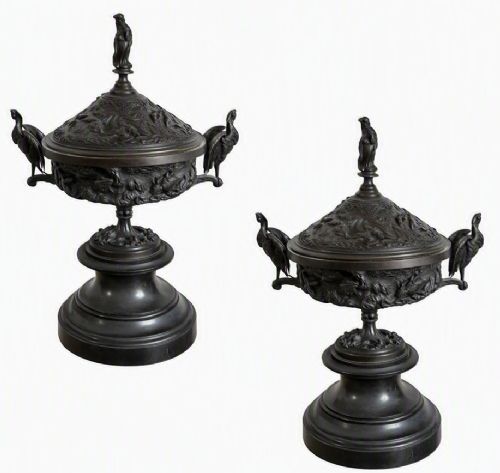
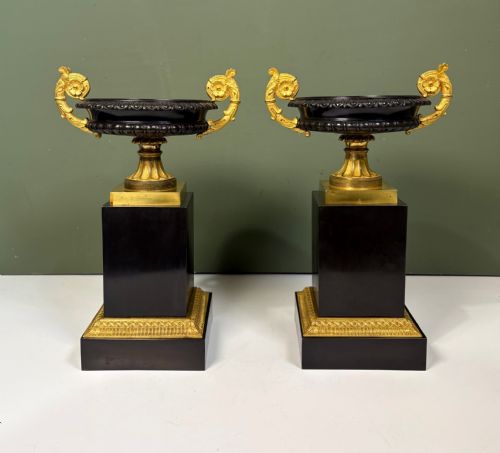
A patinated bronze centrepiece takes many forms across nineteenth-century dining and display furniture, appearing most frequently as decorative bowls, tazzas, urns, and sculptural candelabra. These table centerpieces combine dark metal finishes with contrasting highlights in gilt bronze, ormolu, and marble.
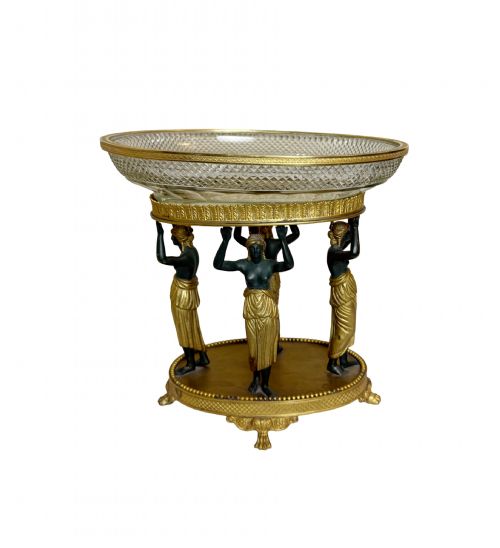
The pieces on this page span French Empire, Régence, Louis XVI, and Regency styles, alongside Grand Tour souvenirs and Chinese or Japanese vessels adapted for Western interiors. Figures such as winged cherubs, putti, and mythological subjects frequently support the main vessel.
Buyers searching for a patinated bronze centrepiece will encounter matched pairs of urns, fruit bowls with circular basins, and multi-branch candelabra designed to anchor a formal room. The materials shift from pure bronze to combinations involving black marble and cut crystal.
What varies in quality
The integration of mixed materials dictates overall harmony, particularly where bronze meets marble, crystal, or gilt mounts. Superior examples maintain secure, flush joints and balanced proportions between the patinated body and its supporting plinth.
Patinated Bronze Centrepiece Retail Price Guide 2026
Typical asking prices for patinated bronze centrepiece among the pieces listed under this phrase on Sellingantiques today, from the lower quarter to the upper quarter. They describe what is for sale here now, not the wider market.
Listings feature nineteenth-century French styles alongside Regency items and Grand Tour bronze reductions.
Jules Moigniez·Henry Dasson
The Patinated Bronze Centrepiece Glossary
- Patinated bronze
- Bronze that has been treated with chemical solutions to produce a dark, aged surface finish. This treatment protects the metal while providing visual depth.
- Ormolu
- Finely ground high-carat gold mercury-gilded onto a bronze base. It creates a bright, durable golden contrast against dark patinated bronze.
- Tazza
- A shallow cup or bowl mounted on a stem and foot, used historically for serving fruit or display. They frequently appear in bronze and marble.
- Grand Tour
- A cultural journey undertaken by nineteenth-century Europeans to view classical antiquities. Souvenirs included bronze vases and reduced-scale architectural models.
Patinated Bronze Centrepiece: Frequently Asked Questions
What is a patinated bronze centrepiece used for?
These pieces served historically as dining table centerpieces for fruit or flowers, or as decorative objects on sideboards and consoles. They anchor large surfaces by introducing height, symmetry, and classical motifs.
Today, they function similarly in domestic interiors, holding seasonal displays or standing alone as sculptural focal points in a reception room or hallway.
How do I identify French Empire style?
French Empire pieces draw heavily on classical Roman, Greek, and Egyptian motifs, featuring strict symmetry, dark patinated bronze, and crisp ormolu mounts. Look for laurel wreaths, sphinxes, winged figures, and military trophies.
This aesthetic emerged during the early nineteenth century and prioritises architectural dignity and formal presence over excessive curves.
Are marble bases original to these bronzes?
Many nineteenth-century bronzes incorporate black or white marble bases, plinths, and columns as integral elements of their design. These stones added weight and stability while creating a sharp textural contrast with the dark metal.
Inspect the seating where the bronze meets the stone to ensure the mounts and fixings correspond with the period of manufacture.
How do I clean patinated bronze?
Dust patinated bronze gently with a soft, dry microfibre cloth to prevent the accumulation of grit in recessed chasing. Avoid commercial metal polishes, water, and chemical cleaners, which strip the original dark surface.
If the piece requires deeper conservation, consult a professional restorer who specialises in historic metalwork and surface finishes.