


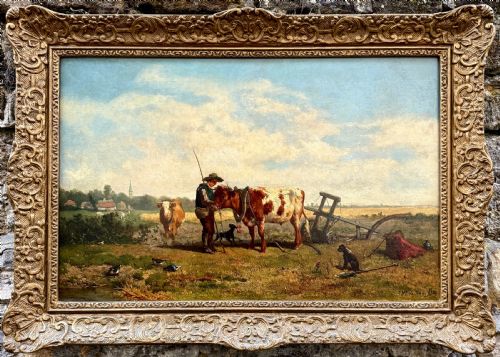


Pastoral Cattle Oil Painting
A pastoral cattle oil painting brings the quiet rhythms of the countryside and the weight of historic herds straight into your room.
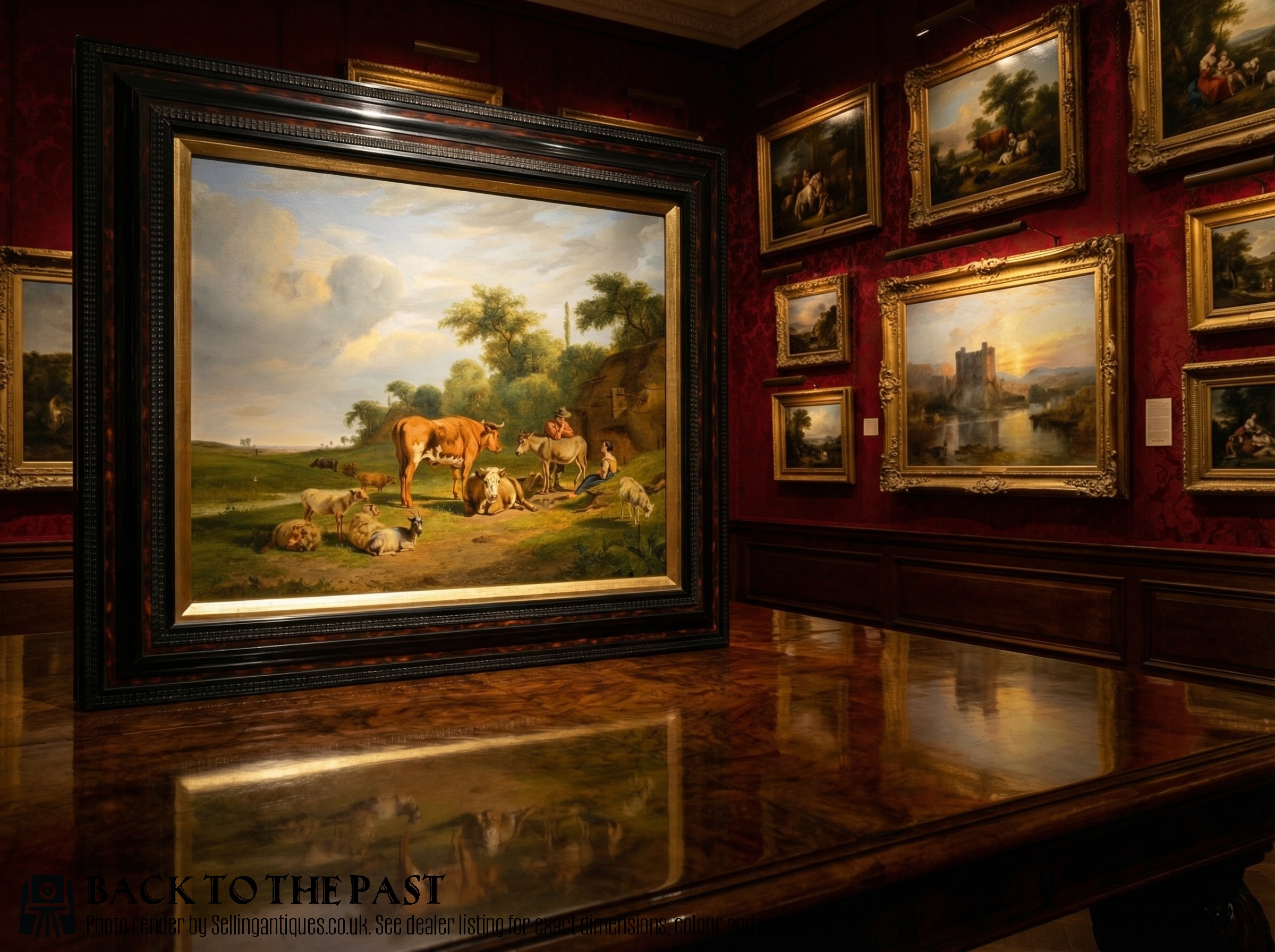
Pastoral Cattle Oil Painting
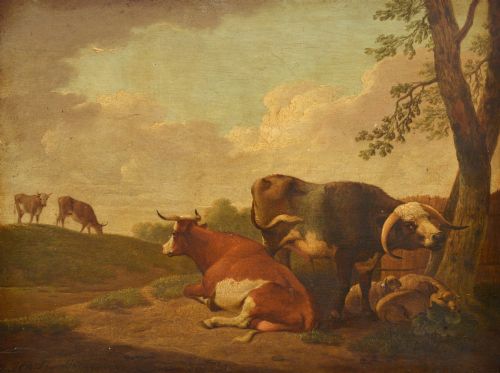
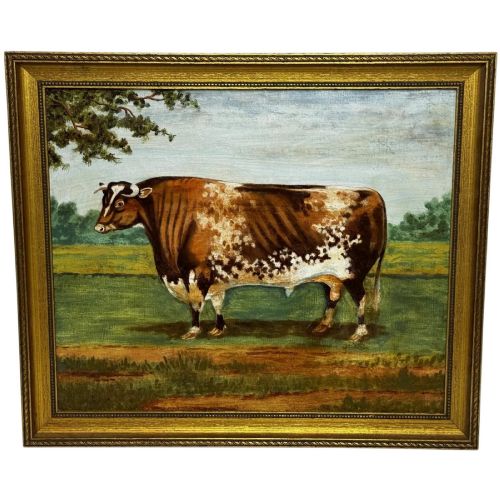
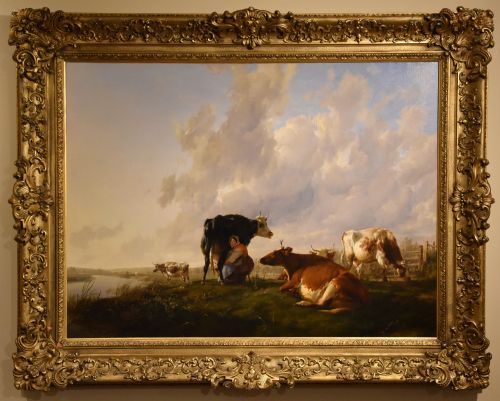
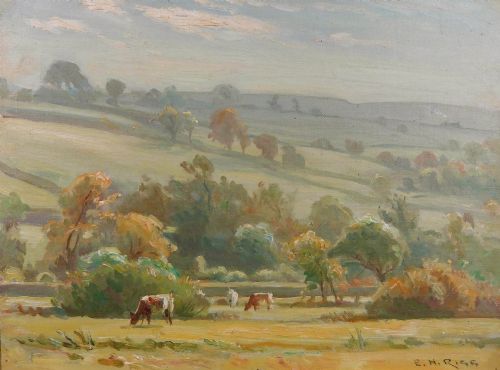
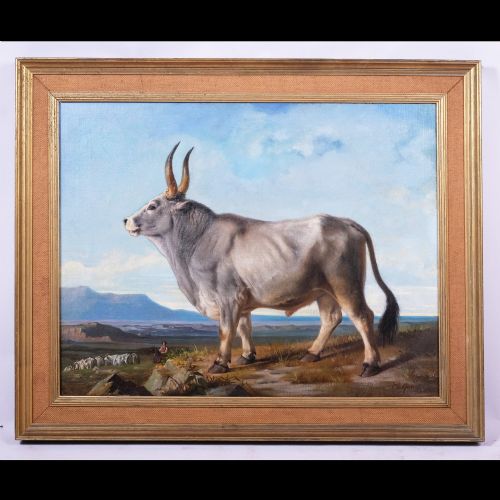
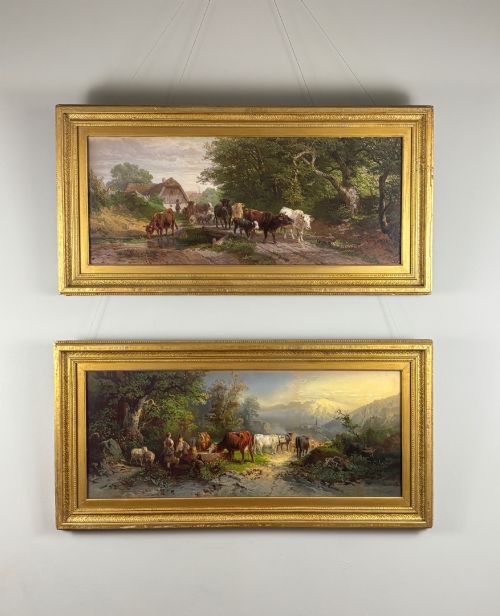
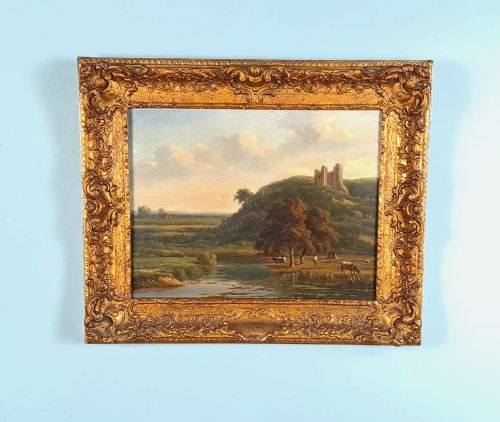
A pastoral cattle oil painting records rural life, agricultural scenes, and riverbanks populated by cows, bulls, and drovers. These works belong chiefly to the nineteenth century, ranging from quiet Victorian British school canvases to broader European realism.
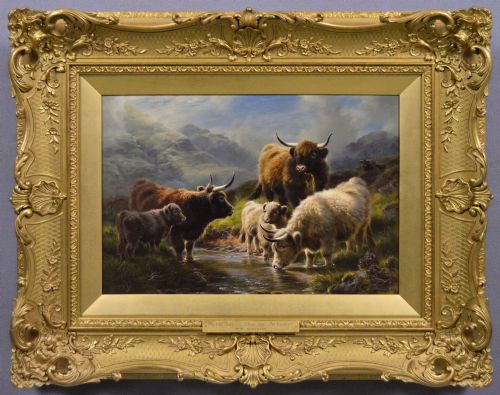
The version most commonly met on this page is an oil on canvas depiction showing shorthorns, highland cattle, or dairy herds in a river valley or woodland setting. Many carry signatures from established regional painters or bear the hallmarks of nineteenth-century academic training.
Materials and Techniques
Pigments ground in oil were laid upon stretched canvas or occasionally wood panels, building up deep tones through layered glazes and opaque highlights. This technique allowed artists to capture the varied textures of animal hides, damp grass, and cloudy skies.
Many surviving examples sit within their original giltwood and gesso frames, which provide structural support and a decorative border that complements the warm palette of the landscape.
Materials recorded across these listings include oil paint, canvas, wood panels, milk glass, and giltwood frames.
Judging Quality and Execution
Quality rests upon the artist's command of anatomy and light, where superior canvases render the bone structure and weight of the cattle with absolute conviction. Weaker works rely on stiff, repetitive forms and muddy foliage that lack depth.
The treatment of the surrounding atmosphere also separates standard decorative pieces from finer works. Stronger paintings balance the cattle against a luminous sky or moving water, integrating the animals into the wider landscape rather than placing them as flat cut-outs.
William H Myers·Hendrik Willem Schweickhardt·Thomas Sidney Cooper·Ernest Higgins Rigg·William Watson Jnr·Johann Friedrich Voltz·T C Hofland·Johannes de Haas·A M Gauci·Samuel Joseph Clark·George Vicat Cole·Sidney Richard Percy·Frederick James Knowles·Robert Thorne Waite·Heinrich Harder·James de Rijk·Eugene Verboeckhoven·Pierre Emmanuel Dielmans·George Cole·Thomas Baker·Thomas Sidney Cooper·Claude Cardon·George Turner·William Traies·John W Morris
The Pastoral Cattle Oil Painting Glossary
- Canvas
- A heavy woven fabric stretched tightly across a wooden frame to serve as a support for oil paint. It provides a slightly flexible surface that responds well to layered brushwork.
- Gesso
- A traditional chalk or plaster mixture applied to wood panels or frames to create a smooth, sealed surface for gilding and painting. It forms a hard white base underneath the outer finishes.
- Giltwood
- Wood that has been coated with a thin layer of gold leaf or metallic powder. This finish appears frequently on nineteenth-century picture frames.
- Pastoral
- A style of art that idealises rural life, shepherds, farm animals, and open countryside. These scenes emphasise a peaceful coexistence between man, beast, and nature.
- Realism
- An artistic movement focused on depicting subjects truthfully and without artificiality, paying close attention to everyday textures and natural light. In these paintings, it shows in the unglamorised appearance of working farms and heavy cattle.
Pastoral Cattle Oil Painting: Frequently Asked Questions
What periods do these paintings come from?
The majority originate in the nineteenth century, spanning Victorian Britain and continental European schools. Earlier eighteenth-century examples and Edwardian works also appear.
Dates often align with the height of pastoral realism and landscape painting traditions across England, Scotland, Germany, and the Netherlands.
How were these paintings displayed originally?
These works hung in nineteenth-century homes, country houses, and parlours, housed within heavy moulded frames of giltwood or gesso. They brought views of open fields and prosperous agricultural estates directly into domestic interiors.
Collectors today maintain this tradition by pairing the canvases with traditional period frames.
How do I identify highland cattle in art?
Highland cattle appear with long, sweeping horns and thick, shaggy coats, usually placed within misty Scottish glens or mountainous river landscapes. Artists such as William Watson Jnr specialised in these distinct regional subjects.
Their rugged appearance contrasts with the smoother hides of shorthorns and dairy cows found in English lowland scenes.
Are these paintings signed by the artists?
Many examples bear artist signatures, monograms, or contemporary inscriptions on the canvas, stretcher bars, or original frames. Archival records and nineteenth-century exhibition histories often confirm attribution.
Some works remain unsigned or attributed to specific regional schools when signatures have worn away over time.