




Parquetry Walnut Cabinet
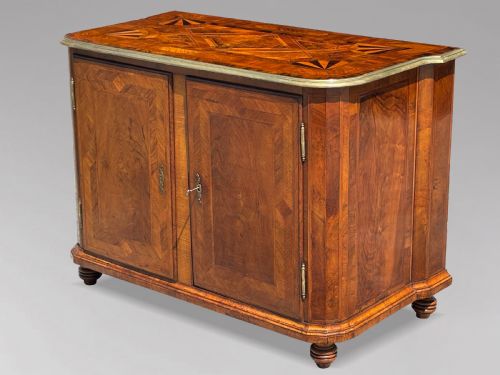
A parquetry walnut cabinet brings geometric timber patterns and rich warmth to an interior, drawing the eye with contrasting grain.
Parquetry Walnut Cabinet
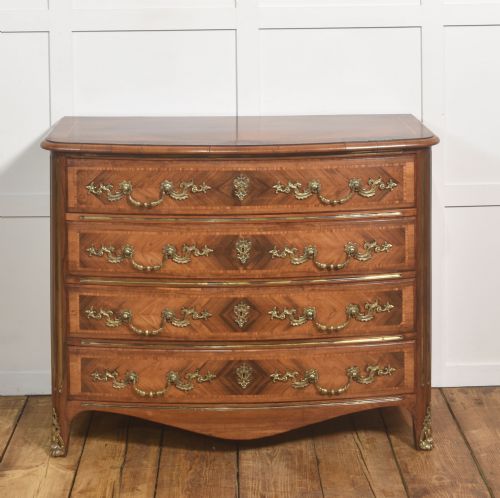
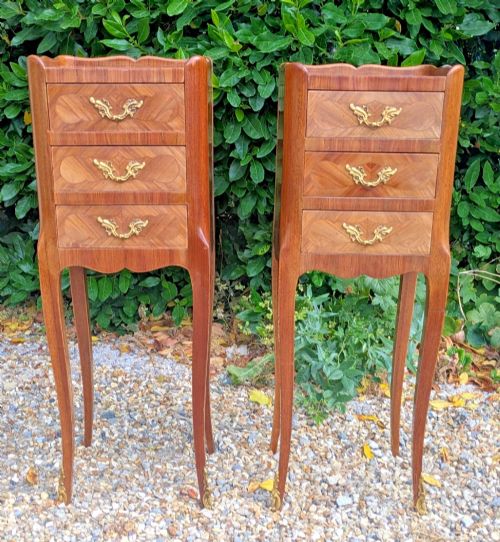
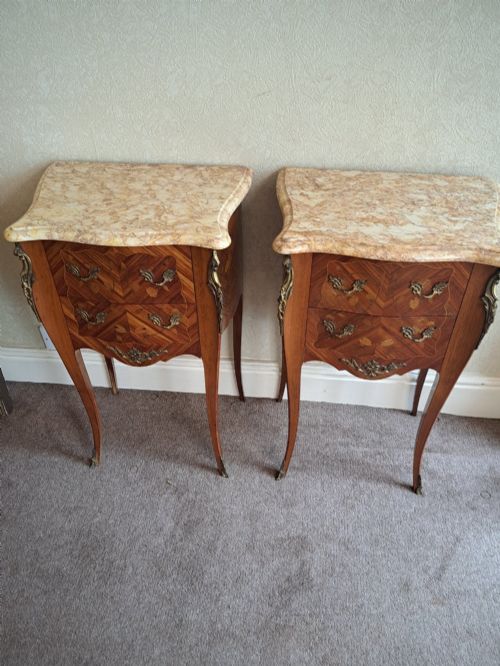
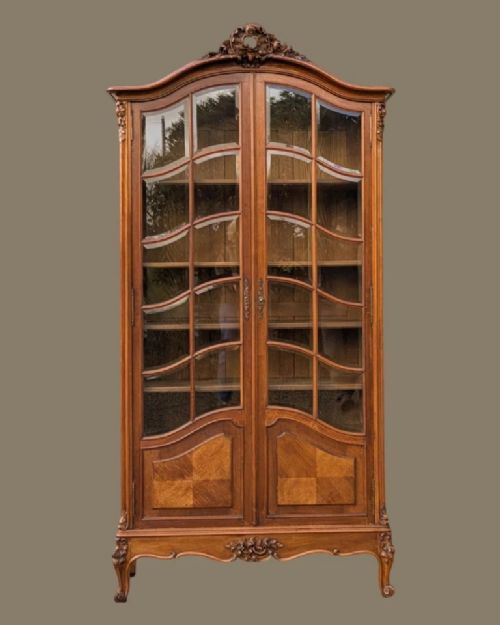
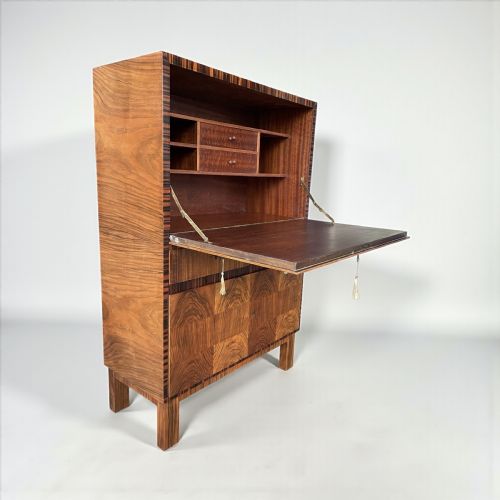
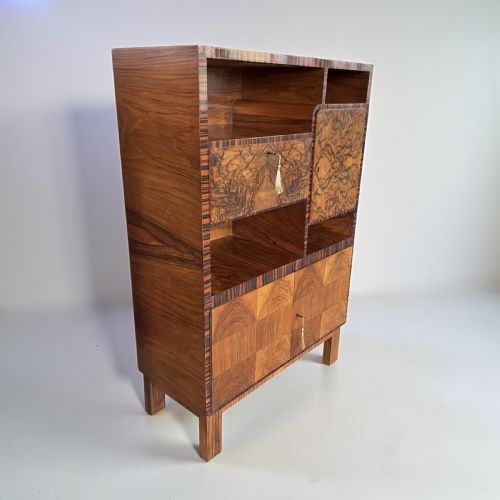
A parquetry walnut cabinet encompasses side cabinets, bedside tables, chests of drawers, and writing desks shaped by centuries of European craftsmanship. The selection spans the eighteenth century through to the art deco period, with nineteenth-century pieces predominating.
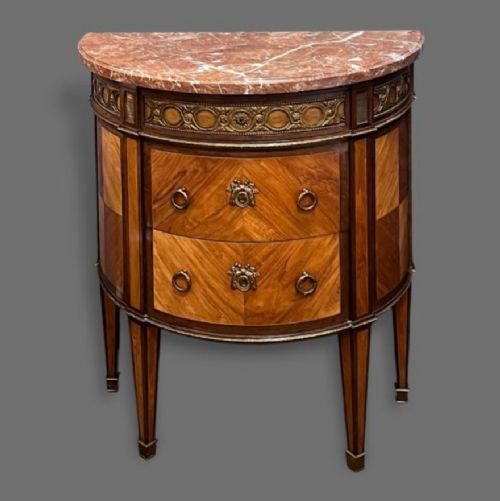
French influence dominates the forms, particularly through Louis XV and Louis XVI revival styles, alongside provincial variations and Italian neoclassical pieces. Buyers encounter serpentine fronts, bombé silhouettes, and compact bedside cabinets designed for practical storage.
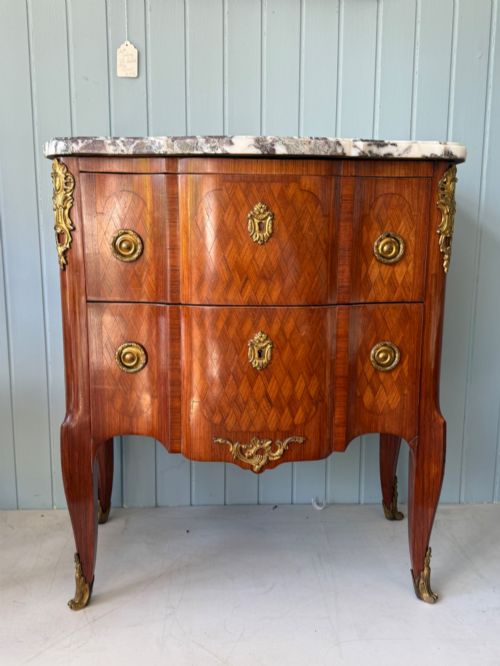
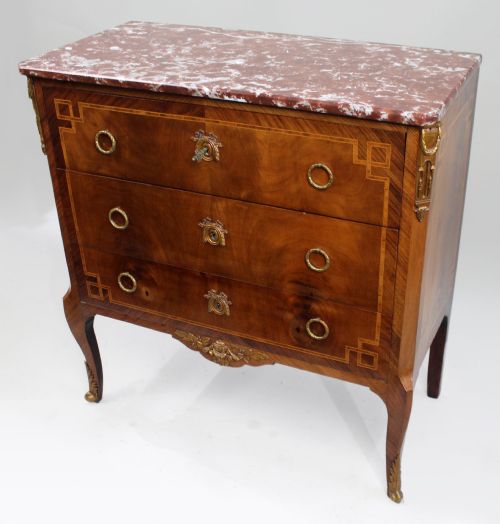
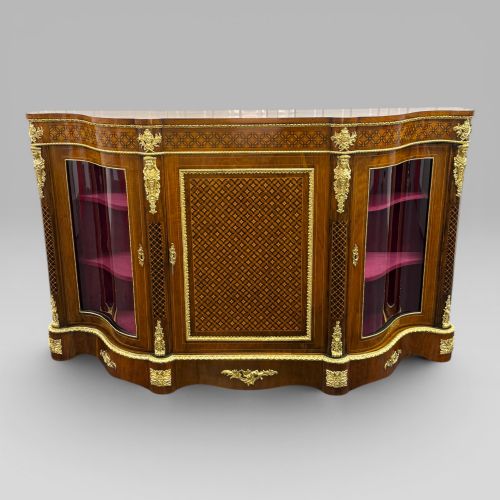
Walnut serves as the primary timber, often enhanced by marquetry details or kingwood borders, while marble tops and gilt bronze mounts appear across various nineteenth-century and early twentieth-century examples.
Materials and technique
Cabinetmakers constructed these pieces using walnut veneers carefully arranged to create geometric parquetry patterns across drawer fronts and doors. This technique required precision in cutting and laying thin slices of timber over solid secondary woods.
Marble slabs, including rouge varieties, were fitted to the tops of commodes and bedside cabinets to provide a durable and decorative surface. Ormolu and gilt bronze mounts were cast and applied to corners, handles, and apron centres to accent the timber designs.
Listings feature walnut combined with marble, ormolu, and brass across periods spanning the seventeenth century to 1930.
Assessing the construction
Quality rests in the precision of the parquetry layout and the crispness of the timber matching across curved or serpentine surfaces. Superior examples demonstrate seamless joins in the veneer and stable carcases that withstand changes in temperature.
The integration of secondary elements dictates the tier of a piece, from finely chased gilt bronze mounts to the selection of unblemished marble tops. Finer items balance structural proportion with harmonious grain contrast in the walnut.
Maison Gagneau
The Parquetry Walnut Cabinet Glossary
- Parquetry
- A geometric mosaic of wood pieces used for decorative veneer on floors, walls, and furniture. It relies on contrasting grains and tones to form patterns like cubes or chevrons.
- Marquetry
- The art and craft of applying pieces of veneer to a structure to form decorative designs. Unlike parquetry, it often depicts pictorial scenes or floral motifs.
- Ormolu
- Gilt bronze applied to furniture mounts, clock cases, and decorative objects. The technique involves coating bronze with a mercury and gold amalgam.
- Bombe
- A swelling, outward-curving contour found on the sides and fronts of chests and cabinets. This baroque form gained popularity in French furniture production.
- Serpentine
- A furniture front or side shaped with a central convex curve flanked by concave curves. It requires advanced woodworking skill to veneer accurately.
Parquetry Walnut Cabinet: Frequently Asked Questions
How do I clean a marble top?
Use a soft cloth dampened with warm water and mild, non-acidic soap to wipe the surface gently. Avoid vinegar or harsh commercial cleaners which can etch the polished stone.
Dry the marble thoroughly with a clean towel to prevent water spots and maintain the natural sheen of the stone.
Where should I place a bedside cabinet?
Position these cabinets beside a bed where their compact proportions and surface space accommodate a bedside lamp and small items. Ensure the height aligns comfortably with the mattress level.
Keep them away from direct heat sources and strong sunlight to protect the walnut veneer and prevent timber movement over time.
What is the difference between parquetry and marquetry?
Parquetry uses geometric blocks of wood arranged in repeating patterns like grids, cubes, or lozenges to cover a surface. It depends entirely on the natural grain variations of the timber.
Marquetry creates pictorial or organic designs, such as flowers or scrolls, by cutting diverse veneers together like a jigsaw puzzle.