



Edwardian Bedside Lockers
Edwardian bedside lockers are compact bedroom cupboards designed for nighttime storage, offering practical surfaces and enclosed compartments with period character.
Edwardian Bedside Lockers
Edwardian bedside lockers encompass enclosed cabinets, pedestal cupboards, and nightstands produced during the early twentieth century and the preceding Victorian era. These pieces provide bedside storage through single doors or drawers, keeping personal items concealed next to the bed. While the search phrase points specifically to the Edwardian period, listings extend across the nineteenth and twentieth centuries to include Victorian and later interpretations.
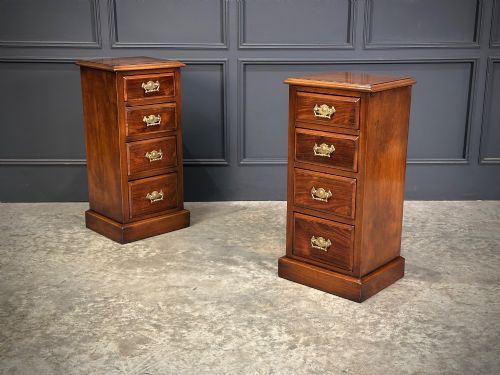
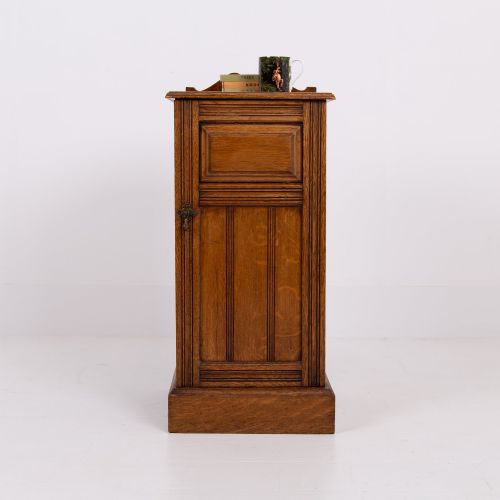
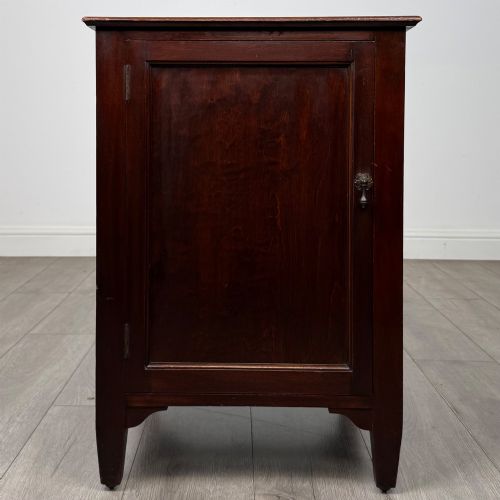
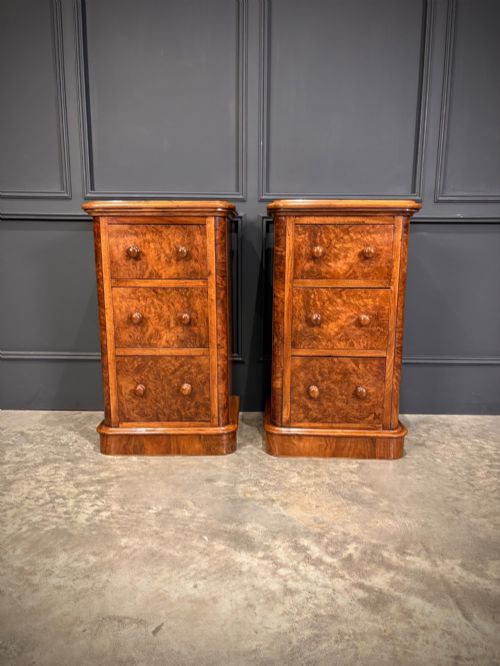
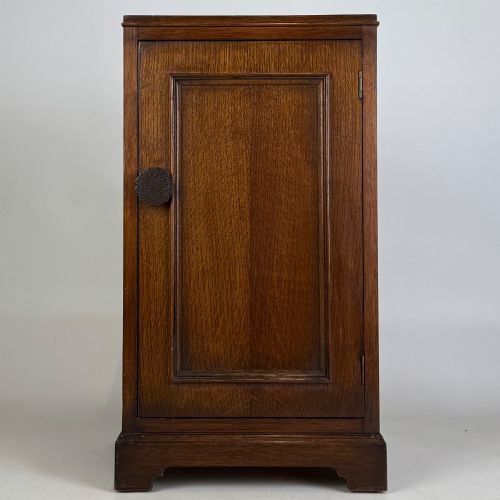
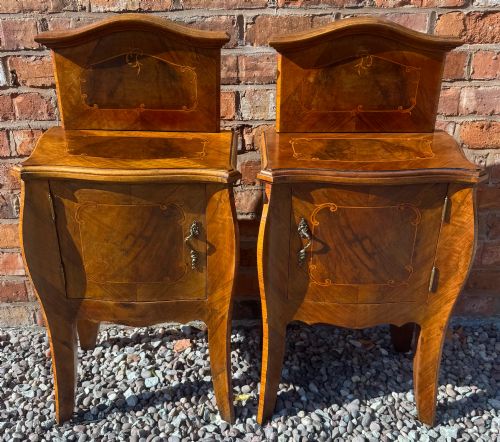
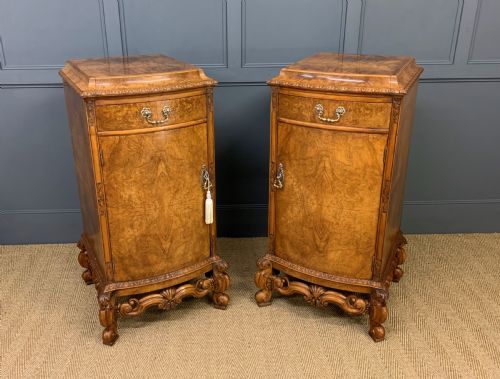
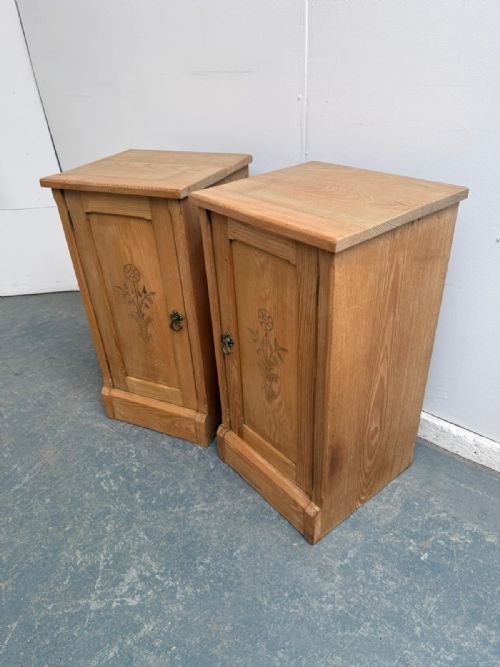
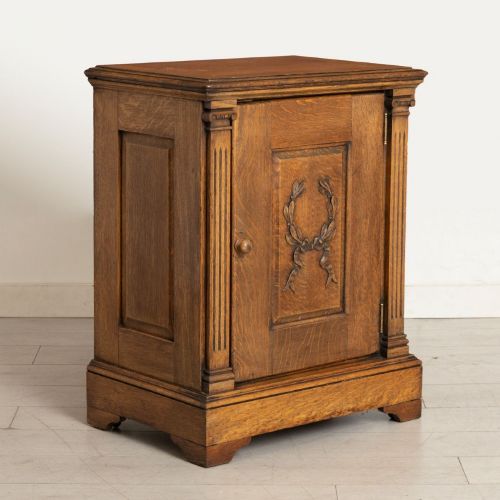
The prevailing forms on this page include mahogany, oak, and satinwood cabinets, often appearing as matched pairs alongside single items. Makers utilised various woods such as burr walnut and ash, shaping them into compact bedside tables and storage cupboards. Alongside standard Edwardian output, examples span Arts and Crafts simplicity, French Provincial influences, and revival styles.
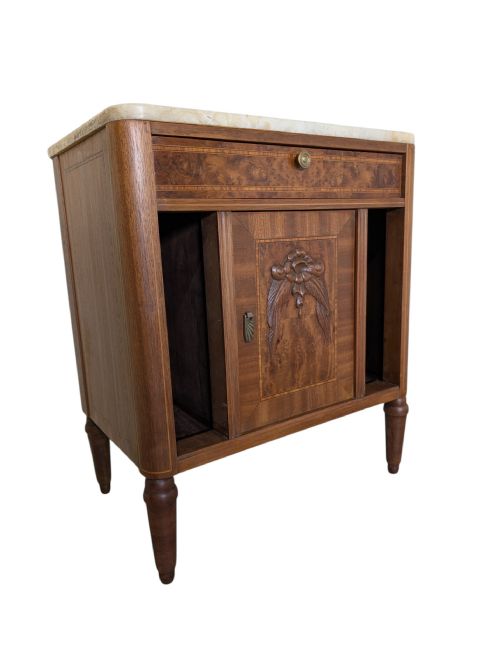
Selecting an Edwardian bedside locker involves choosing between open table surfaces and fully enclosed cupboards with internal shelving. Buyers encounter differing heights and proportions suited to various bed frames and room dimensions. The integration of marble tops or drop flaps further diversifies the functional options available within this category.
Materials and Construction
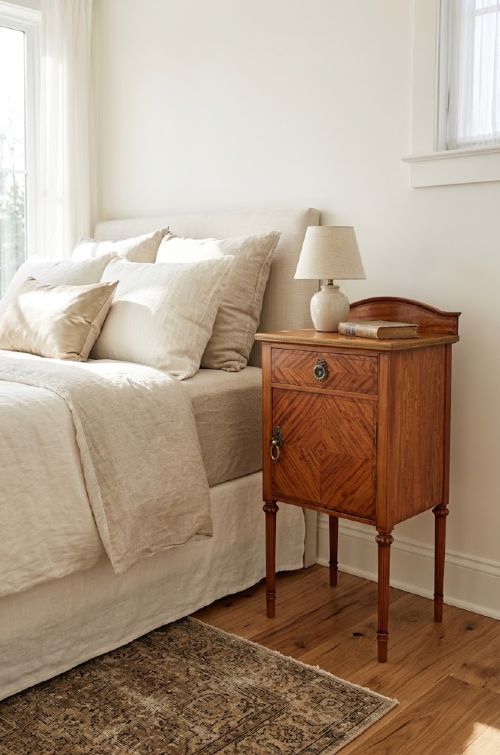
Cabinet makers constructed these lockers using solid timbers and decorative veneers such as mahogany, oak, satinwood, and burr walnut. Workshops applied brass hardware for handles and hinges, while select pieces incorporate marble inset tops for durable bedside surfaces. Craftsmanship often involved precise inlay work, decorative stringing, and panelled door construction.
Construction methods rely on traditional joinery techniques appropriate for compact case furniture. Structural integrity depends on stable timber framing, secure drawer boxes, and durable door mountings that withstand daily domestic use. Wax and polished finishes protect the wood surfaces while highlighting natural grain patterns.
Surviving bedside cabinets incorporate diverse top surfaces including solid timber, decorative marquetry, inset marble, and functional drop flaps.
Assessing Quality
Quality in these lockers rests upon timber selection and the precision of decorative details like stringing, marquetry, and brass fittings. Finer examples display carefully matched veneer grains and solid secondary woods inside drawers and back panels. Heavy marble tops and robust locking mechanisms also separate standard production from superior workshop output.
Proportion and execution define the distinction between mass-produced items and bespoke pieces by notable firms. Crisp mouldings, smooth drawer action, and intact original hardware indicate careful original manufacture. The presence of specialised styles, such as Arts and Crafts hand-crafting or intricate Chinoiserie decoration, elevates individual pieces.
Simpson Halifax·Gillows·Maple and Co
The Edwardian Bedside Lockers Glossary
- Pot cupboard
- A small bedside cabinet originally constructed to house a chamber pot behind a single enclosed door. These pieces now function as general bedside storage lockers.
- Pedestal cupboard
- A tall, narrow freestanding cabinet designed to stand beside a bed or desk. They maximise vertical storage space while occupying minimal floor area.
- Drop flap
- A hinged panel on a cabinet top or side that folds down to extend the usable surface area. This mechanism provides flexible workspace when needed.
- Stringing
- Thin lines of contrasting wood inlay used to decorate flat furniture surfaces. Cabinet makers embedded these delicate strips into mahogany and satinwood panels.
- Burr walnut
- Timber taken from walnut tree growths featuring swirling, knotty grain patterns. Craftsmen prized this figured wood for high-status veneering.
Edwardian Bedside Lockers: Frequently Asked Questions
How do I use a bedside locker in a modern bedroom?
Bedside lockers function effectively as compact nightstands, providing a surface for lighting and books alongside concealed storage for chargers and personal effects. Their enclosed cupboards keep small bedroom items organised and out of view.
Matching pairs frame a bed symmetrically, while single lockers work well in smaller guest rooms or beside narrower bed arrangements.
Are these lockers sold as pairs?
Many listings feature matching pairs of bedside cabinets, while others offer single lockers individually. Pairs provide balanced symmetry on both sides of a larger bed.
Single cabinets offer flexibility for tighter spaces or eclectic interior schemes where matching tables are unnecessary.
How do I tell Edwardian pieces from Victorian ones?
Edwardian furniture generally exhibits lighter timbers, simpler lines, and a brighter aesthetic compared to heavier, darker Victorian designs. Inlaid satinwood and lighter mahogany frequently characterise Edwardian production.
Victorian pieces often rely on denser mahogany, heavier mouldings, and more robust proportions, though stylistic overlap occurs around the transition of the centuries.