

Parquetry Top Desk
A parquetry top desk brings geometric woodcraft and gilt metal mounts together in a writing surface designed for nineteenth-century salons.
Parquetry Top Desk
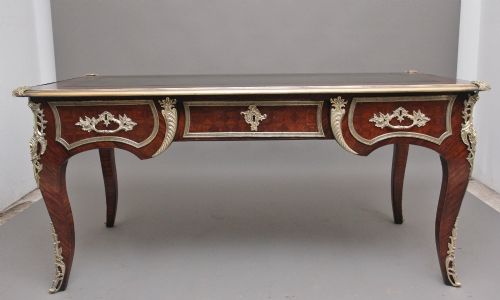
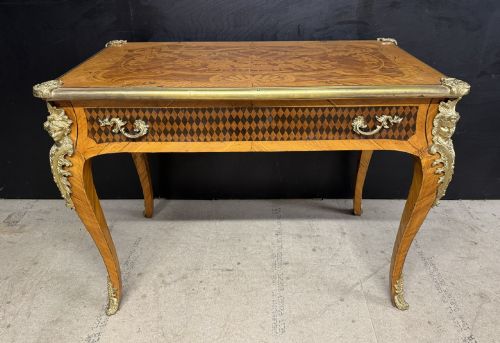
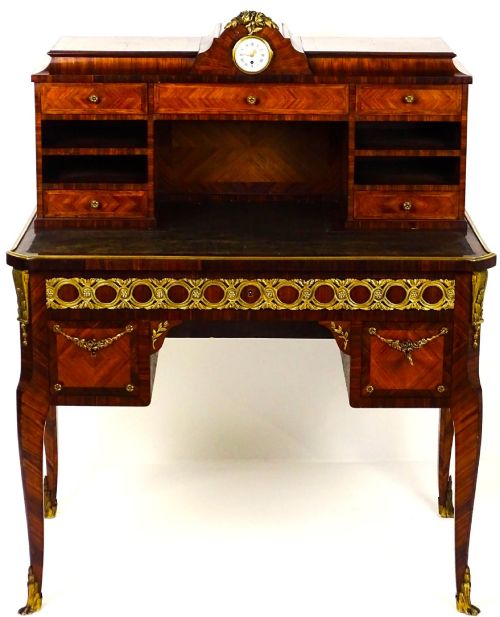
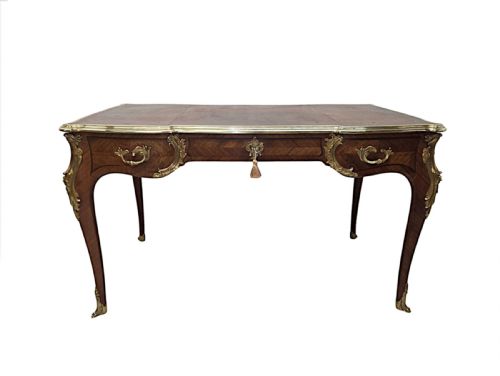
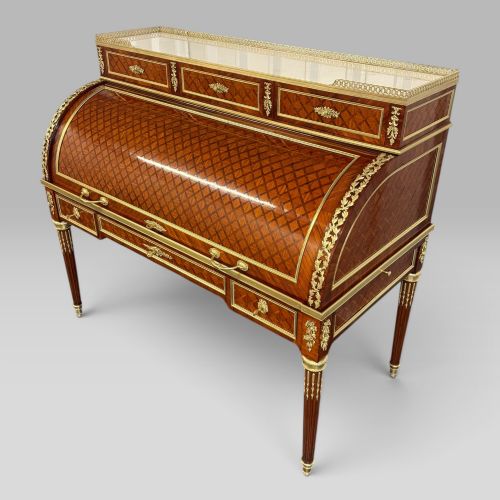
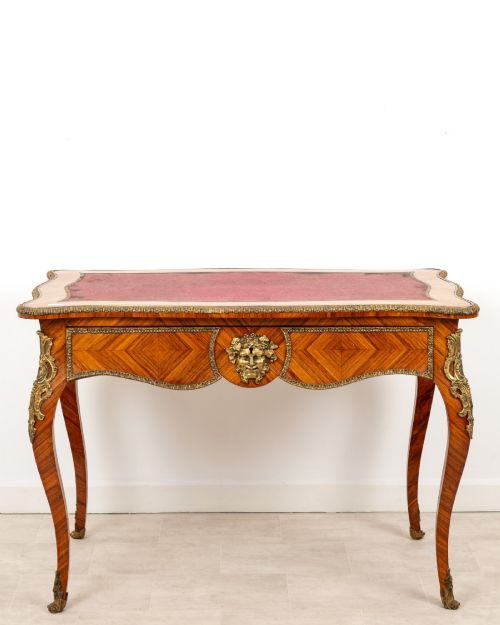
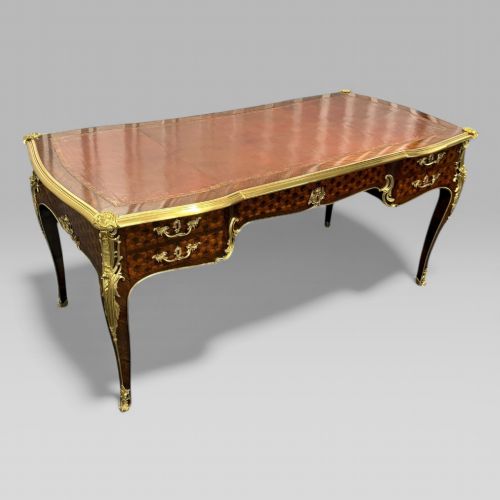
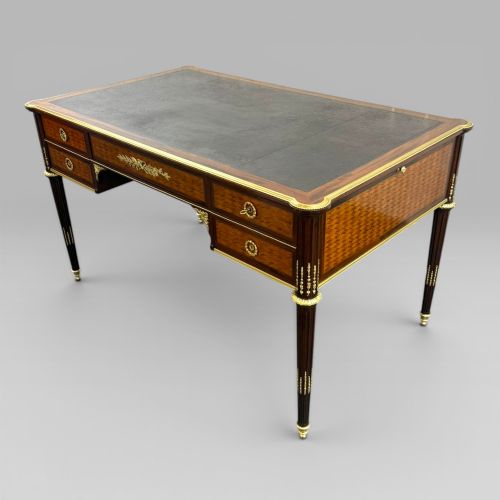
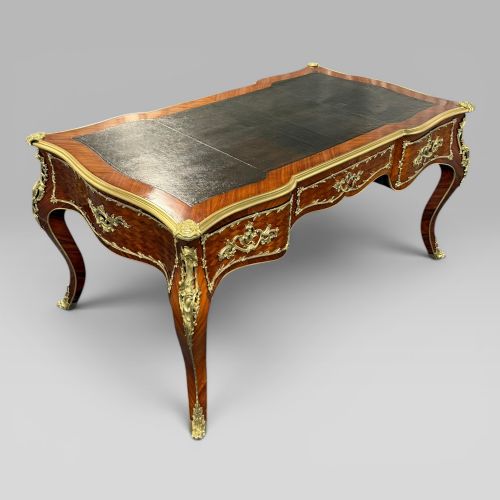
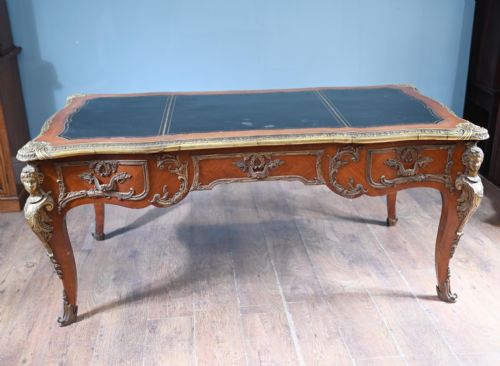
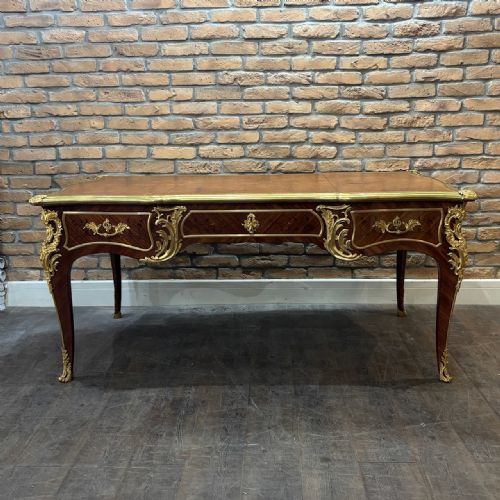
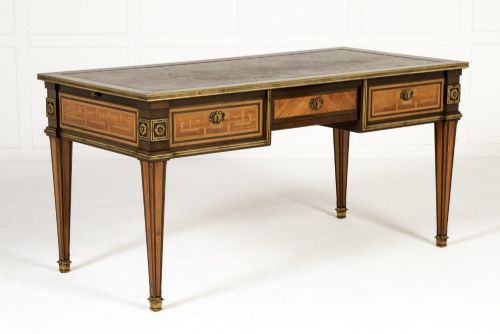
A parquetry top desk presents a geometric arrangement of contrasting wood veneers set into the writing surface, frequently framed by cast ormolu mounts. The pieces meeting a buyer on this page belong primarily to nineteenth-century French revival movements, spanning bureau plat forms, cylinder desks, and secretaire cabinets.
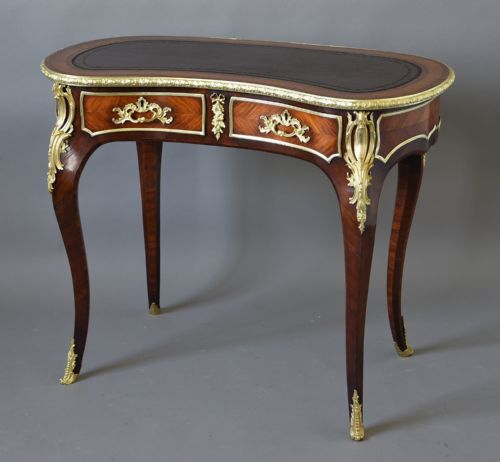
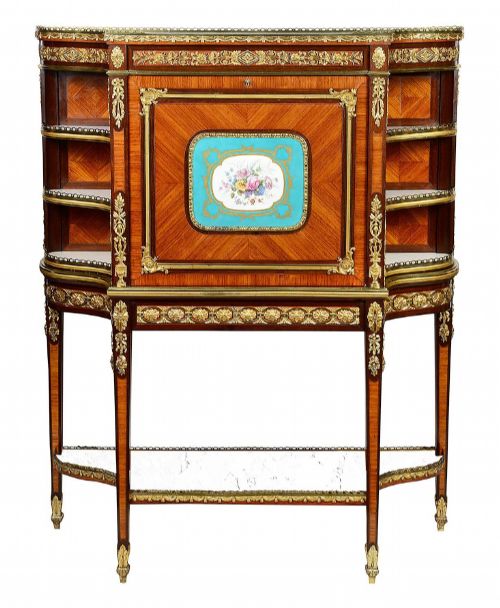
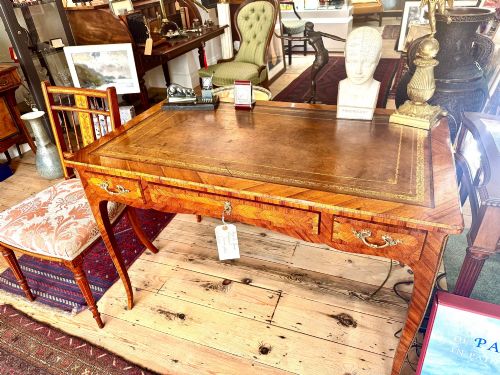
Makers working in nineteenth-century Paris and London constructed these writing tables in Louis XV and Louis XVI styles, utilising exotic timbers like kingwood, tulipwood, and rosewood. Alongside large freestanding bureau plat models, the selection includes kidney-shaped ladies writing desks, dressing tables, and compact secretaire chests.
The form functions as both a decorative centrepiece and a practical writing station, often incorporating fitted leather inserts, drawers, and drop-front writing compartments. Surviving examples demonstrate the nineteenth-century preference for intricate geometric wood patterns combined with classical gilt bronze or brass enrichment.
Materials and construction
Cabinetmakers constructed carcass frames from native hardwoods before applying fine veneers of kingwood, tulipwood, satinwood, and mahogany sliced into geometric parquetry tiles. These individual timber pieces were fitted by hand to create optical cube or basket-weave patterns across the writing surface.
Gilt bronze, ormolu, and brass mounts were cast, chased, and secured around the corners, aprons, and legs to accentuate the curvilinear or neoclassical outlines of the desk. Leather inserts were tooled in gold and set directly into recessed writing panels.
Structural joints relied on traditional cabinetmaking joinery, while fall-fronts and cylinder mechanisms required precise internal counterweights and brass hinges to ensure smooth operation.
Listings feature nineteenth-century French cabinetwork utilising kingwood, tulipwood, and rosewood veneers combined with ormolu and marble.
Judging quality
Quality rests upon the precision of the veneer geometry and the crispness of the bronze chasing. Finer examples display tight, seamless parquetry where grain patterns align deliberately across complex curves, whereas simpler work relies on repetitive repeating patterns with less attention to timber selection.
The weight, depth of gilding, and hand-chasing detail of the ormolu mounts separate workshop production grades. Workshops of high renown employed master metalworkers whose cast mounts exhibit sharp undercutting and lively surface relief, while standard commercial pieces feature softer, shallower cast detail.
Internal secondary timbers, drawer linings, and the survival of original fitted leather writing surfaces indicate the level of care taken during original manufacture.
Paul Sormani·François Linke·Blake London·Donald Ross·Maurice Dufrêne
The Parquetry Top Desk Glossary
- Parquetry
- Geometric wood veneer arrangement forming patterns such as cubes, lozenges, or squares. It differs from marquetry by utilising geometric blocks rather than pictorial figurative designs.
- Bureau Plat
- A freestanding writing table fitted with one or more drawers in the frieze. This form developed in seventeenth-century France and remained popular through nineteenth-century revivals.
- Ormolu
- Gilt bronze ornamentation applied to furniture mounts, escutcheons, and sabots. The technique involves coating cast bronze with a mercury-gold amalgam and firing.
- Kingwood
- A dense, heavily figured Brazilian timber featuring dark violet and brown tones. Cabinetmakers favoured it for high-status nineteenth-century parquetry surfaces.
- Cylinder Desk
- A writing desk featuring a quarter-cylinder rolling shutter that conceals pigeonholes and writing drawers. When closed, the mechanism protects the workspace.
- Secretaire Abattant
- An upright upright cabinet with a drop-front writing flap concealing internal compartments. It combines vertical storage with a dedicated writing surface.
Parquetry Top Desk: Frequently Asked Questions
What is a parquetry top desk?
A parquetry top desk is a writing table featuring a geometric arrangement of inlaid wood veneers across its upper surface. These desks often incorporate gilt bronze mounts and draw upon eighteenth-century French design idioms.
Most surviving examples date from the nineteenth century and reflect revival styles associated with Louis XV and Louis XVI furniture production.
How were these antique desks used?
These desks served as private writing stations for correspondence, administrative duties, and record-keeping in period drawing rooms and boudoirs. Freestanding bureau plat models allowed writers to work away from walls while displaying decorative parquetry from all angles.
Secretaire and cylinder variations provided concealed storage for stationery and ledgers, allowing owners to lock away private documents securely when not in use.
How do I care for a wood parquetry surface?
Protect the timber and veneer by maintaining stable room humidity and avoiding direct exposure to sunlight or heat sources. Gentle cleaning with a soft, dry cloth preserves the polished finish without harming the historic timber.
Avoid applying modern silicone polishes, as these accumulate over time and attract dust to the intricate joints of the parquetry pattern.
How can I tell a bureau plat from a writing table?
A bureau plat specifically denotes a freestanding desk fitted with one or more drawers integrated into the apron beneath the writing surface. Traditional writing tables may share similar proportions but lack the distinct drawer configuration or formal framing characteristic of bureau plat designs.
Both forms typically feature finished backs so they can stand in the middle of a room rather than against a wall.
What distinguishes Louis XV style from Louis XVI style desks?
Louis XV style desks feature asymmetrical curves, cabriole legs, and flowing rococo bronze mounts inspired by mid-eighteenth-century French design. The overall silhouette prioritises movement and organic contours.
Louis XVI style desks introduce straight tapered legs, neoclassical symmetry, fluted columns, and rectilinear parquetry panels reflecting an archaeological revival of classical geometry.