
Craft Writing Desk
A craft writing desk brings solid timber and honest construction to the room, offering a practical workspace shaped by movement away from industrial mass production.
Craft Writing Desk
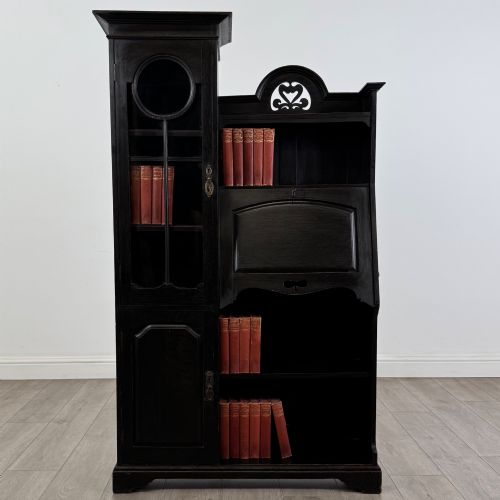
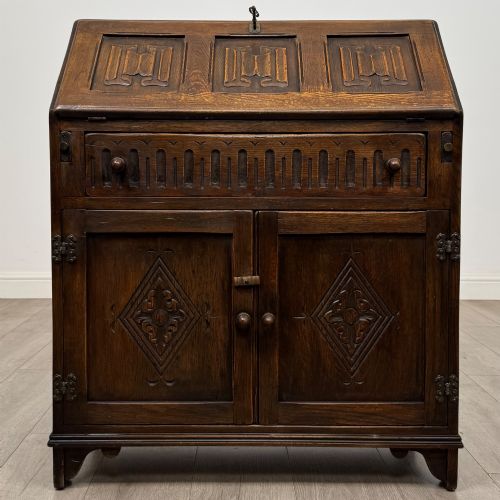
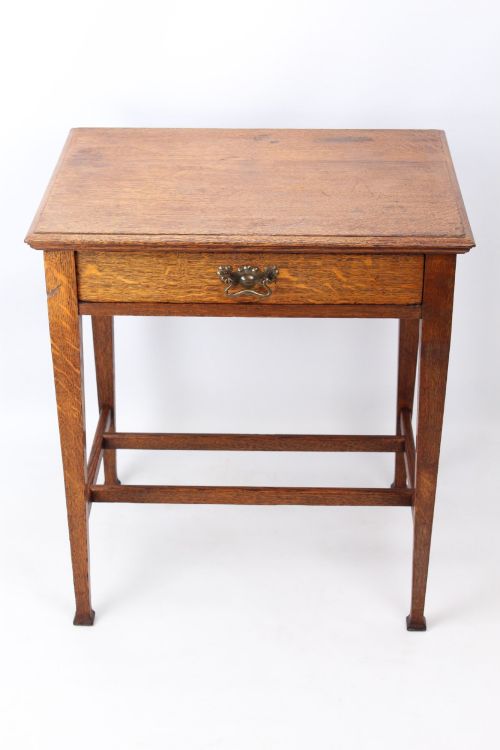
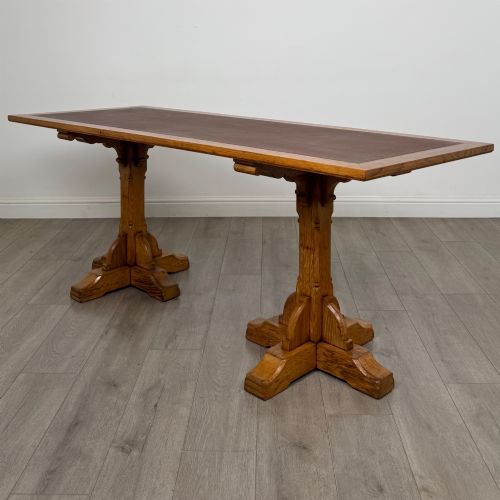
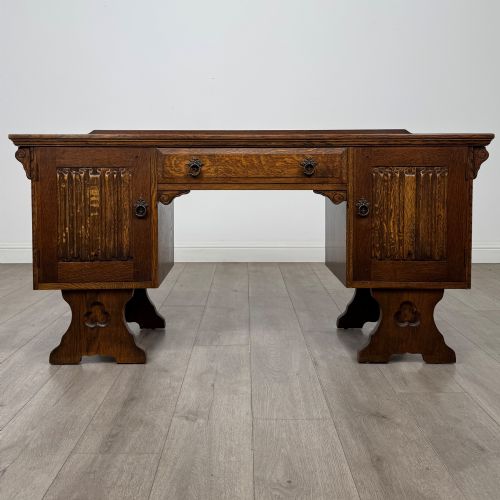
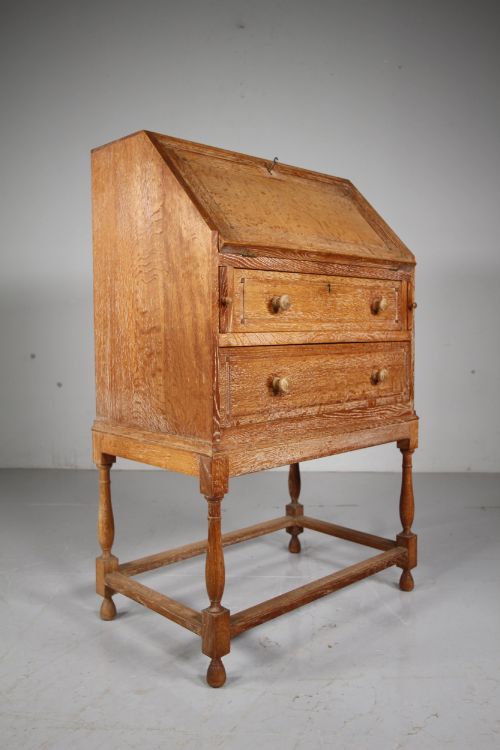
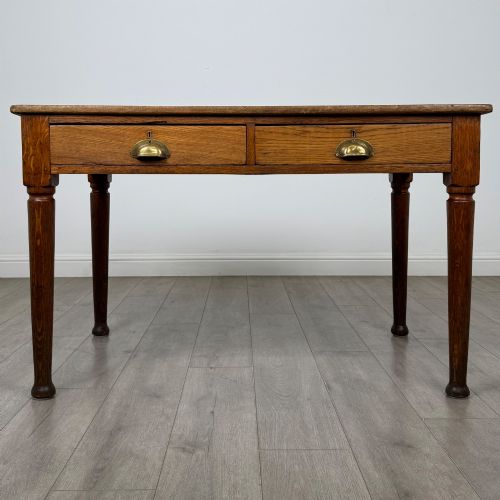
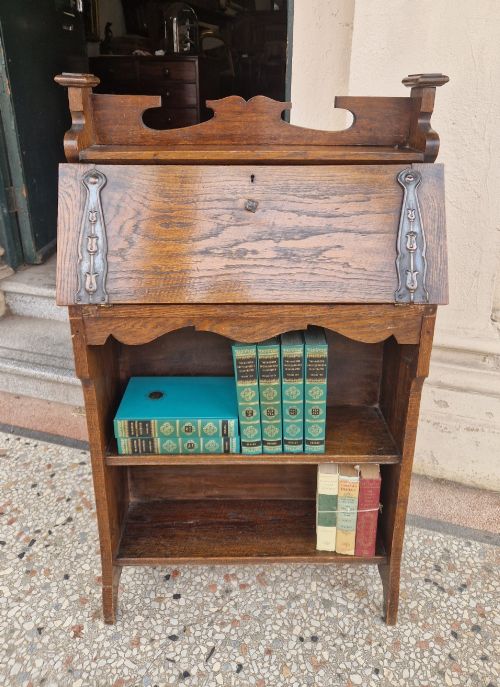
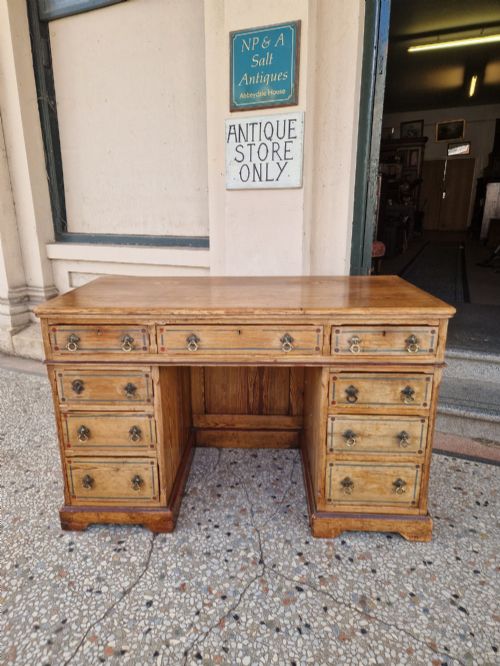
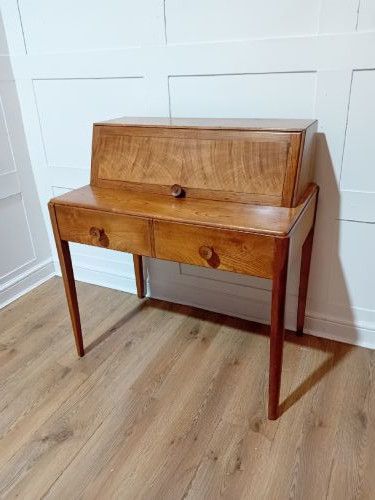
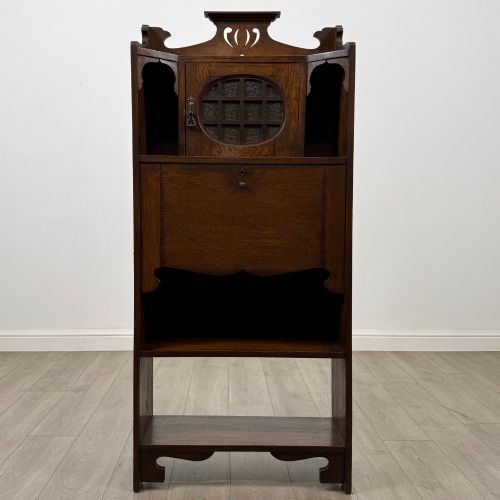
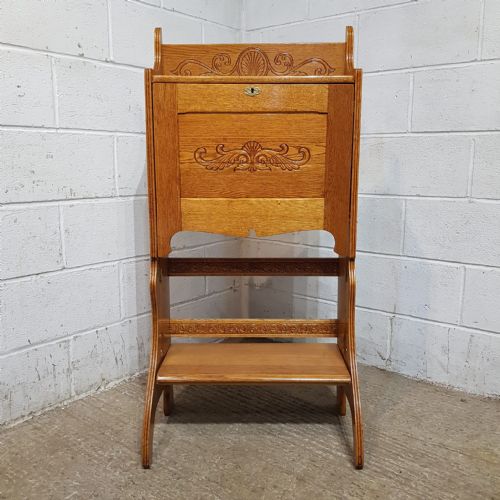
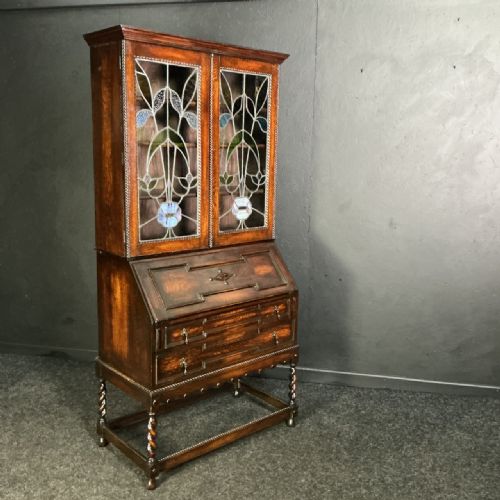
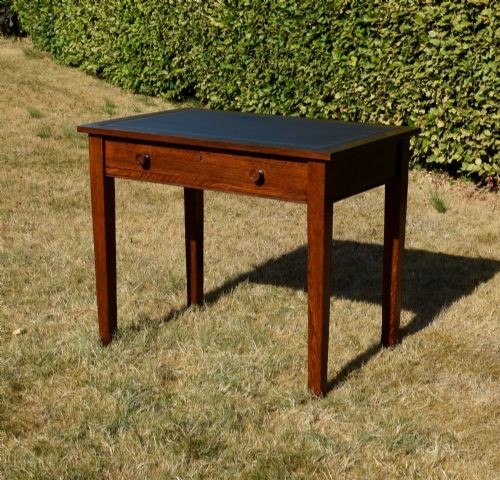
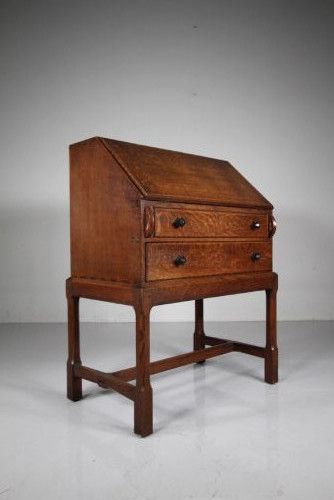
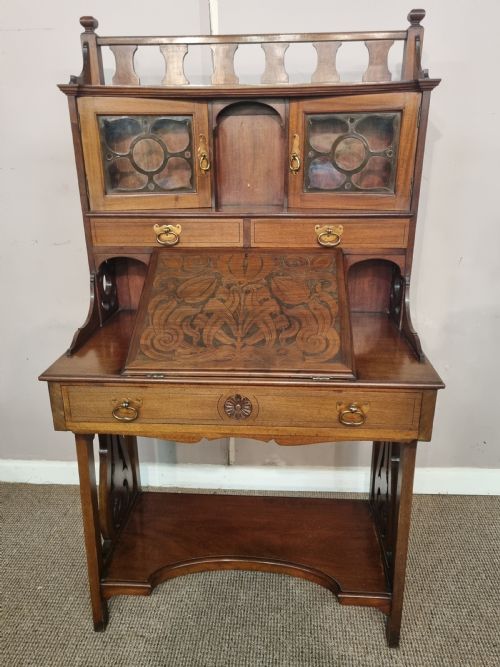
When looking for a craft writing desk, buyers encounter forms ranging from drop-front bureaux and student writing desks to expansive library tables and pedestal desks. The selections span the late Victorian and Edwardian eras into the 1930s, reflecting an era of thoughtful cabinetmaking.
The aesthetic bridges several revival styles, showing strong influences from the Arts and Crafts movement alongside Tudor, Gothic, and Jacobean revivals. Buyers find both simple domestic desks and larger institutional library tables carrying maker labels or workshop attributions.
How they were made
Makers utilised solid timbers like oak, ash, and mahogany, often selecting quarter-sawn boards to expose natural medullary rays in the grain. Construction relied on traditional joinery techniques, including dovetail drawers and tenon joints, prioritising durability over hidden mechanical fasteners.
Metalwork played a functional and decorative role, with wrought copper, brass, and iron utilised for hinges, handles, and escutcheons. Surfaces frequently featured inset leather writing pads, sometimes accented with subtle tooling or pokerwork detailing.
Listings feature oak predominantly as the primary timber, complemented by brass, copper, and leather across various Edwardian and Victorian forms.
What varies in quality
The standard of timber selection defines the upper tier of pieces, where quarter-sawn oak displays consistent figuring and thoughtful grain matching across visible surfaces. Lesser examples rely on plain-sawn boards with less attention to how panels meet along the grain.
Execution of carved details and hardware integration separates workshop productions from standard commercial output. Superior items exhibit hand-carved linenfold panels, carefully fitted drawers that move smoothly, and original hand-hammered metal fittings rather than stamped replacements.
Heals of London·Arthur Basil Reynolds·Stanley Webb Davies·Bryn Mawr Welsh Oak·Hubert Simpson of Kendal·James Shoolbred·Simpsons of Kendall·Morris And Co·George W Jack·Robert Mouseman Thompson·Harris Lebus·Liberty of London·Shapland and Petter·Robertson and Colman
The Craft Writing Desk Glossary
- Bureau
- A writing desk featuring a sloping hinged flap that opens to reveal a fitted interior of small drawers and pigeonholes. These often sit above larger drawer banks or open shelves.
- Quarter-sawn
- A method of milling logs radially to the growth rings, producing timber boards with enhanced dimensional stability and prominent grain figuring.
- Linenfold
- A style of wood carving that imitates folded parchment or linen, frequently seen on panelled doors and drawer fronts of this period.
- Escutcheon
- A protective plate surrounding a keyhole, often fashioned from brass, copper, or iron to complement the surrounding woodwork.
- Pigeonhole
- A small, open compartment within a desk interior used for sorting letters, papers, and stationery.
Craft Writing Desk: Frequently Asked Questions
How do I distinguish a bureau from a writing table?
A bureau incorporates a sloping drop-front lid that conceals internal compartments and stationery slots when opened. This provides a concealed writing surface and lockable storage.
Writing tables and pedestal desks offer a flat top surface, sometimes lined with leather, supported by legs or stacked drawer pedestals without a folding front flap.
Which woods were commonly used?
Oak is the predominant timber found in these pieces, frequently quartersawn to highlight natural medullary rays. Ash, pitch pine, and mahogany also appear across various regional workshops and manufacturers.
Secondary woods are often utilised for internal drawer linings and hidden structural components, maintaining sturdy construction throughout.
How do I care for a leather writing surface?
Leather inserts benefit from occasional cleaning with a slightly damp cloth followed by a neutral leather cream to prevent drying and cracking. Avoiding direct sunlight helps preserve the colour and suppleness of the hide.
Care should be taken with moisture and sharp implements to protect both the leather and the surrounding timber framing.