


Parquetry Nightstands
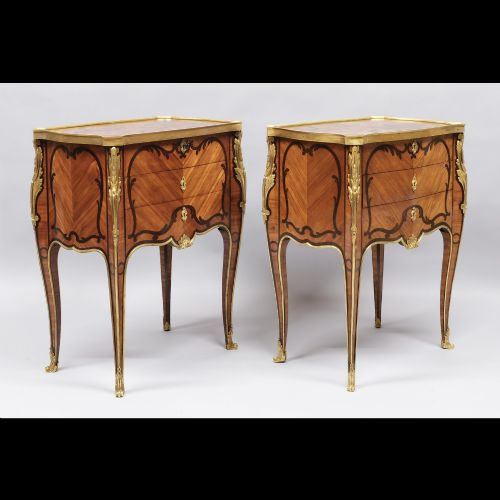
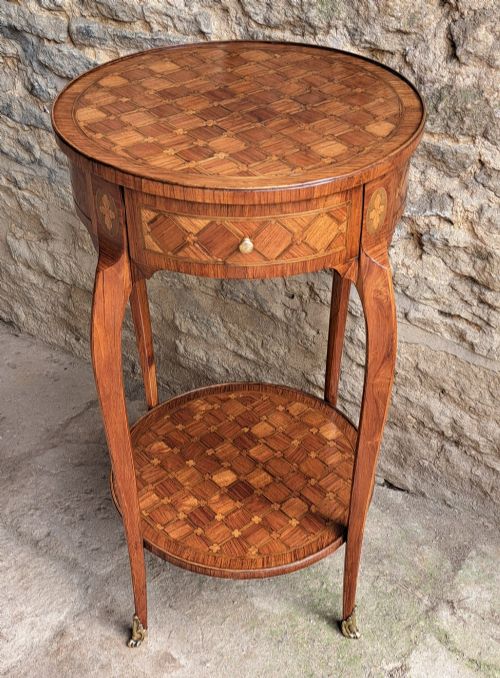
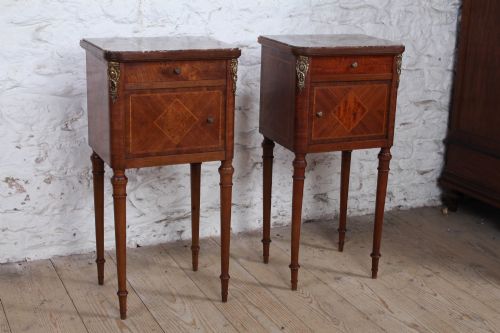
These parquetry nightstands bring geometric wooden inlay and marble surfaces to the bedside, originating largely from French workshops of the nineteenth and early twentieth centuries.
Parquetry Nightstands
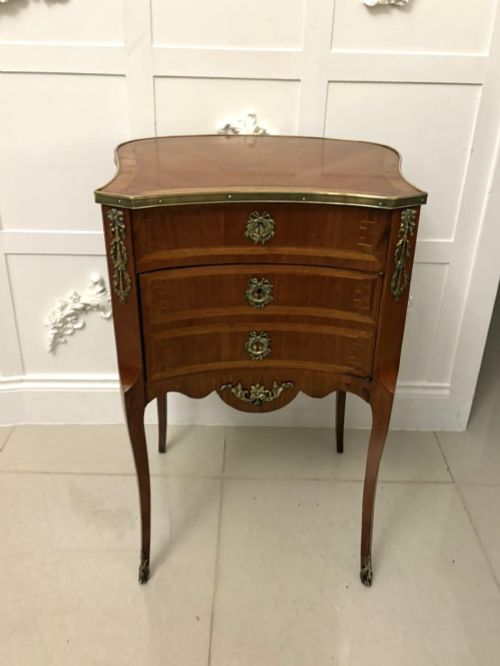
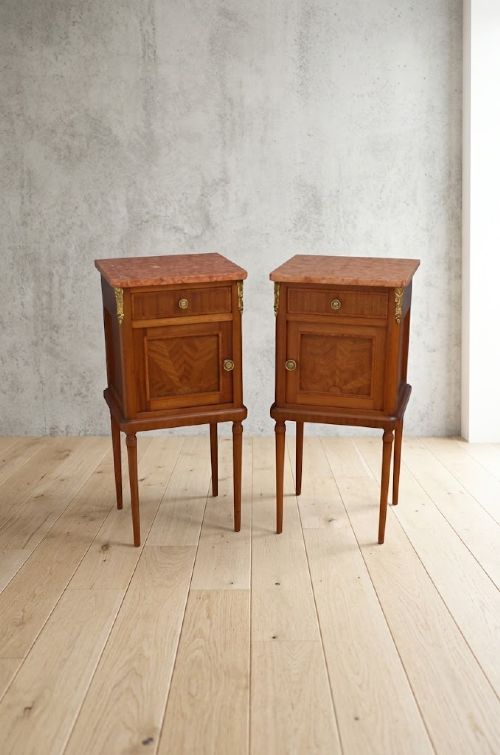
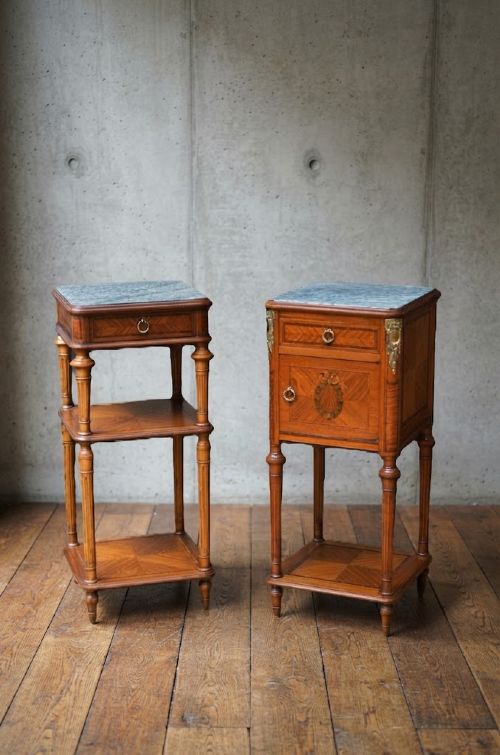
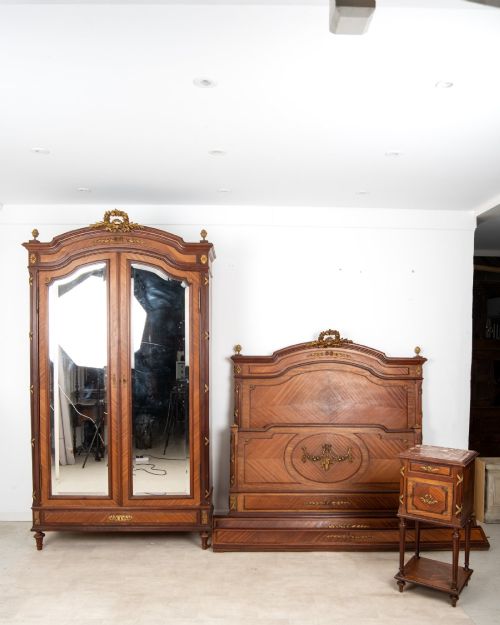
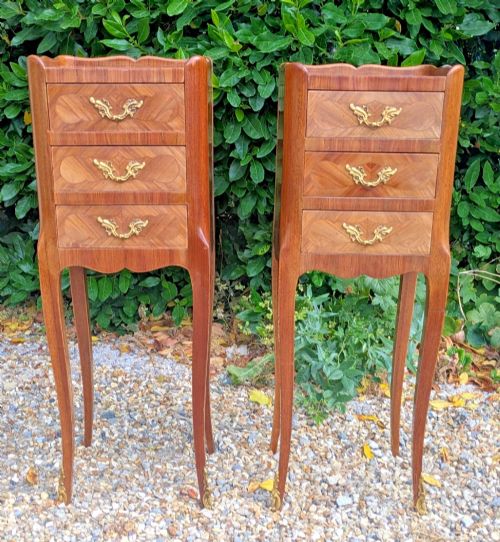
Parquetry nightstands take the form of small bedside tables, cabinets, cupboards and commodes designed to hold lamps and nighttime essentials close at hand. These small pieces surface frequently as matched pairs, sharing proportion and decorative scheme across bedsides.
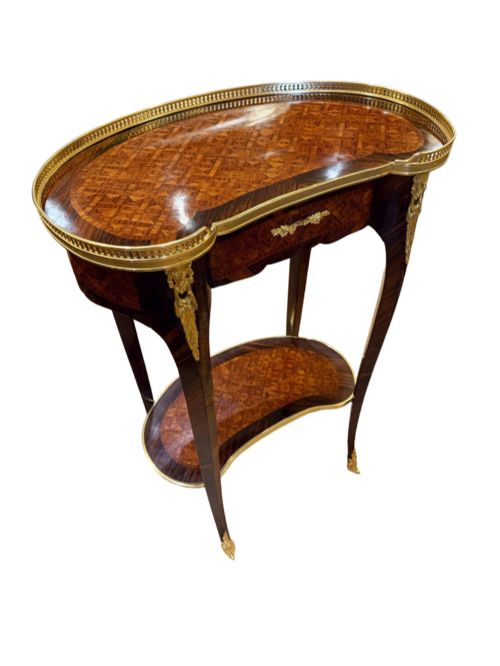
The aesthetic leans heavily on French revival taste, particularly Louis XV and Louis XVI styles, alongside Art Deco examples from the nineteen-thirties. Makers often shaped them with kidney outlines, serpentine curves or neat geometric proportions suited to smaller chambers.
Origins stretch from the Victorian era into the twentieth century, capturing decades of cabinet-making that favoured decorative wood surfaces. Buyers encounter them as standalone side tables, pot cupboards and compact chests of drawers.
How they were made
Craftsmen built these tables using timber frames lined with delicate veneer layers of kingwood, walnut, satinwood, rosewood, burr and fruitwood. Geometric parquetry and marquetry patterns were meticulously pieced together by hand across the top and sides.
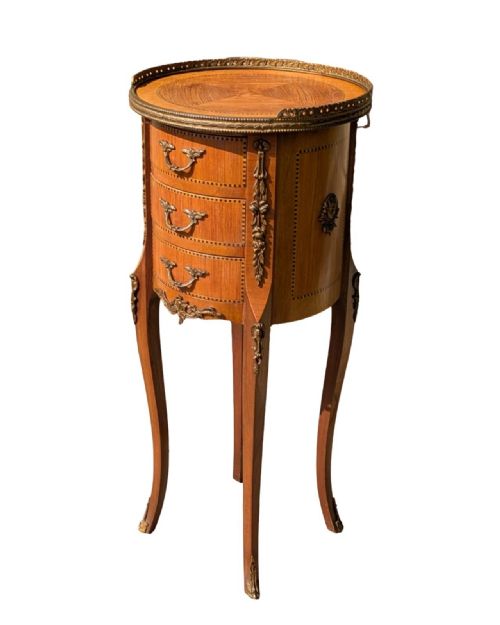
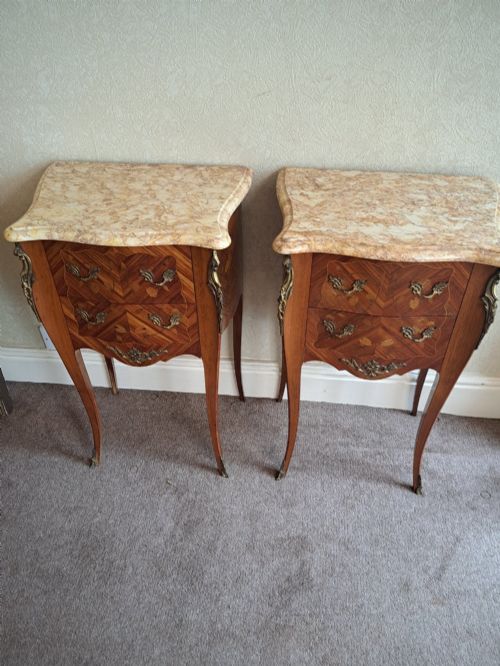
Many examples incorporate polished marble tops, often in fitted slabs, paired with cast brass or ormolu mounts framing corners, handles and aprons.
Some nineteenth-century makers cleverly built these miniature commodes with hidden compartments just right for storing midnight snacks.
What varies in quality
The standard of timber selection and the precision of the geometric parquetry layout dictate the refinement of the piece. Crisp matching of veneer grains and complex curved bombe contours separate standard production from finer workshop output.
The integration of heavy marble slabs, quality cast ormolu mounts and functional internal cabinetry distinguishes the more ambitious iterations from simpler bedside cupboards.
Sormani
The Parquetry Nightstands Glossary
- Parquetry
- A mosaic of geometric wood veneer pieces arranged to form repeating patterns on furniture surfaces. It creates decorative visual depth through contrasting grain directions and timber tones.
- Marquetry
- The art of applying pieces of veneer to a structure to form decorative pictorial or patterned designs. Unlike geometric parquetry, marquetry often depicts floral or organic motifs.
- Ormolu
- Gilded bronze mounts applied to furniture for decorative accent and structural edge protection. It appears frequently on French revival pieces of the nineteenth and twentieth centuries.
- Bombe
- A swelling, outward-curved contour found on the sides and fronts of commodes and bedside cabinets. This rounded profile demands advanced cabinet-making skill.
- Chevet
- A French term for a small bedside table or nightstand. These compact units often feature a combination of cupboards and open surfaces.
Parquetry Nightstands: Frequently Asked Questions
How were parquetry nightstands originally used?
These small cabinets and tables stood beside beds to hold chamber lighting, books and personal items during the night.
Many included enclosed cupboards or drawers to keep bedroom paraphernalia neatly out of sight.
Are these nightstands usually sold as pairs?
A significant portion of these bedside tables appear as matched pairs intended to flank a double bed.
Single examples also emerge for smaller spaces or alternative use as lamp tables.
What periods do these pieces date from?
The selection spans from the mid nineteenth century through the Victorian era and into nineteen-thirties Art Deco production.
French revival designs dominate, drawing inspiration from Louis XV and Louis XVI aesthetics.
How should I care for marble-topped nightstands?
Marble surfaces benefit from regular wiping with a soft, damp cloth and prompt attention to liquid spills to prevent staining.
Waxing the wood veneer preserves the finish without harming the stone inserts.