

Parquetry Inlay Side Tables
These parquetry inlay side tables bring geometric precision and rich timbers into a room, offering both decorative presence and a functional surface.
Parquetry Inlay Side Tables
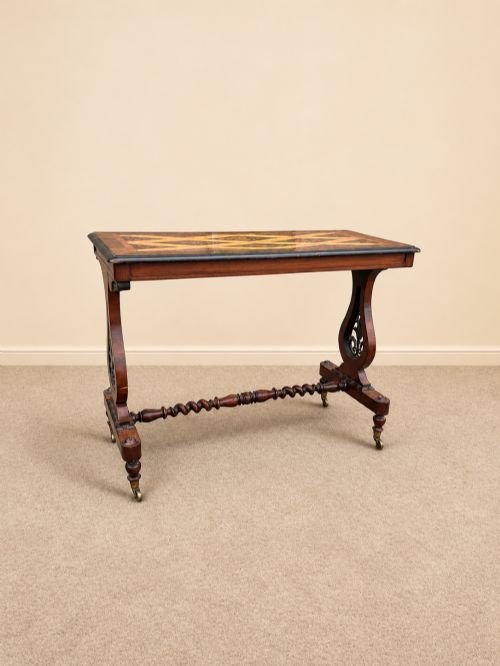
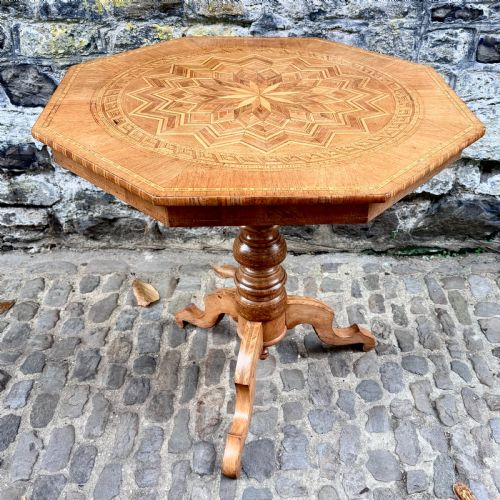
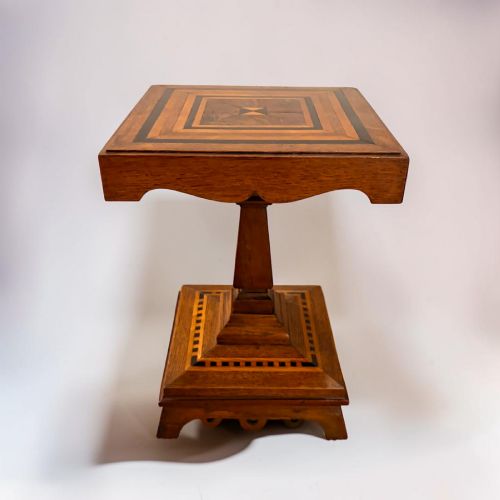
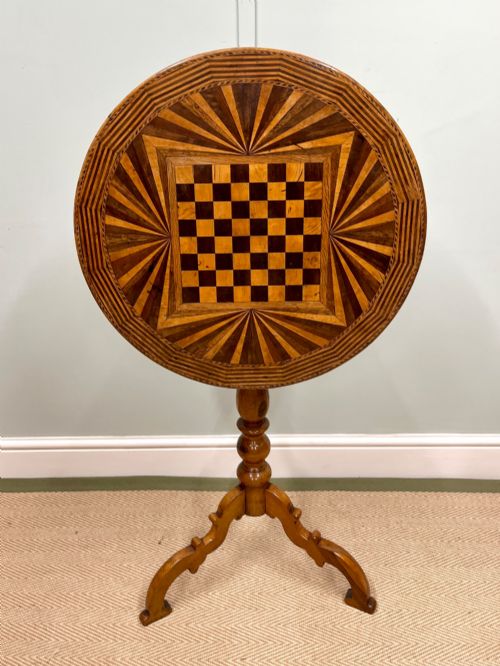
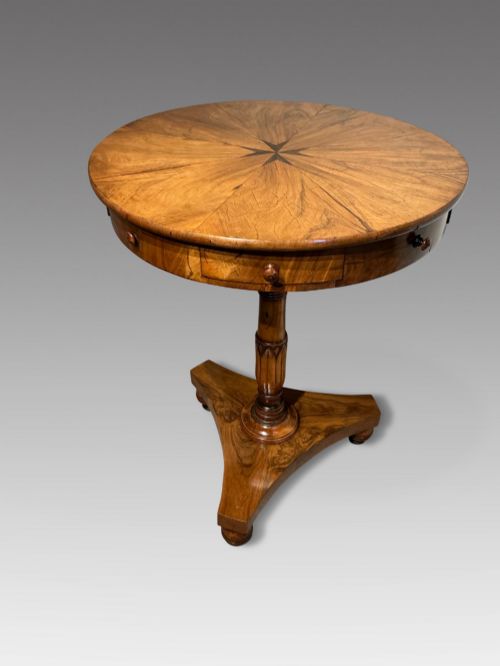
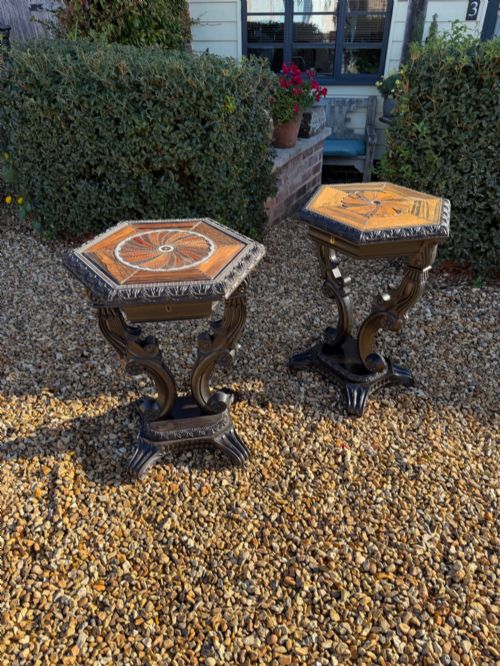
Parquetry inlay side tables encompass a variety of occasional, centre, and games tables constructed during the nineteenth and early twentieth centuries. These pieces display precise geometric wood patterns across surfaces designed for practical daily use in reception rooms and bedrooms.
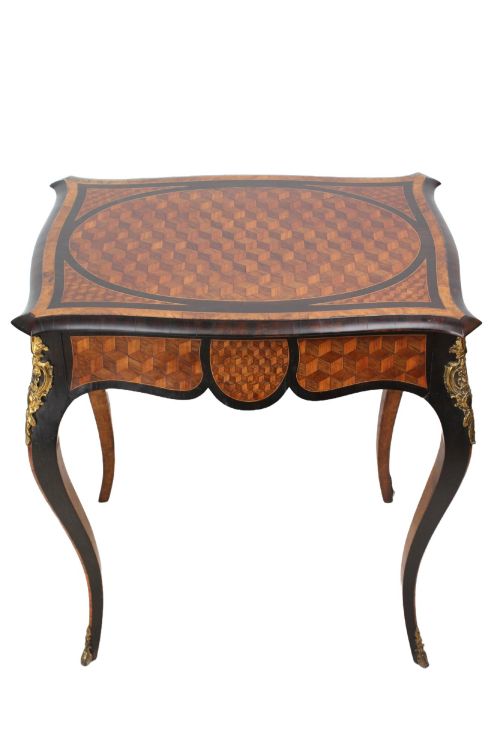
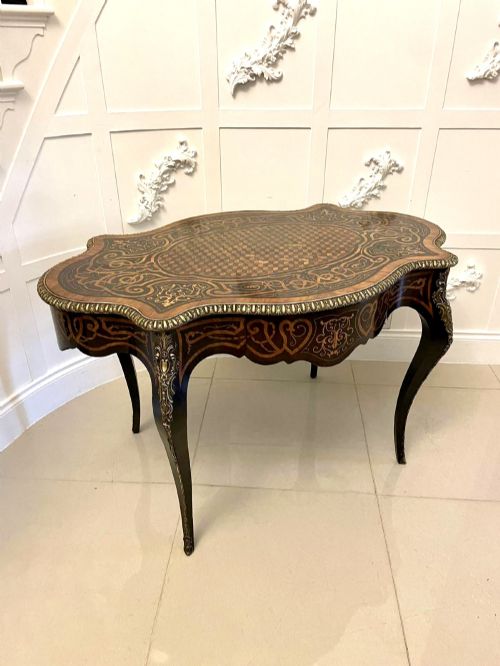
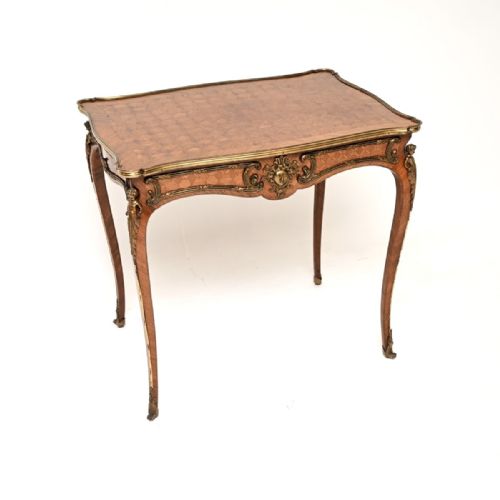
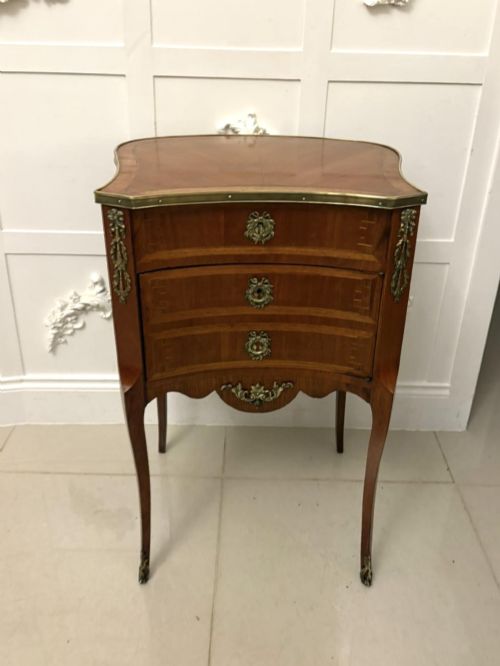
The nineteenth-century examples dominate the selection, often bearing French Louis XV or Louis XVI revival characteristics alongside Victorian interpretations. Buyers frequently encounter kidney-shaped bedside tables, occasional lamp tables, and larger freestanding centre tables featuring intricate top surfaces.
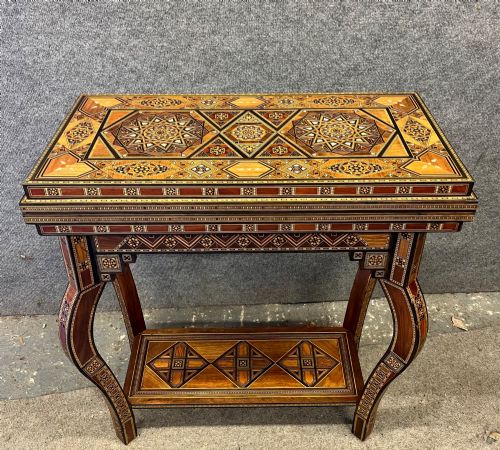
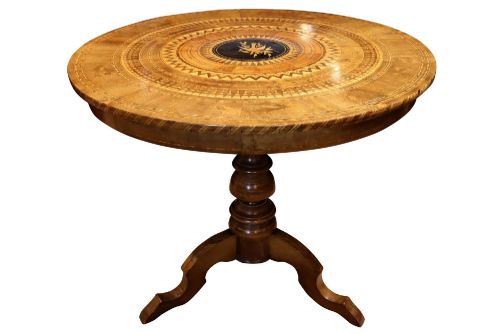
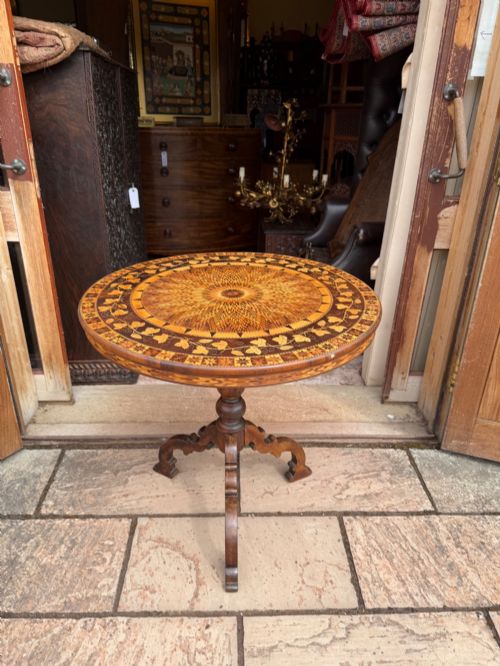
Geographic diversity is evident through Italian Sorrento productions, Syrian and Levantine games tables, and colonial specimen wood pieces from Jamaica and New Zealand. Each origin brings distinct timber choices and specific regional cabinetry traditions to the form.
Materials and construction
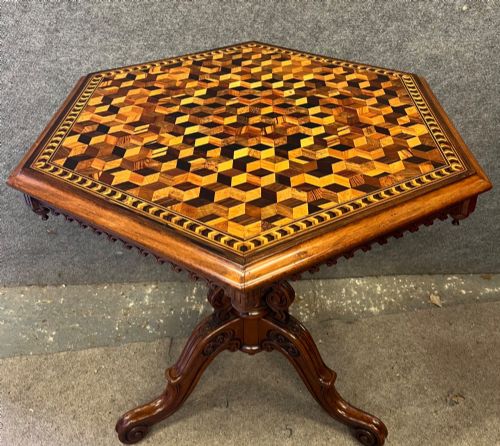
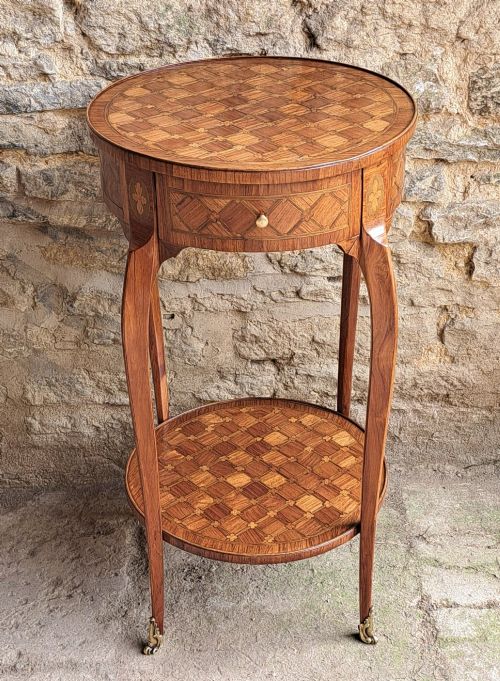
Cabinetmakers utilised dense exotic hardwoods such as kingwood, walnut, rosewood, and satinwood, sliced thinly into veneers. These timbers were meticulously cut and arranged by hand to form repeating geometric cubes, lozenges, and chevron patterns across the table tops.
Structural elements frequently incorporated secondary woods like mahogany or oak beneath the decorative skin. Many pieces received cast brass or ormolu mounts along the legs and apron borders, framing the wood panels and protecting vulnerable edges.
Parquetry Inlay Side Tables Retail Price Guide 2026
Typical asking prices for parquetry inlay side tables among the pieces listed under this phrase on Sellingantiques today, from the lower quarter to the upper quarter. They describe what is for sale here now, not the wider market.
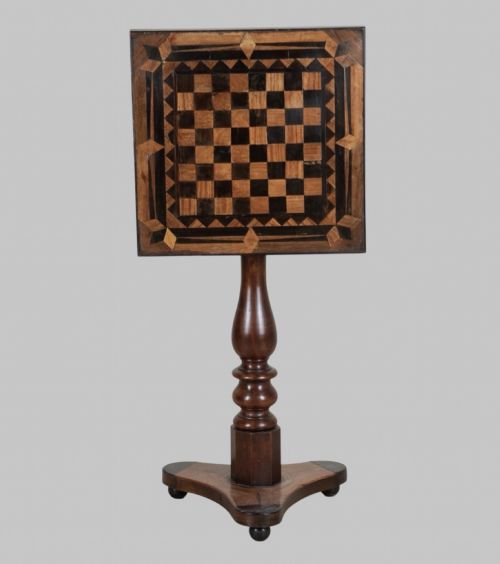
Several Victorian tables double as multi-tasking game stations, hiding secret chess, backgammon, and card boards beneath their tightly fitted parquetry tops.
Craftsmanship and design hierarchy
The standard of a parquetry inlay side table rests primarily on the precision of the geometric cutting and the tightness of the veneer joints. Superior examples maintain absolute symmetry and seamless alignment across complex patterns without visible gaps or excessive filler.
Timber selection and secondary detailing further separate ordinary production from exhibition pieces. Finer items incorporate expensive contrasting specimen woods, substantial bronze or ormolu mounts, and secondary framing that remains stable over centuries of environmental change.
Ralph Turnbull·JAS Shoolbred·Gillows·Anton Seuffert·Collingson & Lock
The Parquetry Inlay Side Tables Glossary
- Parquetry
- A geometric mosaic of wood veneers arranged in repeating patterns such as cubes, triangles, or squares. It differs from marquetry by strictly using geometric lines rather than pictorial scenes.
- Marquetry
- The decorative art of applying cut veneer pieces to form pictorial designs, floral motifs, or scrolls. This technique frequently accompanies parquetry on table tops.
- Ormolu
- Gilt bronze mounts applied to furniture for decorative enhancement and edge protection. Makers cast and chased these metal elements to complement the surrounding woodwork.
- Veneer
- Thin slices of fine hardwood applied to a stable secondary timber base. This method allows craftsmen to utilise expensive figured woods efficiently.
- Specimen wood
- Timbers gathered from various native or exotic regions, often displayed collectively in colonial furniture to showcase local botanical diversity.
Parquetry Inlay Side Tables: Frequently Asked Questions
How do I clean parquetry surfaces?
Dust gently with a dry, soft cloth to prevent particulate accumulation in the veneer joints. Avoid modern liquid polishes or aggressive cleaning agents that can degrade historic finishes and loosen old adhesives.
Apply a microcrystalline wax sparingly once or twice a year if the wood appears dry. Buff the surface gently after application to maintain a protective barrier against moisture.
Can these tables handle daily use?
These tables function well for holding lamps, books, or small decorative items during daily routines. Their historical construction requires basic care regarding placement and weight distribution.
Keep the tables away from direct heat sources and strong sunlight to prevent the timber veneers from shrinking or cracking. Use coasters beneath drinking vessels to protect the polished wood finish from rings.
What distinguishes French revival styles?
French revival pieces incorporate curved cabriole legs, flowing apron contours, and elaborate ormolu mounts inspired by eighteenth-century court furniture. Makers during the Victorian era and early twentieth century revived these decadent motifs for contemporary drawing rooms.
In contrast, earlier Georgian pieces favour straight tapered legs and restrained banding rather than sweeping serpentine lines. The parquetry patterns on revival items tend to cover entire tops with complex three-dimensional cube illusions.
Where were specimen wood tables made?
Colonial workshops in New Zealand and Jamaica produced distinctive tables using local indigenous timbers. Craftsmen arranged contrasting native woods into complex geometric mosaics that doubled as botanical displays.
European centres like Sorrento in Italy also specialised in localized specimen wood and parquetry production. These regional pieces often incorporated folding mechanisms for games or writing.