

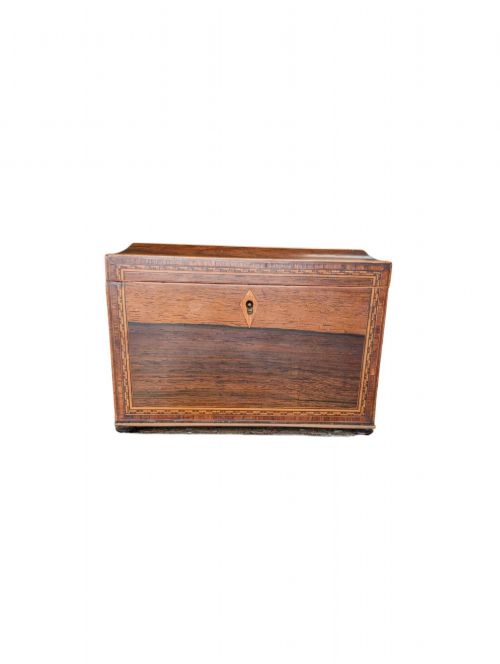
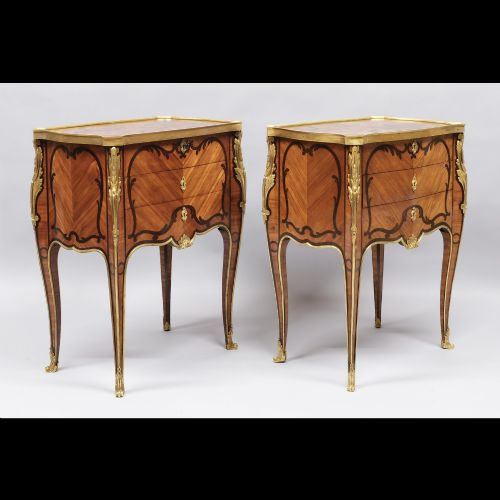
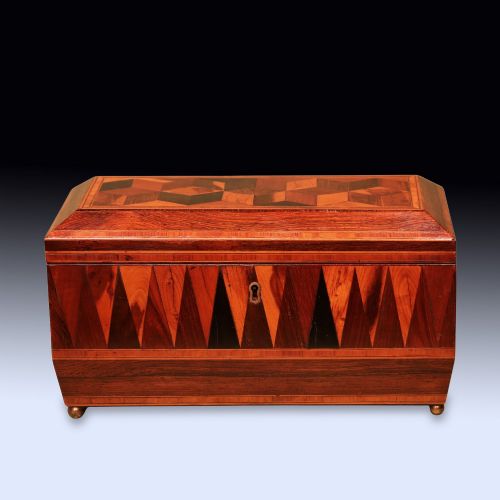
Parquetry Inlaid Chest
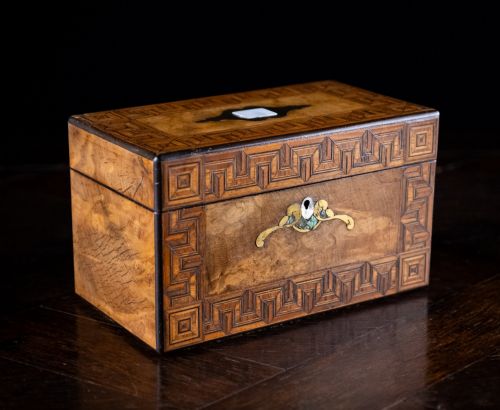
When you search for a parquetry inlaid chest, you enter a world of geometric wooden surface decoration applied to commodes, tea caddies, and cabinets.
Parquetry Inlaid Chest
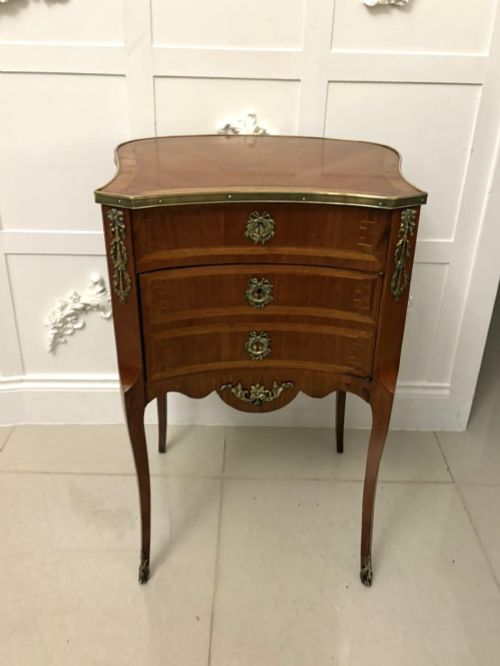
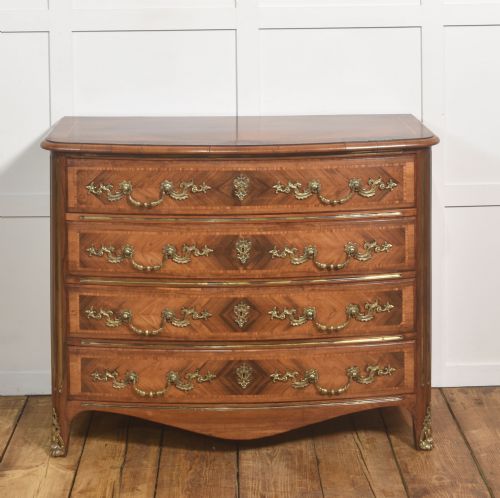
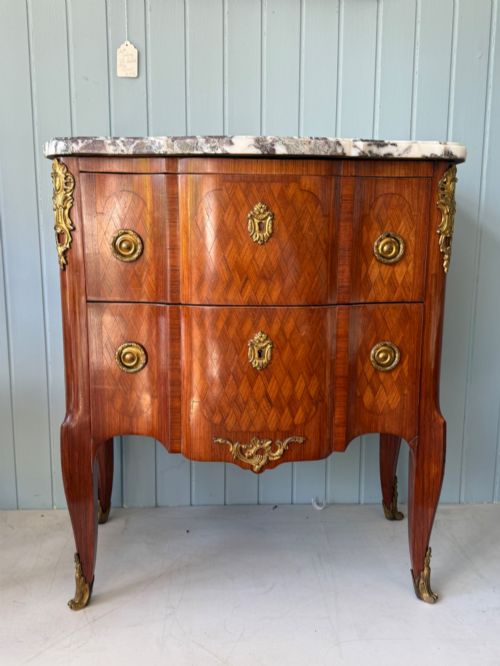
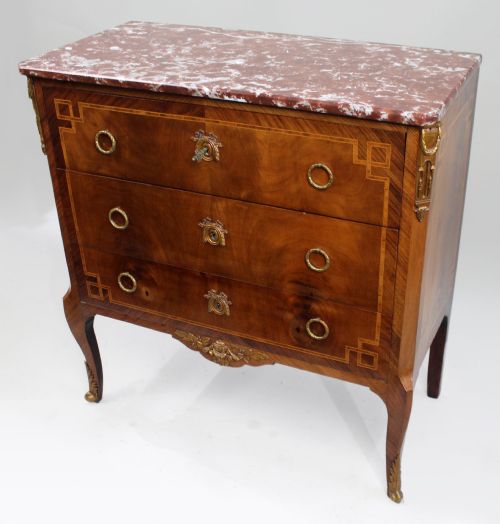
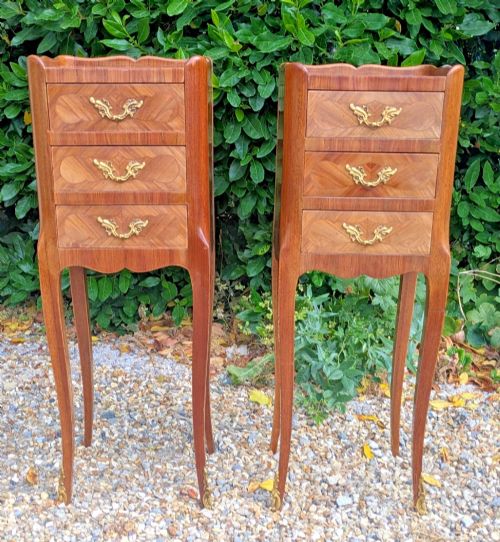
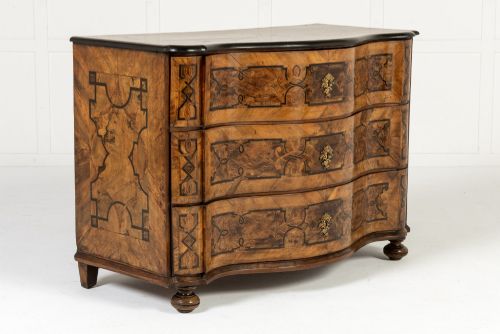
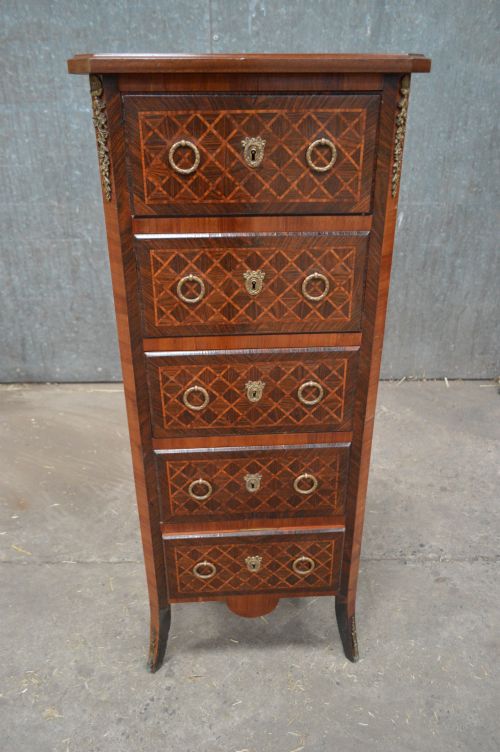
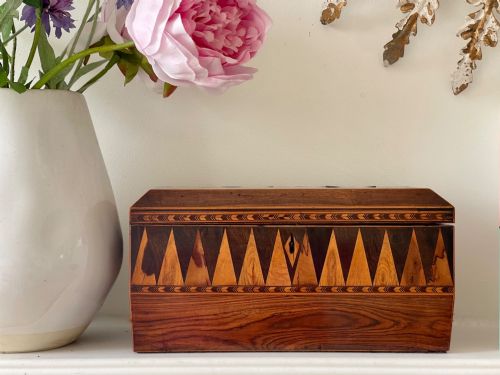
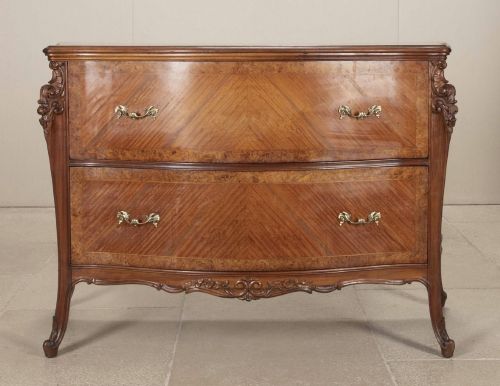
A parquetry inlaid chest brings together functional storage forms and intricate geometric wood surfaces. The pieces span centuries of craftsmanship, appearing most frequently as French commodes, bedside tables, and small tea caddies.
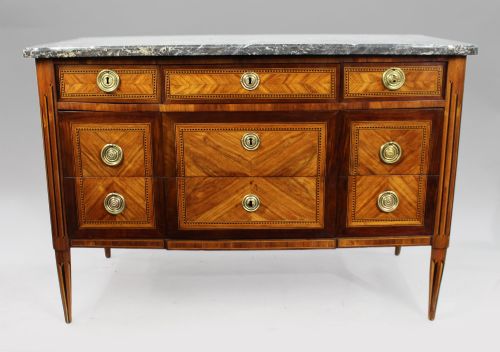
The selection on this page draws heavily from eighteenth and nineteenth century European traditions, notably French Louis styles and English Tunbridge Ware. You will encounter serpentine fronts, marble tops, and cabinet forms executed in walnut, mahogany, and exotic veneers.
Commodes and chests of drawers dominate the offerings, often accompanied by smaller tabletop containers like tea caddies. These objects served elite domestic interiors from the Georgian period through the early twentieth century.
How they were made
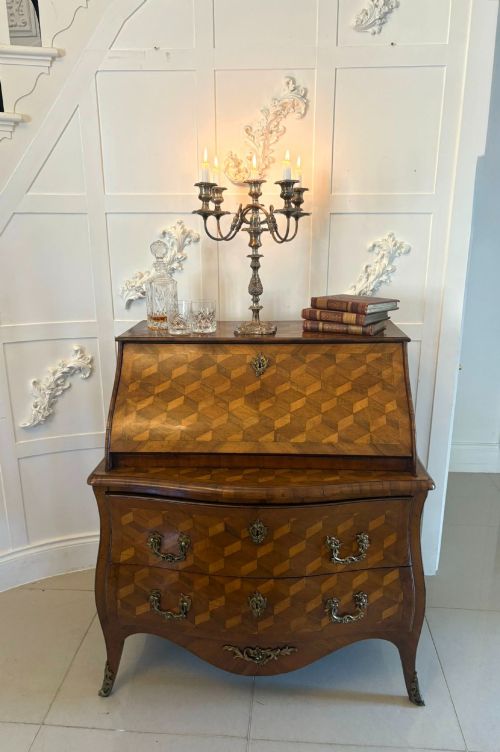
Craftsmen built these items using robust foundational timbers like walnut, oak, or cherry, then applied fine veneers across the surfaces. Geometric patterns formed from contrasting woods such as satinwood, kingwood, tulipwood, and rosewood were meticulously cut and fitted together.
Many commodes incorporate polished marble tops in shades of white or rouge, fitted precisely to the wooden carcass. Additional decorative elements include cast ormolu mounts, brass stringing, and occasional mother-of-pearl accents embedded within the parquetry fields.
Listings feature eighteenth-century pieces alongside Victorian and Edwardian revivals, utilising walnut, kingwood, and marble.
What varies in quality
The division between standard production and exceptional work rests on the precision of the geometric layout and the selection of timber. Finer examples display seamless alignment of contrasting wood grains across complex curves like serpentine and bombe forms.
Subtleties in secondary materials dictate overall merit, including the weight of the marble slab, the crispness of ormolu mounts, and the integrity of the underlying carcase construction. Pieces retaining their original fitted interiors and authentic surface patination command greater appreciation among collectors.
Henry Hollamby·Sormani
The Parquetry Inlaid Chest Glossary
- Parquetry
- A geometric mosaic of wood veneer used to ornament floors, walls, and furniture surfaces. Small tiles of contrasting timber are arranged in repeating patterns such as cubes, triangles, or chequers.
- Marquetry
- The art of creating decorative pictorial or abstract designs by applying thin veneers of various woods to a solid structure. Unlike parquetry, marquetry often depicts floral sprays, ribbons, or landscapes.
- Ormolu
- Gilt bronze mounted onto furniture as decorative handles, feet, or corner mounts. This technique involves applying a gold amalgam to bronze and heating it to drive off the mercury.
- Bombe
- A swollen or bulging outline found on the sides and fronts of eighteenth-century case furniture. This curved silhouette requires advanced woodworking skill to maintain structural stability.
- Serpentine
- A furniture front or top shaped with a central concave curve flanked by two convex sweeps. The undulating line adds visual movement to commodes and chests of drawers.
Parquetry Inlaid Chest: Frequently Asked Questions
What is a parquetry inlaid chest?
A parquetry inlaid chest is a storage piece decorated with geometric wood veneers. Artisans cut small pieces of contrasting timber to form intricate patterns across the exterior surfaces.
These items range from large commodes with marble tops to small tabletop tea caddies. They serve as functional furniture and decorative statements reflecting European design traditions.
How do I care for my chest?
Keep wooden furniture away from direct sunlight and sudden temperature shifts to prevent veneer lifting. Dust regularly with a soft, dry cloth and avoid harsh chemical polishes.
Wax can be applied sparingly to maintain the natural sheen of the timber. Protect marble tops from acidic spills by using coasters and mats.
How do I distinguish eighteenth-century pieces?
Eighteenth-century examples often display hand-cut dovetailing in the drawer construction and thicker foundational timbers. The wood species utilised, such as native walnuts and early imported veneers, differ from later industrial alternatives.
Examine the backboards and interior linings for tool marks and signs of age. Construction methods and joinery details provide reliable clues to the original period.
Where were these pieces used?
Parquetry chests and commodes originally furnished formal reception rooms, bedrooms, and drawing rooms in European residences. They held household linens, clothing, or valuable personal items.
Smaller pieces like tea caddies rested on side tables in dining rooms or parlours. Their decorative surfaces were intended to be displayed prominently in domestic interiors.