








Parquetry Curio Display
A parquetry curio display brings geometric wooden geometry and glass together to showcase treasured possessions with French Revival flair.
Parquetry Curio Display
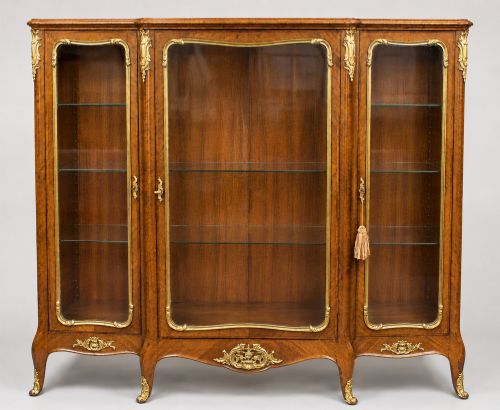
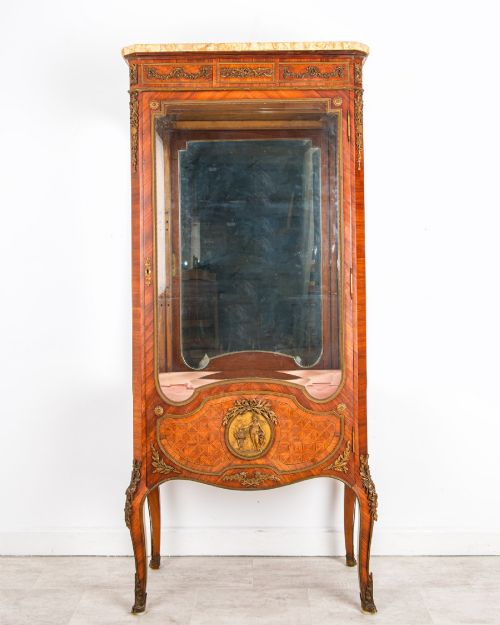
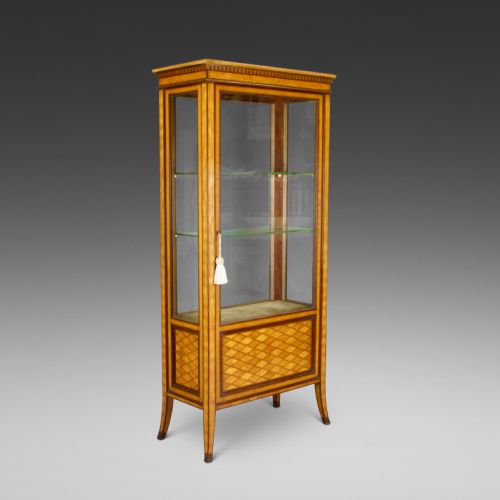
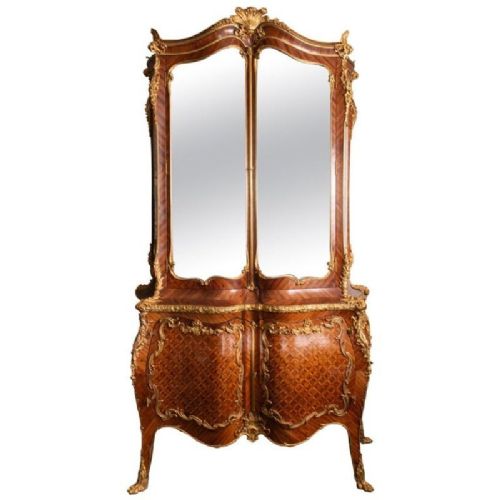
A parquetry curio display takes the form of a display cabinet or vitrine designed to hold precious objects behind glass. Buyers searching this phrase look for timber cabinets featuring intricate geometric wood veneers, most commonly dating from the nineteenth century and the Edwardian period.
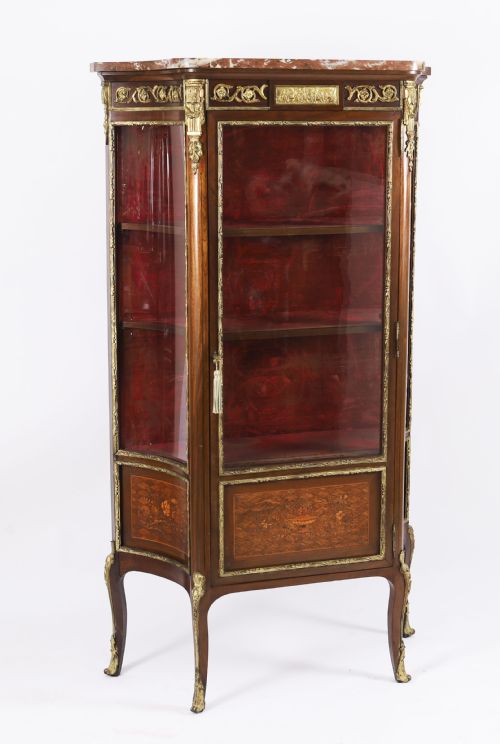
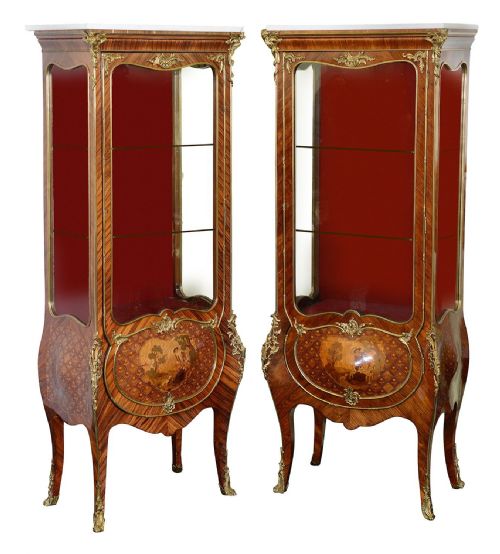
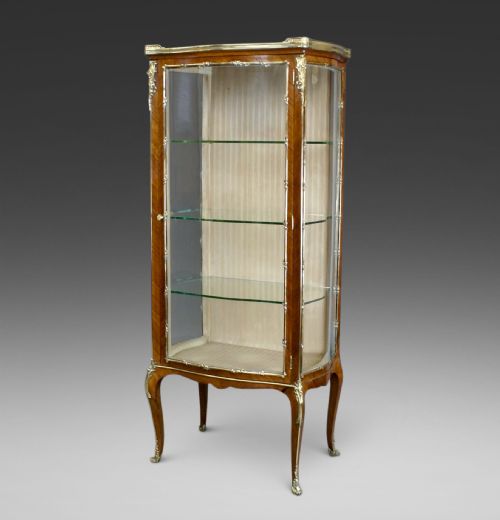
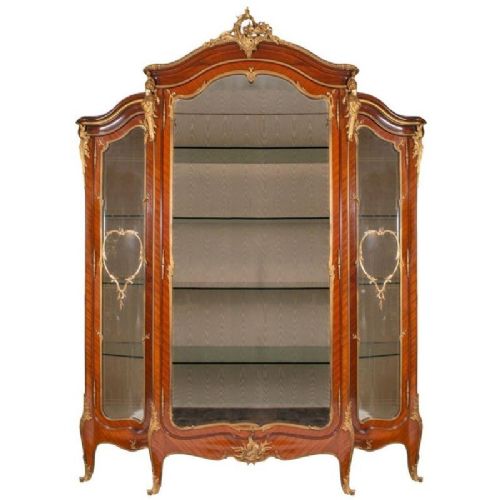
The pieces appearing here are predominantly French in origin, spanning Louis XV and Louis XVI styles alongside Edwardian Sheraton Revival examples. Most pieces incorporate glazed doors and sides to allow light to fall upon the objects displayed within.
How They Were Made
Cabinetmakers constructed these display cabinets using solid and veneered timbers such as kingwood, mahogany, and satinwood arranged in precise parquetry patterns. Ormolu and gilt-metal mounts were cast and applied to accentuate the curves and corners of the structure.
Marble tops frequently finished the upper surface of nineteenth-century examples, while interior shelves often featured fabric linings to cushion delicate items. Joinery relied on traditional framing and veneering techniques to lay out complex geometric wood designs across curved and serpentine fronts.
Some nineteenth-century makers hid their workshop signatures so well in the bronze mounts that collectors need a magnifying glass to spot them.
What Varies in Quality
Quality rests in the precision of the timber parquetry and the crispness of the cast ormolu mounts rather than mere age alone. Finer cabinets display meticulous matching of wood grains and seamless integration of gilt bronze hardware that follows the contours of the furniture.
The architectural ambition of the frame also defines the tier of a piece, distinguishing simple Edwardian mahogany cabinets from large serpentine-fronted vitrines attributed to prominent makers. The weight and integration of the marble top and the clarity of the glass add further distinction across the range.
Francois Linke·Maison Krieger·Gouffel
The Parquetry Curio Display Glossary
- Parquetry
- A geometric mosaic of wood pieces used for decorative veneer on furniture surfaces. It relies on contrasting timbers arranged in repeating patterns.
- Ormolu
- Gilt bronze mounts applied to furniture for decorative enrichment. The technique involves coating cast bronze with a mercury and gold amalgam.
- Vitrine
- A glass-fronted cabinet designed for displaying fine objects and curiosities. The term derives from the French word for glass.
- Serpentine front
- A furniture front curving inward centrally and outward at the ends in a continuous wave. This shape requires advanced woodworking skill to execute properly.
- Kingwood
- A dense, heavily figured timber prized by cabinetmakers for decorative veneers. It displays rich brown tones with dark streaks.
Parquetry Curio Display: Frequently Asked Questions
What is a parquetry curio display used for?
These cabinets serve to protect and exhibit small collectables, porcelain, and precious items behind glass panels. The glazed sides and doors allow light to circulate around the objects from multiple angles.
Historically, they occupied drawing rooms and parlours where hosts presented their finest possessions to visitors. Today they perform the exact same function in domestic interiors.
How do I clean the glass and ormolu?
Dust the timber and ormolu mounts gently with a dry, soft cloth to prevent abrasive particles from scratching the surface. Avoid using harsh chemical polishes that might damage the gilt bronze or dry out the wood veneer.
Clean the glass panels with a mild glass cleaner applied to a cloth rather than sprayed directly onto the surface. This prevents liquid from seeping into the wooden framing or fabric linings.
Are these cabinets suitable for modern homes?
Their restrained footprint and upright proportions allow them to fit comfortably into living rooms, hallways, and dining spaces. The combination of glass and polished wood helps reflect light in smaller rooms.
They provide enclosed storage that keeps delicate display items free from household dust. The varied timber tones pair easily with both contemporary and traditional interior schemes.
How do I distinguish Louis XV from Louis XVI style?
Louis XV style cabinets favour asymmetrical curves, cabriole legs, and flowing Rococo ornamentation. The overall silhouette is organic and undulating.
Louis XVI style pieces embrace neoclassical symmetry, straight lines, fluted columns, and geometric rectangular forms. The decoration draws inspiration from classical architecture and strict proportion.