




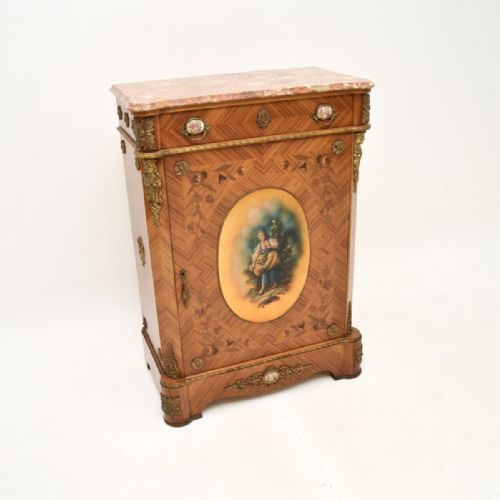


Parquetry Cupboard Cabinet
A parquetry cupboard cabinet brings geometric wood veneers and French revival elegance to a room.
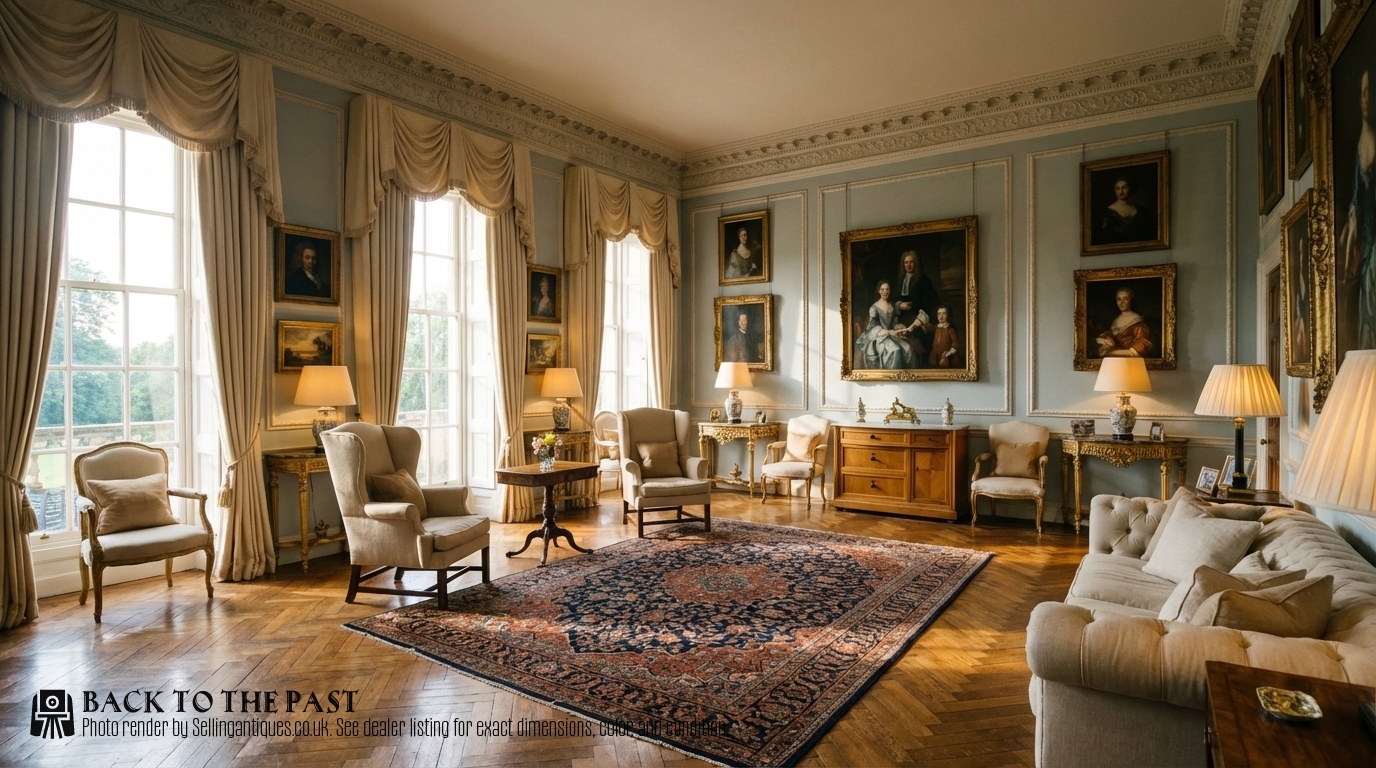
Parquetry Cupboard Cabinet
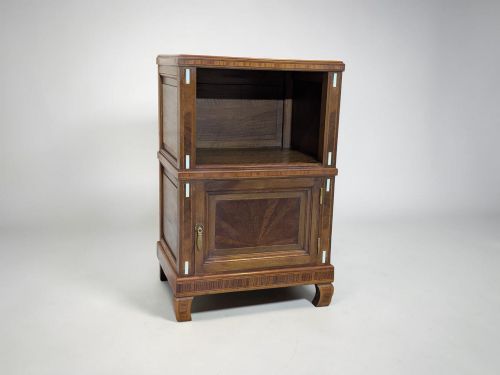
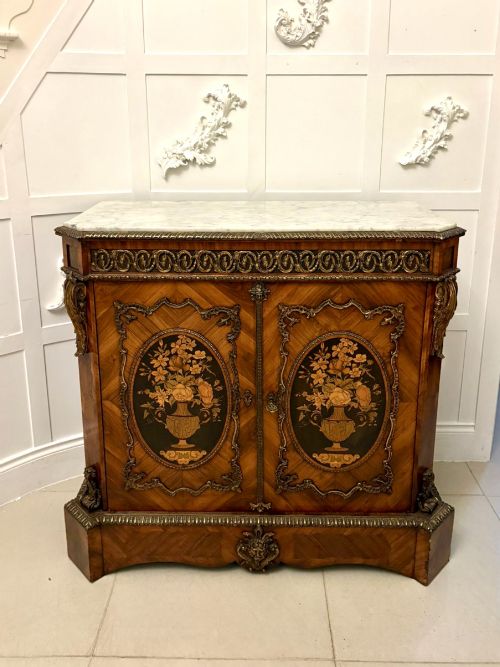
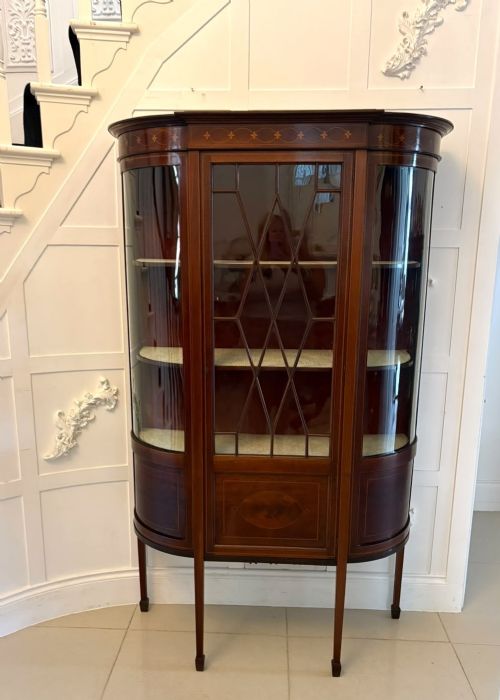
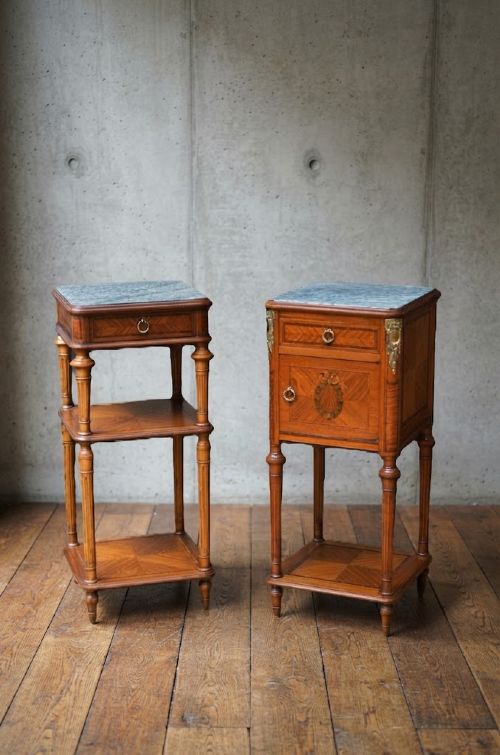
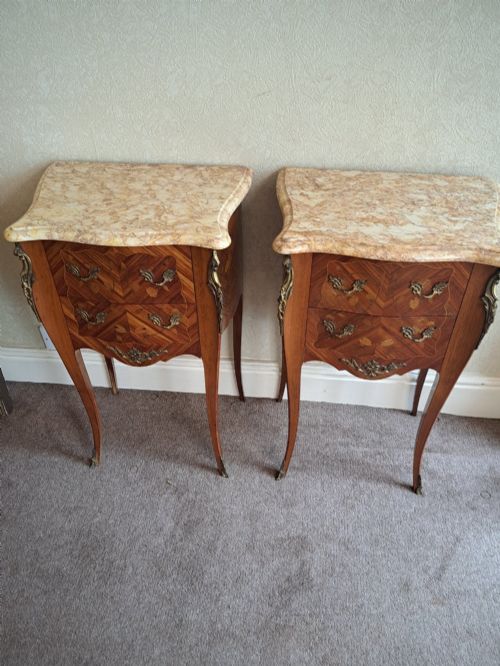
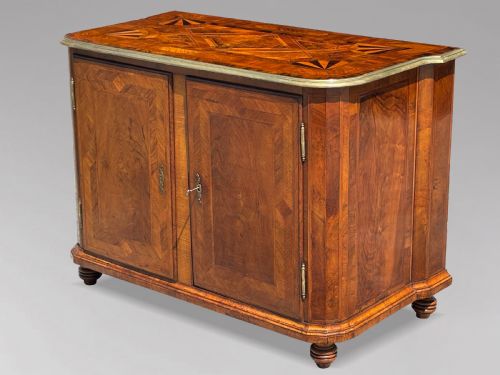
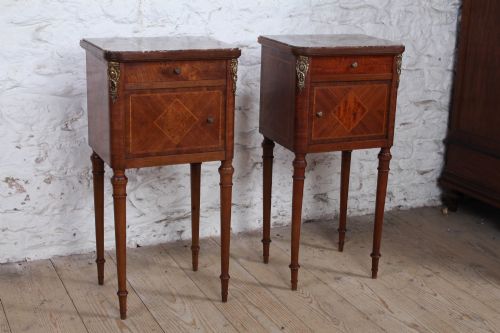
When searching for a parquetry cupboard cabinet, buyers encounter small bedside tables, tall side cabinets, and display pieces originating largely from nineteenth and early twentieth century France. These items draw heavily on Louis XV and Louis XVI design vocabularies, featuring serpentine fronts, marble tops, and detailed wood surfaces.
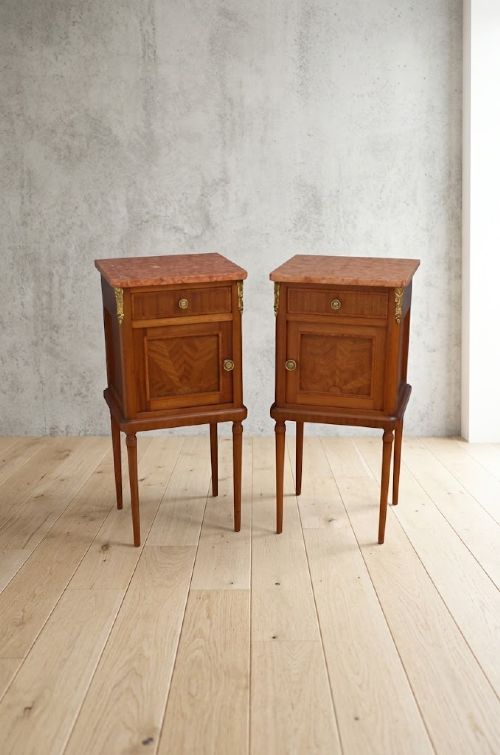
The most common forms on this page are bedside cabinets and nightstands sold in pairs, alongside individual side cabinets and vitrines. Woods such as kingwood, walnut, and satinwood dominate the selection, often arranged in geometric veneer patterns across small proportions.
Periods span from seventeenth century walnut works to later revival pieces from the nineteen-thirties, with nineteenth century productions forming the backbone of the selection. Ormolu mounts and porcelain plaques frequently accompany the parquetry surfaces on the grander items.
Materials and Technique
Cabinetmakers constructed these pieces by applying thin veneers of kingwood, satinwood, walnut, and fruitwood over a secondary timber carcass in precise geometric parquetry and marquetry arrangements. This technique allowed artisans to create complex patterns using the natural grain variations of contrasting timbers.
Marble slabs were shaped to fit the upper surfaces of bedside cabinets and commodes, providing a durable and decorative top. Cast ormolu mounts and bronze sabots were then applied to corners, legs, and aprons to finish the structure.
Parquetry Cupboard Cabinet Retail Price Guide 2026
Typical asking prices for parquetry cupboard cabinet among the pieces listed under this phrase on Sellingantiques today, from the lower quarter to the upper quarter. They describe what is for sale here now, not the wider market.
Listings span from seventeenth century walnut pieces to nineteen-thirties Art Deco bedside tables, featuring marble, ormolu, and kingwood.
Distinctions in Quality
The calibre of a parquetry cupboard cabinet rests upon the precision of the veneer work and the integration of the mounts. Tighter geometric alignment in the wood blocks and crisper casting in the ormolu separate standard production items from workshop pieces bearing maker signatures.
Heavier marble tops with profiled edges and select timber choices like kingwood rather than ordinary walnut indicate higher workshop standards. The structural integrity of the carcase and the smoothness of drawer operation further distinguish finer examples.
Maison Millet·Paul Sormani
The Parquetry Cupboard Cabinet Glossary
- Parquetry
- Geometric mosaic woodwork formed by small veneer blocks arranged in patterns like cubes or chevrons. This technique decorates the surfaces of many French side cabinets.
- Ormolu
- Gilt-bronze mounts applied to furniture for decorative accent and edge protection. These metallic elements appear frequently on Louis style revival pieces.
- Vitrine
- A glass-fronted display cabinet designed for showing porcelain and small objects. Several examples incorporate delicate satinwood and marquetry.
- Chevet
- A French term for a bedside table or nightstand. These small cupboards often feature marble tops and single doors.
- Meuble d’appui
- A nineteenth century French term for a sideboard or supporting cabinet. These pieces typically stand at medium height against a wall.
Parquetry Cupboard Cabinet: Frequently Asked Questions
Where should I place a bedside cabinet?
These small cupboards suit bedrooms as functional bedside tables, holding a lamp and personal items on their marble tops.
They also function in sitting rooms as compact side tables or lamp stands where floor space is limited.
How do I care for marble tops?
Marble surfaces require wiping with a soft, damp cloth and neutral soap to avoid chemical damage.
Acidic liquids like citrus juice or wine can etch polished stone, so coasters protect the vintage finish.
What is the difference between parquetry and marquetry?
Parquetry uses geometric wood blocks to create repeating patterns like cubes, stripes, and checkerboards.
Marquetry employs varied veneers to form pictorial scenes, floral motifs, or scrolling designs across the furniture face.
How do I identify a Louis XVI style piece?
Louis XVI revival items display straight tapered legs, fluting, and neoclassical symmetry rather than the curves of earlier periods.
Ormolu mounts on these cabinets often incorporate ribbons, floral swags, and classical architectural motifs.