


Parquetry Bedside Tables
Parquetry bedside tables bring geometric wooden elegance to the bedroom, pairing decorative veneering with practical bedside storage.

What parquetry bedside tables are
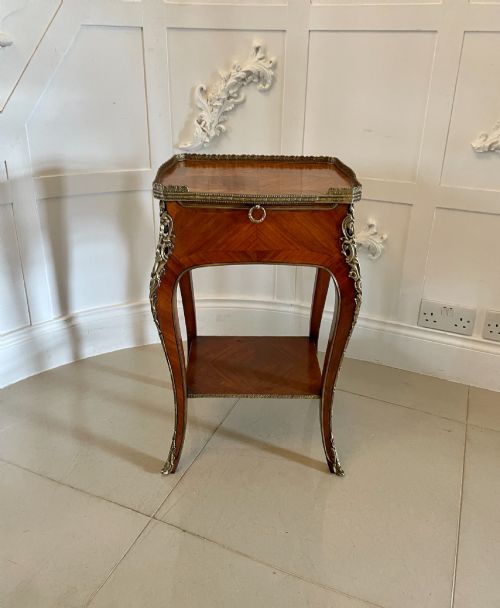
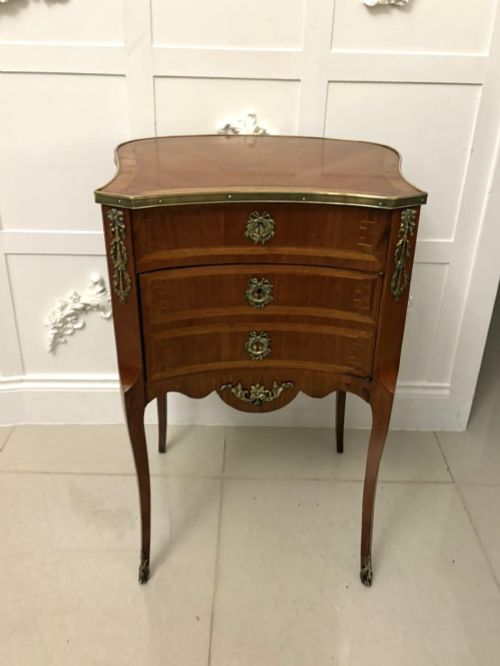
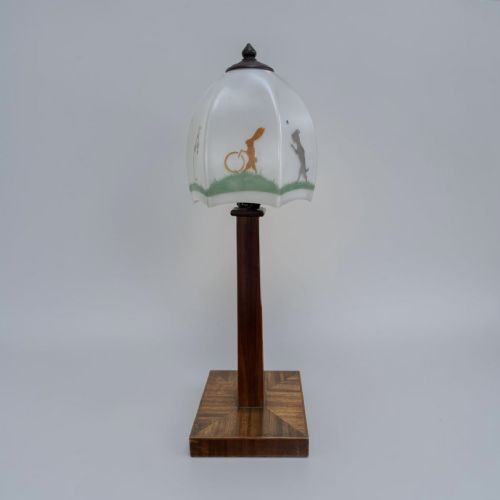
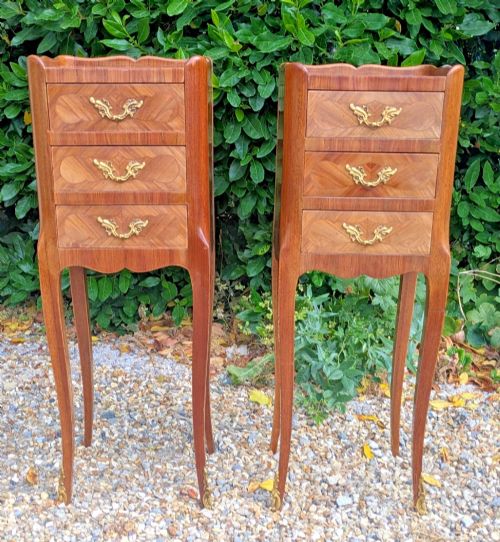
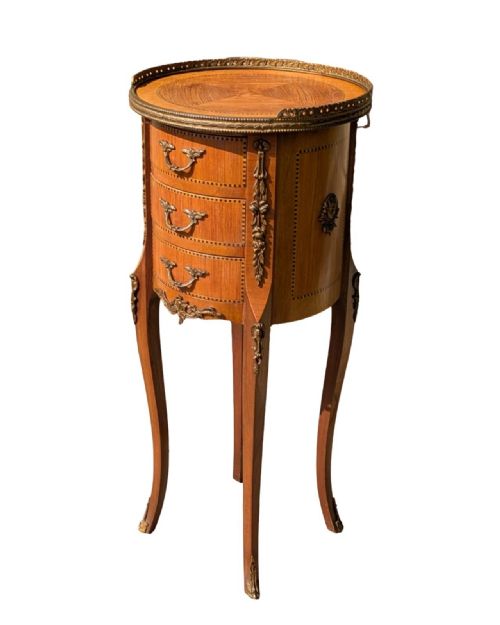
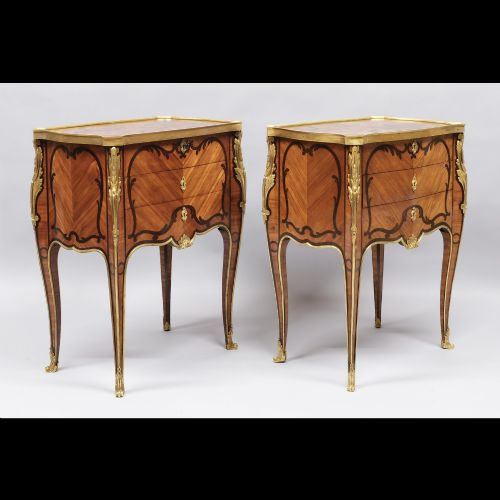
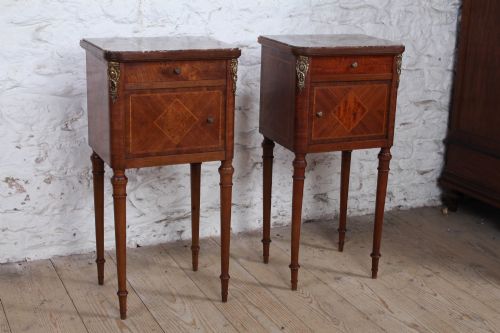
Parquetry bedside tables combine small bedside storage with geometric wood-block patterns on the surface. These pieces appear primarily as French styles, ranging from Louis XV and Louis XVI revivals to Art Deco designs.
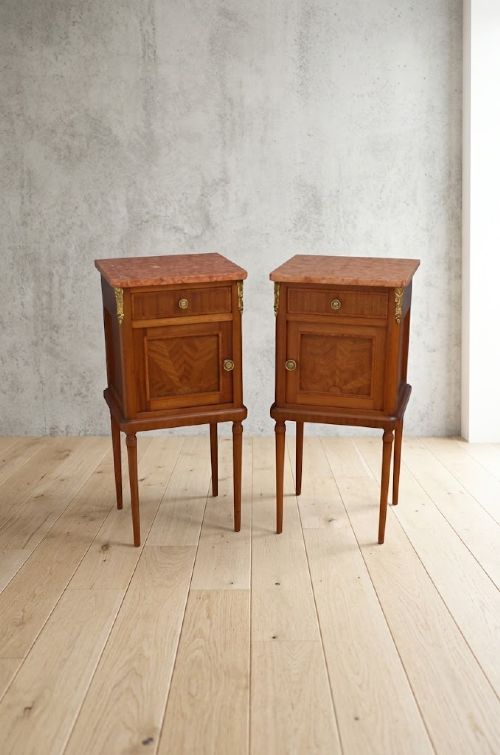
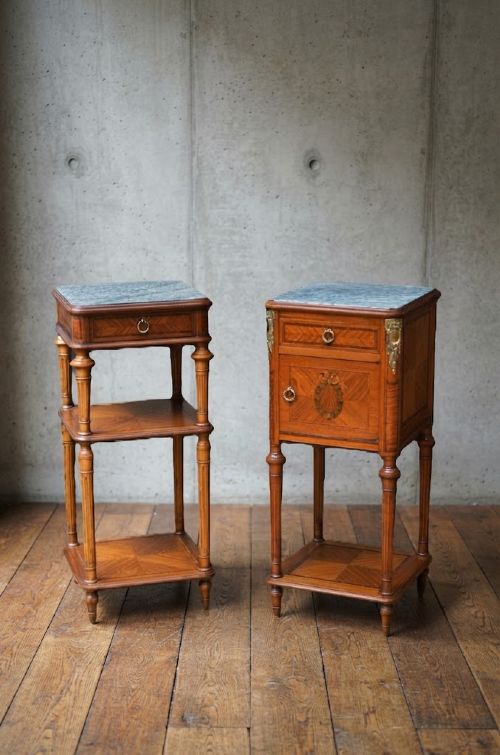
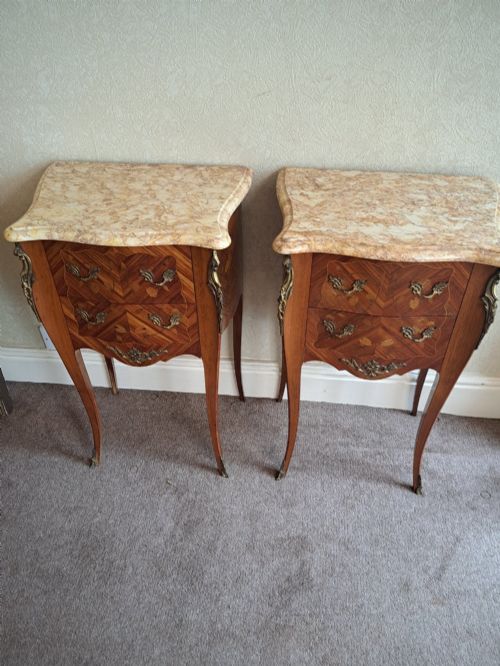
Most examples occur as matched pairs rather than single items. The forms include bedside cabinets, lamp tables and low bedside tables, often topped with marble.
The dates seen across these pieces span the nineteenth and twentieth centuries, particularly around nineteen hundred and nineteen thirty. Buyers encounter oval tables alongside rectangular cabinets.
How they were made
Cabinetmakers constructed these tables using timber veneers cut into geometric shapes and laid onto a carcase. Woods such as satinwood, kingwood, walnut, rosewood and tulipwood provide the contrasting tones for the patterns.
Many examples incorporate marble tops and brass or ormolu mounts. The combination of fine timber marquetry or parquetry with metal mounts and stone tops defines the physical construction of these bedroom pieces.
Retail Price Guide 2026
Typical UK retail prices for parquetry bedside tables, calculated from the Sellingantiques database of over a million retail prices indexed since 2003. This retail price guide relies exclusively on Sellingantiques data; no external sources or auction records are used, so the figures do not describe the wider market.
Some nineteenth-century tables come with stamped maker signatures hidden beneath the marble tops.
What varies in quality
Quality rests in the precision of the timber work and the choice of materials. Finer examples employ varied exotic woods and incorporate cast ormolu mounts rather than plain brass.
The integration of heavy marble tops and the crispness of the geometric pattern separation mark the distinction between standard production and top-tier pieces.
Gillows
The Parquetry Bedside Tables Glossary
- Parquetry
- Geometric wood-block patterns formed by fitting small veneer pieces together. This technique creates the patterned tabletops characteristic of these bedside pieces.
- Chevets
- The French term for bedside tables or cabinets. These small pieces sit beside a bed for night-time storage.
- Ormolu
- Gilt-bronze mounts applied to furniture for decoration. Makers used these metal ornaments to accent the corners and legs of tables.
- Kingwood
- A dense, richly figured timber utilised in fine cabinet-making. Its dark brown tones with lighter streaks suit geometric veneering.
- Satinwood
- A pale, lustrous timber prized for its golden sheen. It provides bright contrast in parquetry designs.
Frequently Asked Questions
Are parquetry bedside tables usually sold as pairs?
Many examples on the market appear as matched pairs, designed to flank a bed symmetrically. Single tables do occur, but pairs dominate the available selection.
Buyers seeking balance for a master bedroom will find that matching pairs offer the traditional arrangement seen in period interiors.
What periods do these bedside tables come from?
The pieces span from the nineteenth century through to the nineteen thirties. Revival styles mimicking eighteenth-century French design are particularly common.
Art Deco examples also appear alongside these earlier revival pieces, reflecting the stylistic shifts of the early twentieth century.
Do these tables come with marble tops?
A significant proportion of these bedside tables feature fitted marble tops. This stone surface provided a durable, wipe-clean shelf for water jugs and lamps.
White and veined marble slabs are standard across both nineteenth-century and twentieth-century variants.
How do I care for a parquetry surface?
Parquetry surfaces require gentle dusting and protection from excessive moisture or direct sunlight. Using coasters prevents water rings on the polished wood and marble.
Regular polishing with appropriate wax maintains the lustre of the various timbers without building up residue.