


Parisian Landscape Oil
A Parisian landscape oil captures the enduring charm of the French capital through expressive brushwork and atmospheric light.
Parisian Landscape Oil
A Parisian landscape oil brings the street scenes, river views and monuments of France into an interior space. These works range from early twentieth century impressions to mid-century modern interpretations of the city.
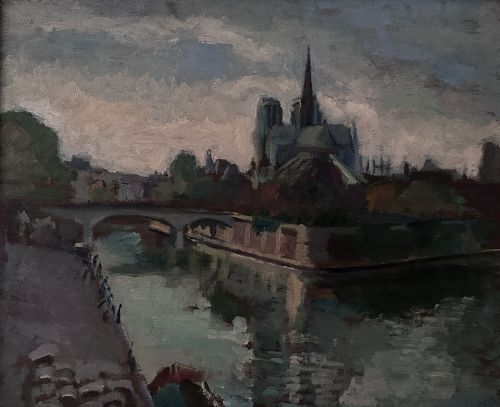
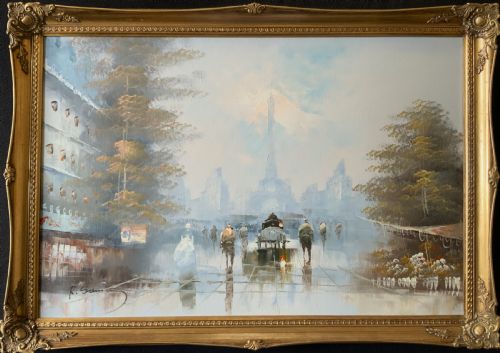
The most common examples on this page are oil paintings on canvas and board depicting iconic landmarks such as Notre Dame, the Eiffel Tower and the River Seine. Buyers encounter varied formats, from intimate board studies to large framed cityscapes.
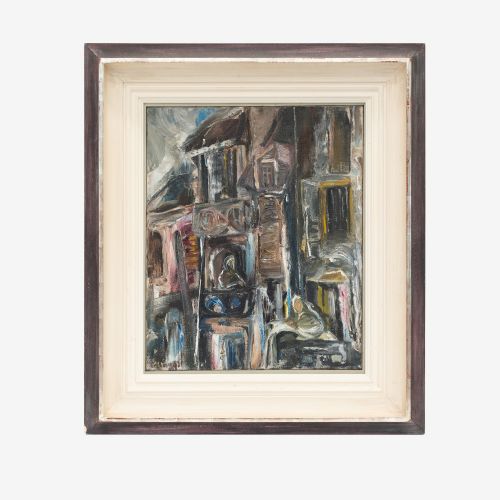
The material record spans the nineteenth century through to the 1960s, capturing stylistic shifts from Belle Epoque realism to post-impressionism and mid-century expressionism.
Materials and methods
Artists relied primarily on oil paint applied to stretched canvas or wooden board, utilising the slow-drying medium to blend tones and build rich surface textures. Support frames frequently consist of wood or gilded wood, which complement the tonal depth of the pigments.
Techniques range from loose, expressive impasto strokes associated with impressionist and expressionist interpretations to flatter, more structured applications found in mid-century works.
Listings feature works spanning the nineteenth century through to the 1960s, executed in oil on canvas, board, and wood.
Assessing quality in the works
Quality rests upon the confidence of the brushwork and the artist's command of light and atmospheric perspective within the composition. Stronger pieces demonstrate a distinct sense of place and movement, capturing the vitality of Parisian streets and waterways rather than relying on mechanical reproduction.
The integration of the painting with its surrounding frame also influences the overall integrity of the piece, with period gilt wood surrounds enhancing the visual weight of the canvas.
Lilian Colbourn·Caroline Burnett·Gabriel Dauchot·Ron Folland·Merio Ameglio·Eduard Leon Cortes·Hermoine Hammond·Pierre Peltier
The Parisian Landscape Oil Glossary
- Impasto
- Paint applied thickly to a canvas or board, leaving visible brush or palette knife marks that add physical texture to the surface. This technique allows light to catch the raised pigment.
- Canvas
- A closely woven fabric stretched across a wooden frame to serve as a durable support for oil painting. It remains the most prevalent medium foundation in this category.
- Post-Impressionism
- An art movement extending beyond impressionism that prioritised symbolic content, expressive use of colour and distinct structural forms. Works in this style often use bolder outlines.
- Gilt wood
- Wood coated with a thin layer of gold leaf or gold paint, frequently utilised for decorative antique frames. It provides a warm metallic border around the painting.
Parisian Landscape Oil: Frequently Asked Questions
What subjects do these paintings typically feature?
The works focus heavily on recognisable Parisian locations, including street scenes, cafes, bridges like the Pont Neuf, and views along the River Seine. Landmarks such as Notre Dame and the Eiffel Tower frequently anchor the compositions.
Alongside major monuments, artists also captured quieter suburban views, parks like Le Jardin des Tuileries, and everyday urban life through changing seasonal light.
How do I date a Parisian landscape oil?
Dating relies on stylistic clues, framing materials, and recorded signatures or dates left by the artist. Works from the Belle Epoque era in the early twentieth century often display traditional impressionist tendencies, whereas pieces from the 1950s and 1960s lean towards mid-century modern or expressionist forms.
Examining the canvas preparation, stretcher frames, and any annotations on the reverse provides further context for the period of creation.
Where should I hang a large cityscape?
Large cityscapes require a substantial wall space where the composition can be viewed from a distance to appreciate the perspective and brushwork. Rooms with steady, indirect natural light help prevent glare on the oil surface while illuminating the finer tonal variations.
Pairing the painting with complementary period or simple modern frames allows the artwork to serve as a strong focal point in a living room, study, or hallway.
What is the difference between canvas and board supports?
Canvas provides a flexible, woven surface stretched over a wooden frame, which yields slightly under the brush and accommodates larger compositions. Board offers a rigid, solid wooden backing that suits smaller, more immediate plein air studies.
Both supports were used across different decades, with board frequently appearing in compact interpretations of Montmartre and river scenes.