

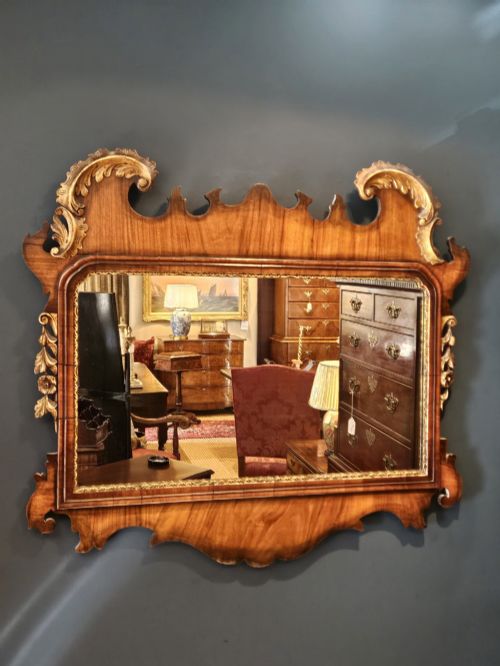


Parcel Gilt Wooden Mirror
A parcel gilt wooden mirror brings warmth and reflective light to a room through its polished timber frame and bright touches of gold.
Parcel Gilt Wooden Mirror
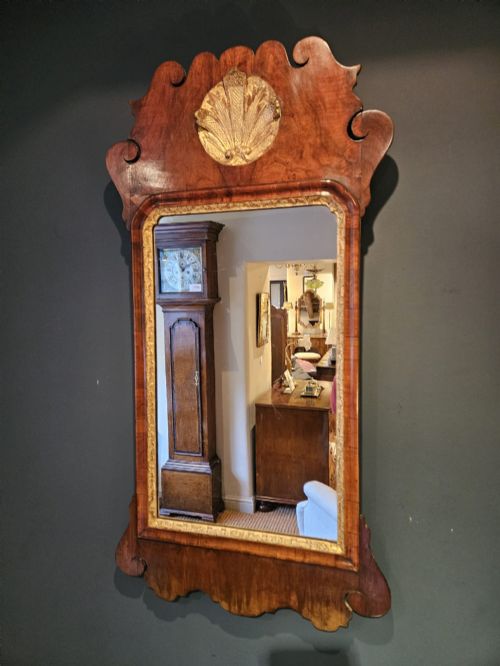
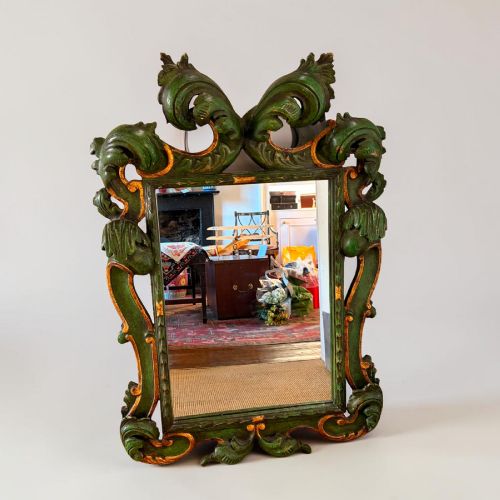
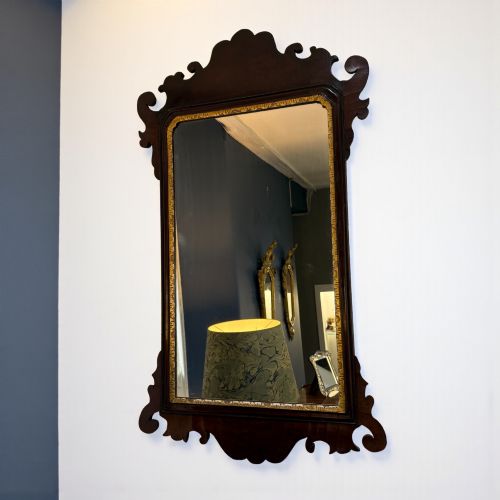
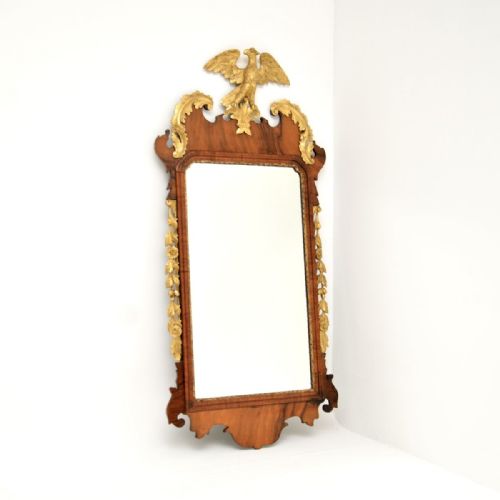
A parcel gilt wooden mirror combines rich brown timber frames with selective touches of gold leaf, creating an elegant contrast that catches the eye. Buyers searching for a parcel gilt wooden mirror will find wall mirrors and overmantel mirrors spanning several eras from the Georgian period to the early twentieth century. Most examples on this page utilise traditional timber foundations such as mahogany and walnut paired with carved gesso details.
The styles range widely from classic George II and George III fretwork designs to Italian Florentine creations and Victorian interpretations. Many pieces display intricate pierced fretwork silhouettes, while others present landscape proportions or grander overmantel dimensions suitable for principal rooms. Every era brings its own distinct interpretation of the form, from eighteenth century craftsmanship to later revival pieces.
Construction and materials
Craftsmen shaped these frames from solid hardwoods like mahogany and walnut, often applying veneers to achieve smooth surfaces and figured grains. Carved gesso ornamentation provided the raised floral or scroll motifs necessary before gilding was applied to selected areas with gold leaf. Paint and ebonisation also appear on select frames to enhance the decorative contrast against the metallic highlights.
Makers utilised hand-cut glass plates for the reflective surface, secured within the wooden rebate by traditional backing boards. The fretwork sections were carefully sawn from timber planks, requiring steady hands and sharp tools to maintain crisp interior angles and delicate silhouettes.
Parcel Gilt Wooden Mirror Retail Price Guide 2026
Typical asking prices for parcel gilt wooden mirror among the pieces listed under this phrase on Sellingantiques today, from the lower quarter to the upper quarter. They describe what is for sale here now, not the wider market.
Some fretwork panels hide subtle pencil lines left by makers who traced their intricate patterns centuries ago.
Assessing quality and craftsmanship
The distinction between standard examples and finer works lies in the depth and precision of the hand-carved ornament on the timber and gesso. Superior pieces exhibit sharper fretwork edges, more fluid scrollwork, and a harmonious balance between the exposed wood grain and the gilt highlights. Original glass plates with authentic silvering also elevate the standing of an antique mirror.
Proportion and scale dictate the visual impact of the piece upon the wall, with well-balanced dimensions reflecting thoughtful design during construction. The retention of early gilding and stable timber construction without excessive replacement parts marks the difference at the upper end of the range.
The Parcel Gilt Wooden Mirror Glossary
- Parcel gilt
- Partially gilded, where gold leaf is applied only to specific carved details or mouldings while the underlying timber remains visible. This technique highlights particular decorative elements on the frame.
- Gesso
- A plaster mixture applied to wood frames to create a smooth surface for carving and gilding. It allows for intricate relief ornamentation before the gold leaf is laid down.
- Fretwork
- Openwork ornamentation cut from a thin board in decorative patterns, frequently seen on eighteenth century mirror frames. This technique creates delicate silhouettes around the perimeter.
- Overmantel mirror
- A large horizontal mirror specifically designed to hang above a fireplace mantelpiece. These pieces often feature landscape orientations to fill the wall space effectively.
- Giltwood
- Wood that has been coated with gold leaf or gold paint to give the appearance of solid gold. It reflects ambient light brilliantly within a room.
Parcel Gilt Wooden Mirror: Frequently Asked Questions
Where should I hang a parcel gilt wooden mirror?
These mirrors suit principal reception rooms, hallways, and above mantelpieces where their reflective qualities and decorative frames can be fully appreciated. Their classic proportions allow them to anchor a wall arrangement or stand alone above furniture.
Ensure the wall construction supports the weight of the timber frame and secure the mirror using appropriate hardware suited to the specific wall type.
How do I care for the gold leaf?
Dust the frame gently with a soft, dry brush to prevent the accumulation of particles without disturbing the delicate metallic surface. Avoid liquid cleaners and chemical sprays, which can damage the historical gilding.
Keep the mirror away from direct heat sources and damp environments to protect the wooden foundation and prevent the gesso from cracking over time.
What is the difference between Georgian and Victorian styles?
Georgian and George III pieces typically feature refined fretwork silhouettes in mahogany or walnut with restrained gilding. Victorian interpretations often present heavier proportions and grander overmantel formats with bolder decorative carving.
Examining the timber preparation, joinery methods, and the style of the gesso helps distinguish the eighteenth century originals from later nineteenth century revival work.
Are the glass plates original?
Many antique mirrors retain their original glass plates, which often display subtle imperfections, minor foxing, or slight distortion characteristic of earlier manufacturing methods. Replacement glass may appear clearer and more uniform across the surface.
Both original and replaced plates serve their functional purpose, though collectors often value the untouched historical character of early glass.