


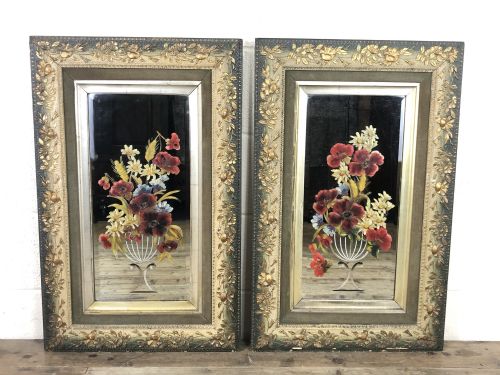
Green and Gold Mirror
A green and gold mirror brings colour and reflection together, offering a decorative surface that brightens dark corners and anchors a room.
Green and Gold Mirror
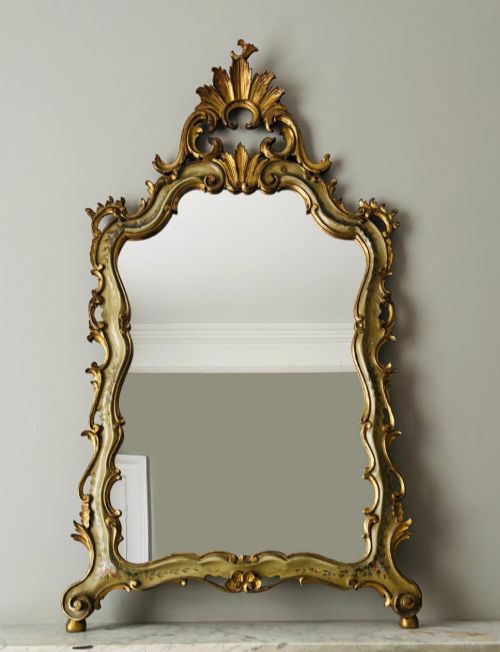
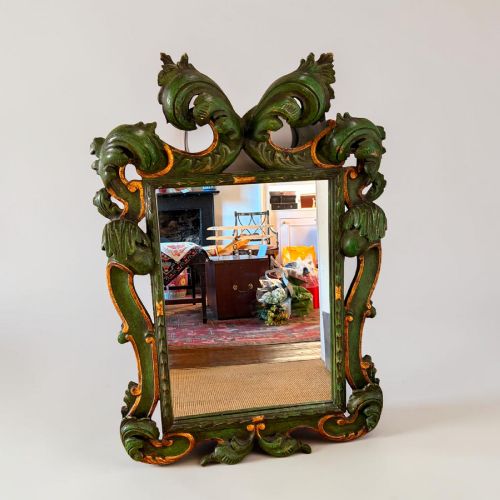
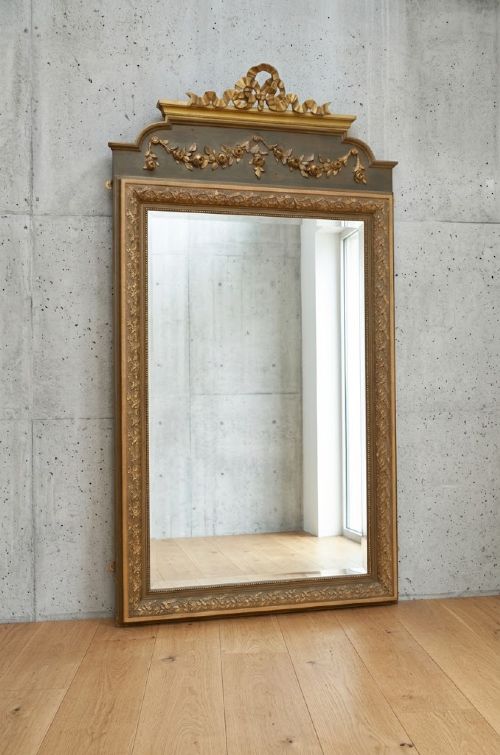
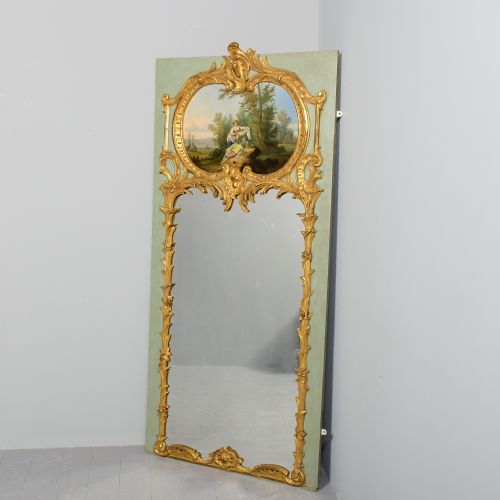
When you search for a green and gold mirror, you encounter a selection of wall mirrors, trumeau mirrors, and pier mirrors spanning the nineteenth and early twentieth centuries. These objects combine painted surfaces in shades of green with gilded or giltwood details, drawing on styles such as Victorian, Neoclassical, Venetian Rococo, and Belle Epoque.
The version you are most likely to meet on this page is a European wall mirror, often originating from France or Italy, featuring carved wood, painted wood, or giltwood. Alongside mirrors, the selection includes related forms like console tables and powder compacts that share the same decorative palette.
These pieces function primarily as interior wall decorations, reflecting light and adding colour through painted polychrome surfaces and gold leaf highlights. The designs range from ribbon crest motifs to classical architectural framing.
How they were made
The construction of these mirrors relies on traditional woodworking techniques, utilising carved wood, giltwood, and painted wood for the frames. Artisans applied gold leaf and paint to create the characteristic green and gold finish.
Glass plates provide the reflective surface, paired with bronze, brass, or marble elements in specific pieces such as console tables and hall mirrors. The integration of paint and gilding required skilled application by makers working within regional traditions.
Listings feature periods from the nineteenth and early twentieth centuries, including Victorian, Belle Epoque, and Art Deco eras.
What varies in quality
The quality of a green and gold mirror rests in the depth of the carving and the precision of the gilding on the wooden frame. Hand-carved giltwood and finely cast metal elements demonstrate a higher level of craftsmanship than simpler painted surfaces.
The application of the green paint and gold leaf varies, with some pieces showing intricate polychrome details and others relying on simpler painted finishes. The integration of original mirror glass and structural stability also separate the finer examples from standard decorative items.
Richard Hudnut
The Green and Gold Mirror Glossary
- Giltwood
- Wood that has been covered with a thin layer of gold leaf or gold paint. This material provides the bright metallic highlights seen on many antique mirror frames.
- Trumeau mirror
- A decorative wall mirror designed to fit into the panel above a mantelpiece or between two windows. These pieces often feature painted wooden panels alongside the glass.
- Polychrome
- The practice of decorating architectural elements or furniture in a variety of colours. On these mirrors, it describes the painted green and multi-coloured surfaces.
- Pier mirror
- A tall mirror designed to hang on the wall space between two windows, often placed above a matching console table. They reflect light into the centre of a room.
- Neoclassical
- A style of art and architecture inspired by the classical antiquity of ancient Greece and Rome. Pieces from this period exhibit symmetrical forms and restrained classical ornamentation.
Green and Gold Mirror: Frequently Asked Questions
What is a green and gold mirror?
A green and gold mirror is a decorative wall mirror featuring a frame finished with green paint and gold leaf or giltwood highlights. These pieces date predominantly from the nineteenth and early twentieth centuries.
They encompass various regional styles, including Venetian Rococo, French Belle Epoque, and Italian Neoclassical designs, combining functional glass with ornate frames.
Where were these mirrors placed?
These mirrors were traditionally hung on interior walls in reception rooms, hallways, and parlours. Pier mirrors were specifically designed for the wall space between windows.
They served both to reflect natural light into dark rooms and to act as striking decorative centrepieces within domestic interiors.
How do I identify a Neoclassical mirror?
Neoclassical mirrors display symmetry, straight lines, and motifs drawn from classical antiquity. They often incorporate carved giltwood and faux marble elements.
Unlike the more asymmetrical Rococo style, Neoclassical frames rely on architectural order and balanced proportions.
What materials are used in these frames?
The frames are constructed primarily from wood, including painted wood and carved giltwood. Some examples incorporate cast brass, bronze, or marble components.
The reflective surfaces consist of traditional mirror glass set within these decorative wooden and metallic housings.