
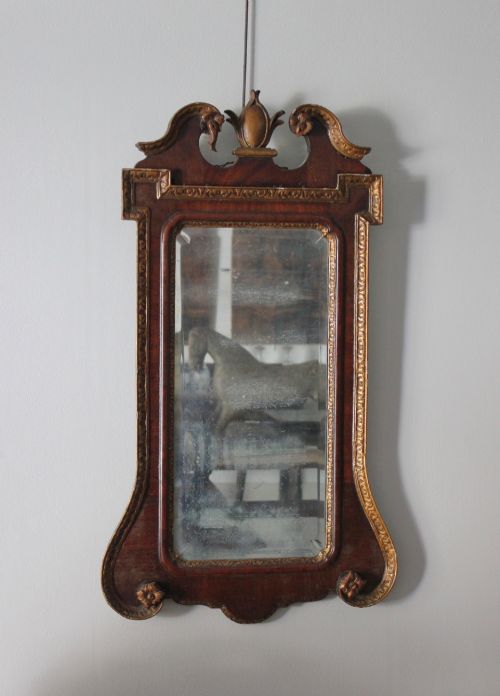

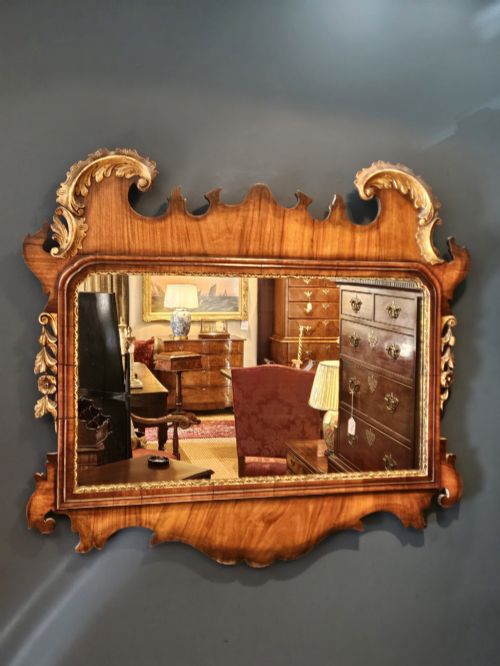


Parcel Gilt Mahogany Mirror
A parcel gilt mahogany mirror combines rich dark timber with bright touches of gold leaf to brighten any interior space.
Parcel Gilt Mahogany Mirror
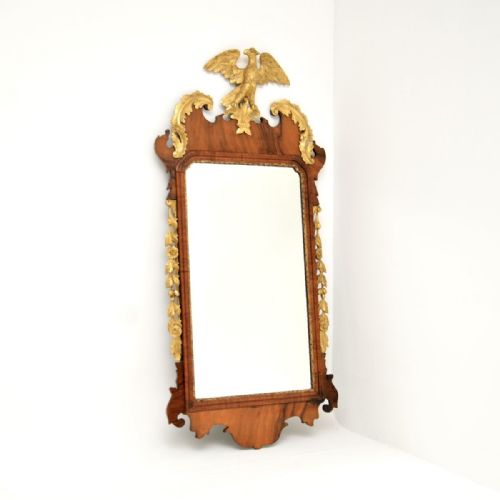
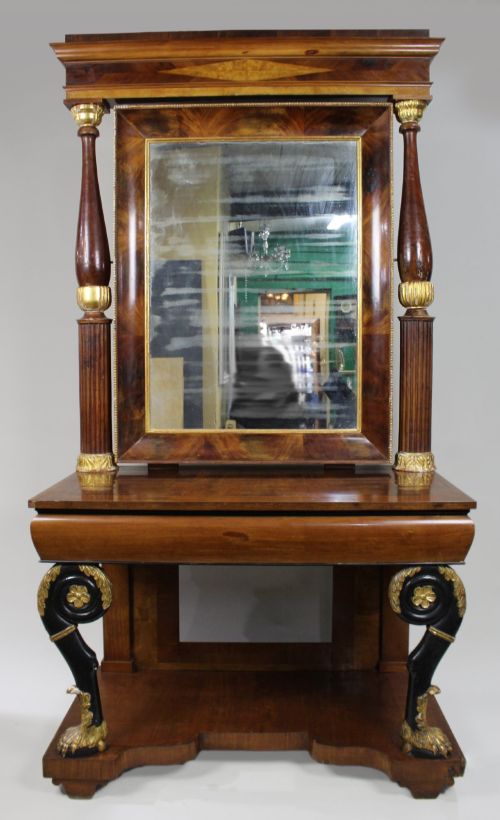
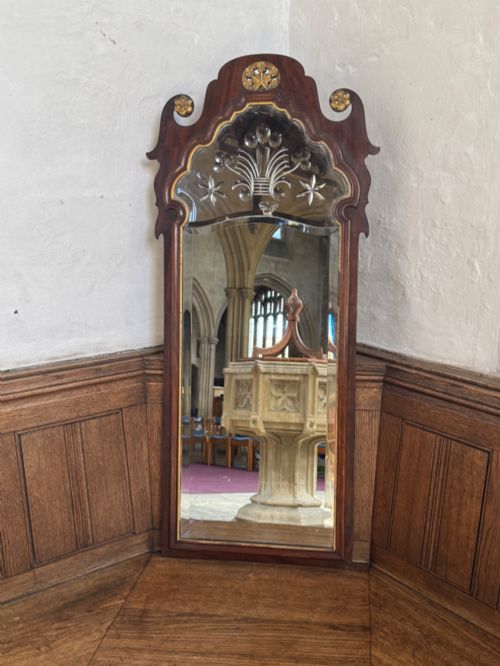
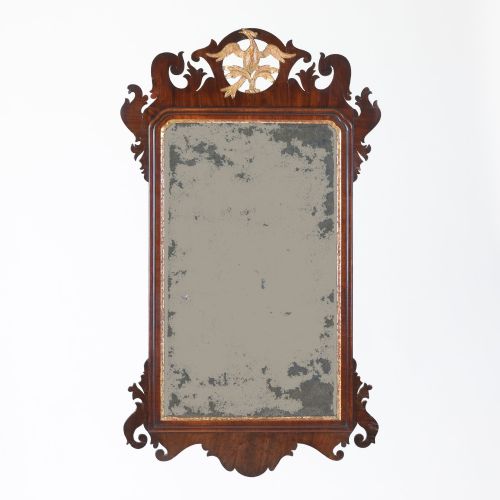
When searching for a parcel gilt mahogany mirror, a buyer encounters a range of wall-hanging and dressing glasses produced across the eighteenth and nineteenth centuries. These pieces typically feature dark timber frames embellished with selective gold leaf highlights on carved details such as mouldings, ears, or crests.
The most common forms on this page include Georgian fretwork wall mirrors, larger pier mirrors, and landscape overmantels. Examples span original eighteenth-century creations from the reigns of George II and George III alongside later Victorian and Edwardian revivals of those classical styles.
How they were made
Cabinetmakers constructed the foundational frames using solid mahogany, often shaping the crests and borders with intricate frets and scrolling outlines using a fretsaw. Selected areas received a layer of gesso before the application of thin gold leaf to create the characteristic parcel gilt contrast against the polished dark wood.
Original mirror glass plates were typically silvered with mercury or tin amalgam and set into rebates at the back of the frame, secured by old pine backboards. Later replacements or nineteenth-century examples utilise different silvering methods, while structural elements are occasionally reinforced with pegged mortise and tenon joints.
Many a haughty mythical bird keeps eternal watch from the top of these wooden frames.
What varies in quality
The distinction between average and exceptional pieces lies in the crispness of the hand-carved fretwork and the depth of the mahogany grain. Superior examples display balanced proportions, delicate pierced decoration, and well-preserved original gilding that catches the light without heavy restoration.
Another measure of quality rests on the integrity of the glass plate and the backing boards. Mirrors retaining their original silvered plates with natural ageing show a soft, mottled reflection that enhances historical character far more than a modern, uniform replacement.
William Kent
The Parcel Gilt Mahogany Mirror Glossary
- Parcel Gilt
- Decoration where only specific carved portions of an object are gilded with gold leaf, leaving the surrounding timber exposed. This technique highlights particular architectural or sculptural details on the frame.
- Fretwork
- Openwork ornamentation cut from a thin board of timber using a fretsaw. It creates flat, decorative silhouettes along the outer edges of eighteenth-century mirror frames.
- Pier Mirror
- A tall glass designed specifically to hang on the wall space between two windows. They often coordinate visually with console tables placed directly beneath them.
- Overmantel Mirror
- A wide horizontal glass intended to be mounted directly above a fireplace mantelpiece. These pieces frequently incorporate landscape proportions or multiple plates.
- Ho-ho Bird
- A mythical Chinese phoenix motif commonly carved into the gilded crests of mid-Georgian mirrors. It appears frequently as a central decorative flourish on Chippendale style frames.
Parcel Gilt Mahogany Mirror: Frequently Asked Questions
How do I date an old mirror?
Dating relies on examining the timber construction, the style of the fretwork, and the characteristics of the glass plate. Eighteenth-century frames typically use native mahogany with hand-cut joinery and heavy bevelling on old plates.
Later Victorian and Edwardian revivals often utilise machine-sawn elements and different backboard fixings. Comparing the decorative motifs against known Georgian design periods also clarifies the age.
Where should I hang a pier mirror?
Pier mirrors are traditionally hung on the narrow strip of wall between two windows. This placement maximises natural light reflection within a classical interior layout.
They also work effectively above smaller entrance hall tables or sideboards where vertical wall space is limited.
Are original mirror plates clear?
Original antique glass plates rarely provide a flawless, modern reflection. They usually exhibit subtle foxing, minor speckling, and gentle distortions from early manufacturing methods.
Collectors generally prize these aged characteristics because they confirm the authenticity of the glass and add depth to the appearance.