


Paper Winter Landscape Painting
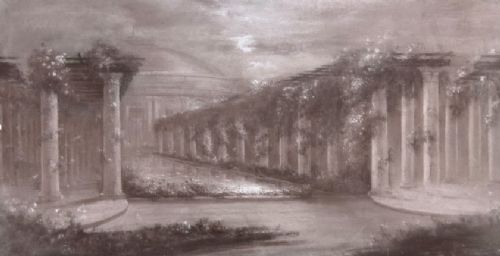
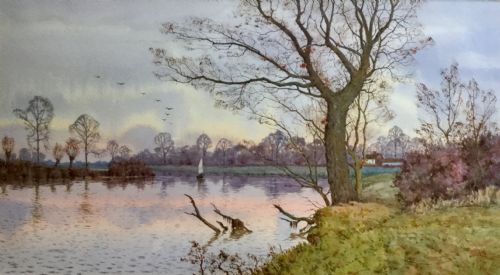
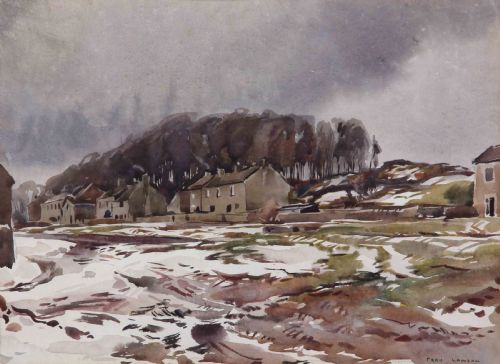
These paper winter landscape painting works capture frost, snow and bare branches on paper, offering a quiet window into the colder months.
Paper Winter Landscape Painting
A paper winter landscape painting brings together delicate pigment and frosty scenes, capturing snow-covered fields and cold northern light. You will frequently encounter works from the nineteenth century through to the mid-twentieth century.
The selection ranges from detailed Edwardian watercolours to mid-century pastels and charcoal sketches. These pieces record rural scenes, coastal harbours and quiet gardens under winter skies.
Most examples arrive framed behind glass, preserving the fragile paper support from moisture and handling. Painters recorded British and European locations, from Yorkshire dales to French towns.
How they were made
Artists worked primarily with watercolour pigment, pastel and charcoal applied directly to paper sheets. Some watercolours employ thin washes for pale winter skies, while pastels build up heavy textures of snow.
Supports often consist of heavy paper or card, occasionally attached to canvas stretchers for stability. Glazing with glass and gilt wood framing protects the vulnerable paper surface from environmental damage.
Periods represented span from the late nineteenth century through Edwardian times to the mid-twentieth century.
What varies in quality
Quality rests on the sureness of the hand and the sensitivity to light, distinguishing casual sketches from accomplished Impressionist studies. Stronger works capture atmospheric mood, such as twilight or mist, rather than mere topographical recording.
The preservation of the paper and pigment integrity also marks out better examples. Tonal balance and the handling of white paper spaces to represent snow define the success of each composition.
Fred Lawson·John Hobson Nicholson·W. Tatton Winter·Emily M. Paterson·Matthew Hale·Angus Rands·Arthur Anderson Fraser
The Paper Winter Landscape Painting Glossary
- Watercolour
- A paint consisting of pigment suspended in a water-based solution, applied in translucent washes on paper.
- Pastel
- A dry medium made of powdered pigment and a binder, producing velvety marks often used for soft winter light.
- Charcoal
- A form of dry carbon used for drawing, capable of deep blacks and subtle smudged greys.
- Gilt
- A thin layer of gold leaf applied to wood framing, adding a reflective border to the artwork.
Paper Winter Landscape Painting: Frequently Asked Questions
How should I hang a paper winter landscape painting?
Keep these works away from direct sunlight to prevent the watercolour pigments and pastels from fading over time. Position them on interior walls where room temperature and humidity remain stable.
Ensure the glass does not press directly against the paper surface to avoid condensation damage. Professional framing with acid-free mounts preserves the integrity of the sheet.
What periods do these winter paintings cover?
The available works span from the late nineteenth century through the Edwardian era and into the mid-twentieth century. This period encompasses early British Impressionism and Tonalist movements.
Dates range from the 1890s through to the 1960s, showing shifts in how artists interpreted snow and cold light. Each era brings distinct framing styles and handling of watercolour or pastel.
Are these paintings original artworks?
Every piece listed under this phrase is an original work created by hand rather than a modern reproduction. Artists used watercolour, charcoal and pastel directly on paper.
Signatures from period painters frequently appear on the front or verso of the sheets. Many retain historical framing and paper attachments from their original creation.
How do I identify pastel from watercolour?
Watercolour relies on translucent washes that allow the white of the paper to shine through for snowy highlights. Pigments sink into the fibres of the paper support.
Pastel sits on top of the paper as a powdery, velvety layer of compressed pigment. This medium offers dense, opaque coverage often seen in French post-impressionist snow scenes.