
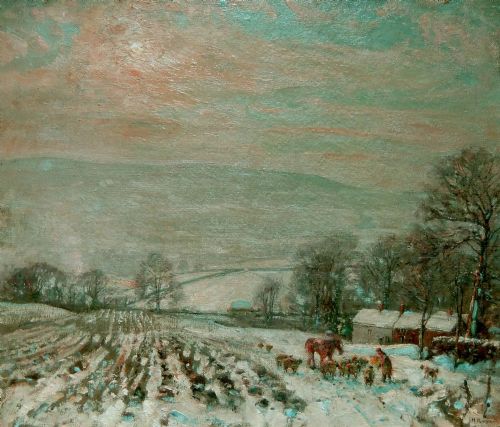
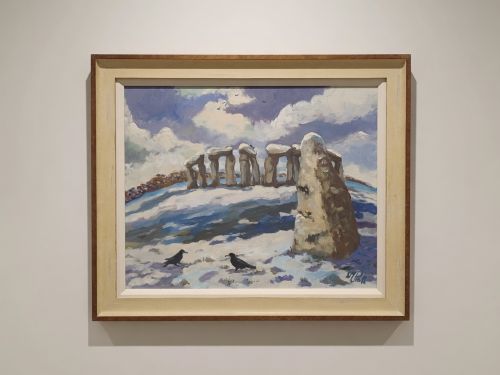
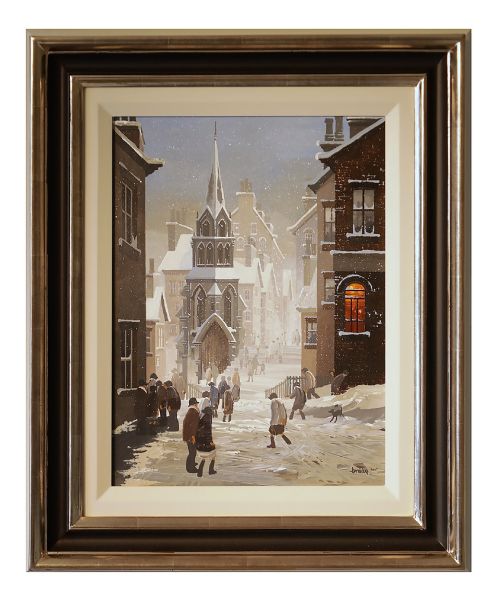
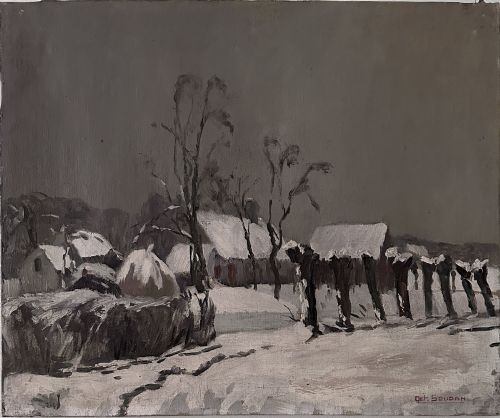


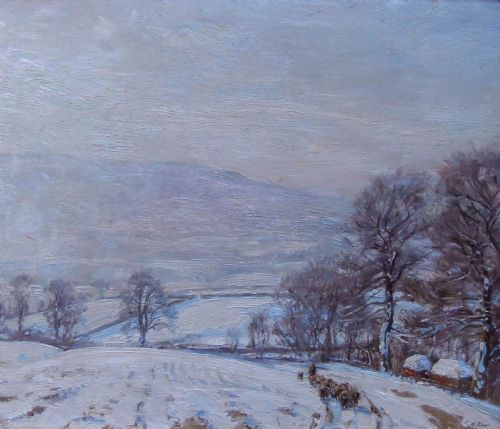


Snowy Landscape Wall Art
These snowy landscape wall art pieces capture frozen fields and quiet winter days, bringing historic winter scenes straight into your home.
Snowy Landscape Wall Art
When you search for snowy landscape wall art, you are looking at historic depictions of winter scenes, snow-covered pastures, and cold rural days. These works record frozen fields, winter farming, and quiet villages under snow, captured by artists across different decades.
On this page, you are most likely to meet oil paintings on canvas alongside watercolours on paper. The selection spans the nineteenth century through to mid-century modern works and later twentieth-century pieces, showing how artists recorded the winter chill over generations.
How they were made
These works are painted using oil on canvas or watercolour and ink on paper, often set within traditional wood frames. The artists applied oil paint to build up thick textures for snow, or used fluid watercolours and ink washes to suggest mist and frost.
The physical construction relies on stretched canvas over wooden supports or heavy paper mounted for stability. Many of these pieces retain their original wood frames, which protect the edges of the canvas and paper from damage over time.
Several pieces on this page specifically capture sheep enduring the winter cold.
What varies in quality
Quality in these winter scenes lies in the handling of light on snow and the atmosphere of the cold air. Superior works show a confident command of colour to render shadows on white drifts rather than relying on flat white pigment.
The strength of the composition and the artist's ability to convey the stillness of winter separate a standard decorative view from a striking piece of fine art. Brushwork and the preservation of the original paint surface also dictate the standing of each piece.
Herbert Royle·Lucy Pratt·Brian Shields Braaq·Anthonij Anton Mauve
The Snowy Landscape Wall Art Glossary
- Canvas
- A heavy woven fabric stretched across a wooden frame to serve as a sturdy support for oil paint. It provides a textured surface that holds thick applications of pigment.
- Watercolour
- A paint consisting of pigment suspended in a water-based solution, typically applied to paper. It allows for translucent washes that capture soft winter light and mist.
- Impressionism
- A style of painting that focuses on capturing the visual impression of a moment, paying particular attention to shifting light and natural colours. Works in this style often feature rapid, visible brushstrokes.
- Wood frame
- A rigid border constructed from timber to enclose, support, and protect a painting or work on paper. These frames are often period-specific and complement the artwork.
Snowy Landscape Wall Art: Frequently Asked Questions
What periods do these paintings come from?
The selection spans from the nineteenth century through the 1920s, 1930s, and 1950s, up to pieces created later than 1960.
These dates reflect the active periods of the artists and the framing styles typical of those decades.
How should I hang a canvas painting?
Canvas works should be hung away from direct sunlight and damp walls to protect the paint layer and the wooden stretcher bars.
Ensure you use appropriate fixings that match the weight of the frame and the wall type in your home.
What materials were used to create them?
Artists used oil paint on canvas, watercolour, and ink on paper, housed within traditional wood frames.
These materials were standard for fine art production across the nineteenth and twentieth centuries.
How do I identify a watercolour from an oil painting?
Watercolour works are typically executed on paper under glass, showing translucent washes and fine ink details. Oil paintings feature textured, opaque pigments applied directly to woven canvas.
Examining the surface closely under good light reveals whether the medium has a glossy, impasto finish or a flat, paper-based absorbency.