
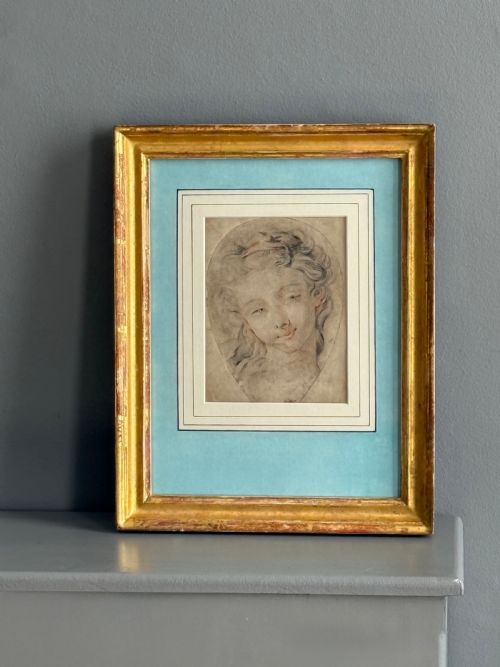
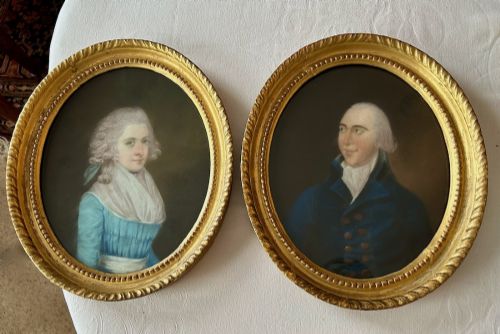
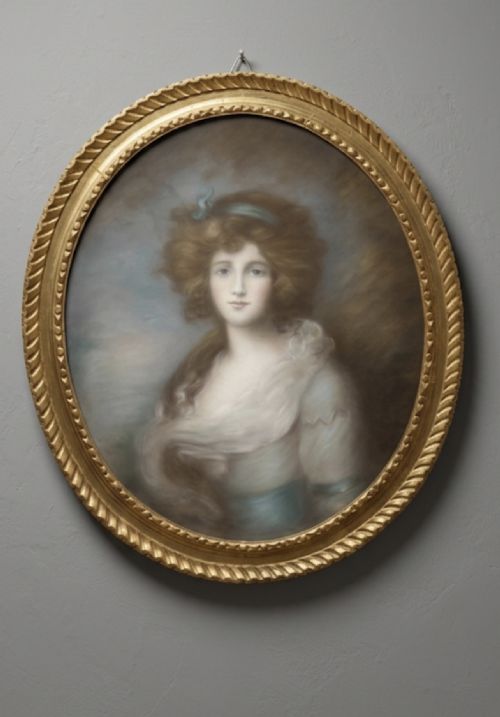


Paper Oval Portrait Drawing
These paper oval portrait drawing pieces capture personal likenesses through delicate media, offering an intimate glimpse into past centuries.
Paper Oval Portrait Drawing
A paper oval portrait drawing presents a historical likeness shaped by the hands of past artists working across the eighteenth and nineteenth centuries. These works take the form of intimate framed artwork, capturing sitters ranging from Regency ladies and gentlemen to Edwardian figures.
The pieces on this page span the Georgian, Victorian, and Edwardian eras, encompassing both British and French schools. Collectors encounter formats framed tightly within giltwood or carved wooden surrounds that emphasise the curved boundary of the portrait.
How they were made
Makers housed the finished drawings behind glass within protective surrounds, often utilising gilt frames, gilded silhouettes, or brass fittings to complete the presentation.
Some sitters gaze out with such intensity they appear ready to interrupt your tea.
What varies in quality
The standard of execution depends heavily on the draughtsmanship and the artist's ability to render expression and proportion truthfully within the confines of the paper support. Finer examples display a confident handling of line and tone, whether through the softness of pastel or the precision of graphite.
Preservation of the delicate paper surface and the integrity of the original frame also influence the standing of a piece. Works retaining their contemporary glass and framing materials offer a more complete historical artefact.
Nathaniel Bermingham·Charles Prosper Sainton·Henri Josephe Hesse
The Paper Oval Portrait Drawing Glossary
- Pastel
- A dry medium composed of powdered pigment and a binder, used to create soft-toned portraits on paper.
- Giltwood
- Wood carved and coated with gold leaf, frequently utilised for the ornate frames enclosing these portraits.
- Bourbon Restoration
- The period in French history spanning the early nineteenth century when the Bourbon monarchy was restored.
- Wash
- A thin, fluid layer of watercolour applied evenly across paper to create background depth or tonal shading.
Paper Oval Portrait Drawing: Frequently Asked Questions
How should I hang these portraits?
These framed works require placement away from direct sunlight to protect delicate watercolours and pastels from fading over time. Stable indoor humidity helps preserve the paper supports and wooden frames.
Grouping smaller oval frames together creates a traditional gallery arrangement on a wall, echoing period display methods.
Are these works original?
The pieces represent period works created by artists active during the eighteenth and nineteenth centuries. Materials such as handmade paper and period frames correspond to the recorded eras.
Signatures, inscriptions, and stylistic markers assist in identifying the origin and timeframe of each individual drawing.
What subjects appear most often?
Portraits frequently depict named individuals, members of historical schools, or unidentified gentlemen and ladies from past centuries. Sitters range from nobility and mistresses to elegant young people of the Georgian and Victorian eras.
Artists also produced profile silhouettes and detailed studies capturing the character of their subjects.
How do I identify the period?
Clothing styles, hairstyles, and framing techniques provide primary clues for dating a portrait drawing. Eighteenth-century works often display powdered wigs and specific costume cuts, while Victorian pieces reflect mid-century fashions.
Inscriptions on the reverse or contemporary documentation further clarify the exact timeframe of creation.