





Paper Maritime Wall Art
Paper maritime wall art brings historic coastal scenes and sailing vessels into rooms through delicate waterworks, etchings, and gouache.
Paper Maritime Wall Art
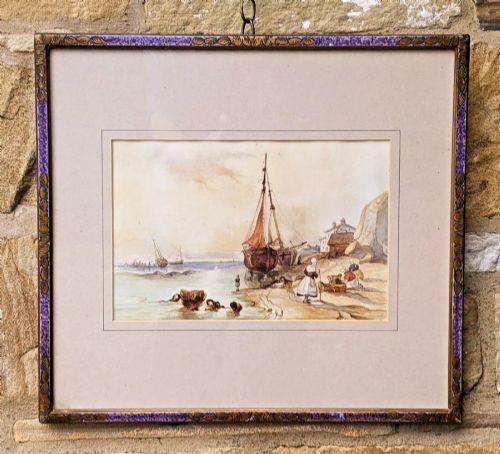
Paper maritime wall art encompasses framed watercolours, gouache paintings, etchings, and prints depicting harbours, coastal landscapes, and shipping vessels. When exploring paper maritime wall art, the most frequent encounters are nineteenth-century and early twentieth-century British watercolours capturing coastal towns and fishing boats.
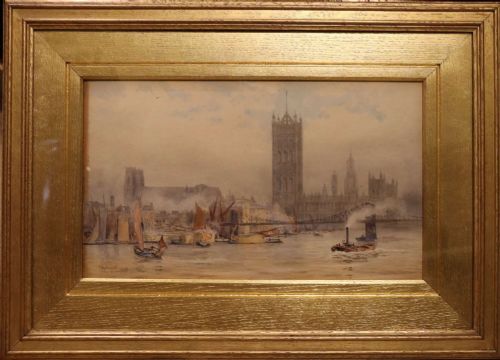
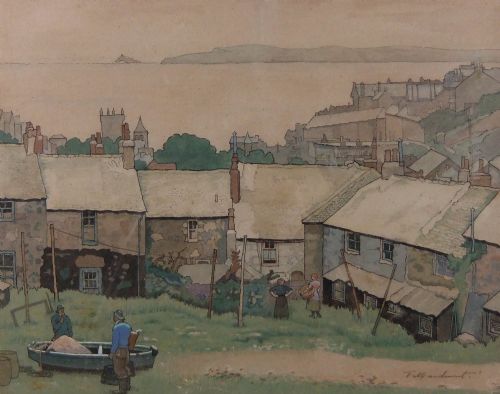
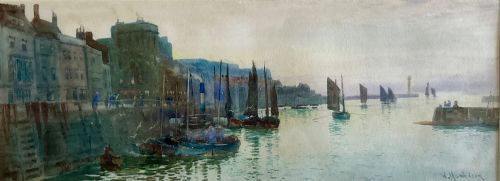
The selections span Victorian scenes of Whitby and St Ives, Edwardian depictions of river traffic, and mid-century watercolours of local harbours. These pieces typically arrive framed under glass, preserving delicate pigments and ink lines against environmental wear.
Materials and Technique
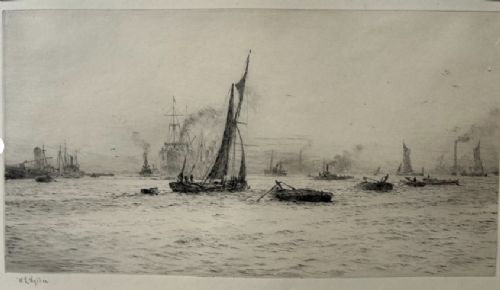
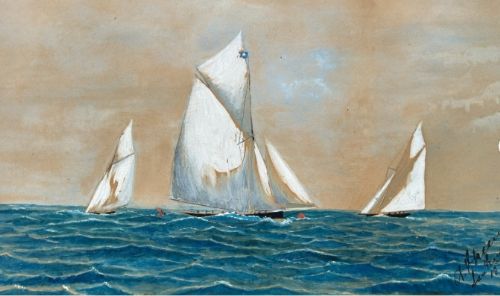
Watercolour pigment and ink applied to paper form the foundation of these works, frequently paired with gouache for opaque highlights on ships and cresting waves. Etchings utilise inked metal plates pressed onto paper, capturing fine linear detail in rigging and architecture.
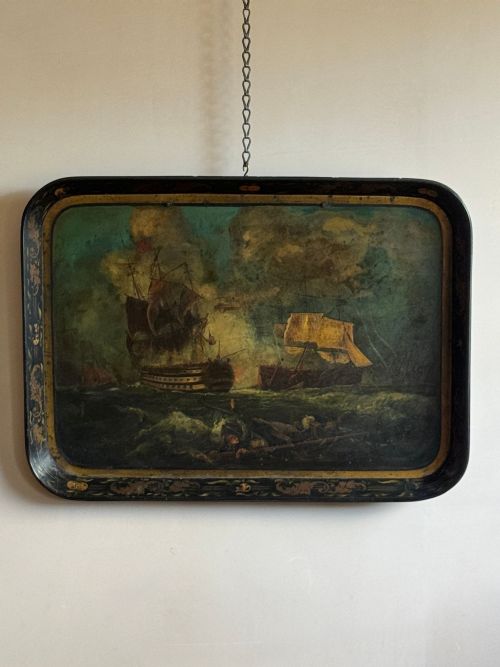
Wooden frames protect the paper works, often accompanied by glass to shield the water-soluble pigments from moisture and fading. Papier-mâché and woodblock prints also appear among the varied techniques employed to record maritime life.
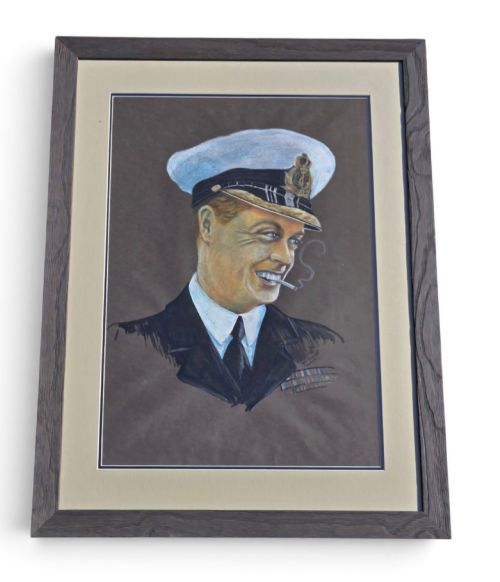
A royal portrait signed in 1931 rubs shoulders with gritty fishing trawlers and quiet Norfolk broads.
Judging Quality
Quality rests in the fluency of the brushwork or the crispness of the plate impression, where confident handling brings movement to water and air. The strength of the composition and the preservation of the paper pigment dictate the visual impact of the piece.
Works by named marine artists or pieces with documented exhibition histories demonstrate superior draftsmanship, particularly in the accurate rendering of rigging, hulls, and coastal topography.
James Orrock·William Lionel Wyllie·Thomas Maidment·William Matthison·Thomas Bush Hardy
The Paper Maritime Wall Art Glossary
- Gouache
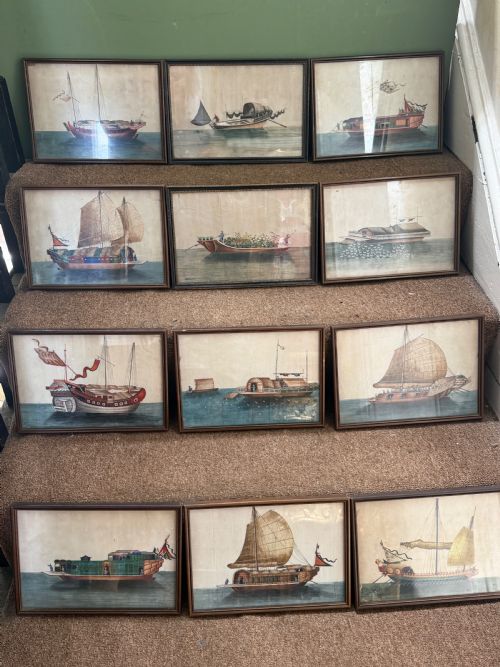
- An opaque watercolour paint that uses a binding agent such as gum, allowing for bright highlights and dense colour application. It frequently appears in Chinese export paintings and nineteenth-century coastal scenes.
- Etching
- A printmaking technique where lines are bitten into a metal plate with acid before ink is applied and pressed onto paper. This method creates fine, precise details found in river and harbour views.
- Aquatint
- A printmaking variation that produces tonal effects resembling watercolour washes through the use of powdered resin. It creates subtle gradations of light and shade in coastal prints.
- Japanned
- A European imitation of East Asian lacquerwork applied to surfaces such as papier-mâché trays or frames. It involves layered varnishes cured by heat to produce a hard, glossy finish.
- Watercolour
- A painting method where fine pigments are suspended in a water-based solution and applied to paper. It relies on the white of the paper to show through translucent washes for luminous atmospheric effects.
Paper Maritime Wall Art: Frequently Asked Questions
How should I hang watercolour art?
Keep watercolours away from direct sunlight to prevent the pigments from fading over time. UV-filtering glass offers extra protection for fragile nineteenth-century paper.
Ensure rooms maintain stable humidity levels to protect both the paper support and the wooden frame. Hanging pieces away from radiators prevents the paper from becoming brittle.
What subjects appear in these works?
Coastal harbours, fishing boats, and sailing ships dominate the subject matter, recording nineteenth and twentieth-century maritime life. Scenes often feature specific British ports such as Whitby, St Ives, and the River Thames.
In addition to working vessels, depictions include naval ships, lighthouses, and quiet coastal inlets. Urban waterfronts and architectural landmarks also feature alongside the open sea.
Are these works original or printed?
The selection includes both unique hand-painted watercolours and original print mediums such as etchings and aquatints. Hand-painted works show brush texture and pigment pooling under close inspection.
Etchings and prints bear the characteristics of plate impressions in the paper. Signatures and dates often distinguish individual original sheets from later reproduction prints.
How do I date a paper painting?
Stylistic clues within the clothing, architecture, and vessel types help narrow down the period of creation. Many Victorian and Edwardian works carry handwritten inscriptions or signatures on the front or reverse.
Framing materials and backing papers also offer clues to the age of the piece. Archive records and artist lifespan dates provide definitive brackets for production.