



Paper Horse Watercolour Painting
These paper horse watercolour painting works capture equestrian subjects and rural scenes across the nineteenth and twentieth centuries.
Paper Horse Watercolour Painting
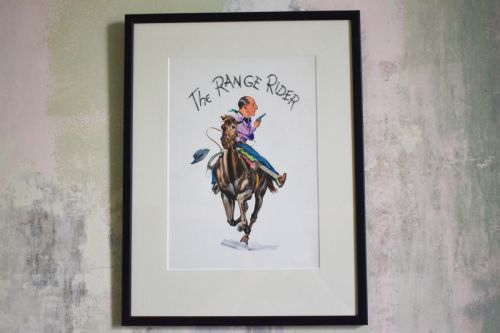
When you examine a paper horse watercolour painting on this page, you encounter original works spanning the Georgian era to the mid-twentieth century. The selection ranges from detailed nineteenth-century portraits of horses and cavalry scenes to early twentieth-century depictions of working animals on farms and city streets.
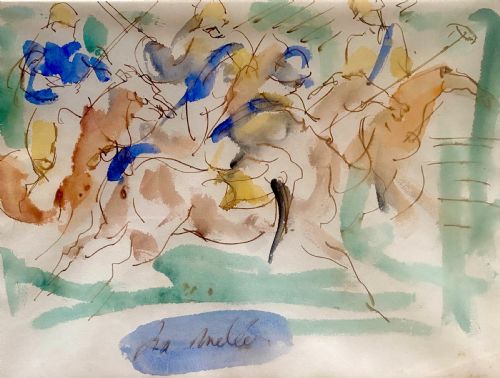
Many examples capture horses in motion during hunting, polo matches, or cart-hauling scenes, executed by British and European artists. You will also find genre paintings and landscapes where horses form the central focus of rural working life.
Materials and technique
Artists create these works using watercolour pigment and ink applied directly to paper sheets. Many pieces incorporate framing with glass and gilt wood surrounds to protect the delicate water-soluble pigments.
The technique relies on the natural translucency of watercolour to build form and light across the paper substrate. Artists often combine washes of colour with fine ink line work to define the musculature of horses and the textures of rural landscapes.
What separates the work
Quality rests in the precision of the draughtsmanship and the artist's ability to render the anatomy and movement of the horse convincingly. Superior examples display confident brushwork and a balanced composition that anchors the animal within its environment.
Condition also plays a part, as works executed on paper remain vulnerable to fading from light exposure or discolouration from acidic mounts. The strength of the remaining pigment and the preservation of the paper surface distinguish finer examples.
Albert Ludovici Jnr·Gen Paul·William Manners·James William Booth·Charles James Lauder·John Augustus Atkinson·Helena Maguire·George Hamilton Constantine·Rowland Henry Hill·Thomas Mackay·Adrian Jones·Robert Hollands Walker·John Sanderson Wells·Charles H Poingdestre·William J Hodgson·Henry Charles Fox·Walter Duncan·Frank Saltfleet·William Kay Blacklock·Alfred George Stevens·Frank Dadd·Fred Lawson·John Atkinson·Charles James Adams·John Baragwanath King
The Paper Horse Watercolour Painting Glossary
- Watercolour
- A paint consisting of a colour pigment suspended in a water-soluble binder. It is applied in translucent washes to paper to create luminous effects.
- Gilt wood
- Wood that has been treated with a thin layer of gold leaf or metallic gilt paint. This finish commonly appears on period frames enclosing works on paper.
- Genre painting
- Artwork that depicts aspects of everyday life by portraying ordinary people and animals engaged in common activities. These scenes often feature working horses and rural laborers.
- Equestrian
- Pertaining to horses, horse riding, or the representation of horses in art. This category includes racing, hunting, and working farm animals.
- Monochrome
- A painting or drawing executed in a single colour or shades of one colour, such as sepia or black ink washes.
Paper Horse Watercolour Painting: Frequently Asked Questions
What periods do these paintings come from?
The works span from the Georgian period through the Victorian and Edwardian eras up to the nineteen-thirties. You will find pieces reflecting British Impressionism, Realism, and Expressionism.
Dates are established through artist signatures, stylistic markers, and period framing where available. Each era brings distinct approaches to depicting equestrian subjects.
How should I frame and display them?
Works on paper require conservation framing under glass to protect the delicate water-soluble pigments from moisture and airborne pollutants. Acid-free mounts prevent chemical damage to the paper over time.
Keep these paintings away from direct sunlight to prevent the watercolour pigments from fading. Controlled indoor lighting preserves the subtle tones of the original washes.
What subjects appear most often?
Horses feature prominently in various settings, including hunting scenes, cavalry manoeuvres, and polo matches. Working animals pulling carts, ploughed fields, and timber wagons also recur frequently.
Many compositions place horses within bustling street scenes or quiet rural landscapes. Artists recorded these animals as central components of daily transport and labour.
Are these works signed by the artists?
Many examples bear the signature or monogram of the artist within the composition or along the margin. Attributions often rely on recorded exhibition histories and stylistic comparison.
Works without visible signatures are attributed based on technique, period materials, and subject matter typical of known practitioners.