


Paper Graphite Sketch Art
Paper graphite sketch art offers direct contact with the hand of the past through unpretentious, intimate works on paper.
Paper Graphite Sketch Art
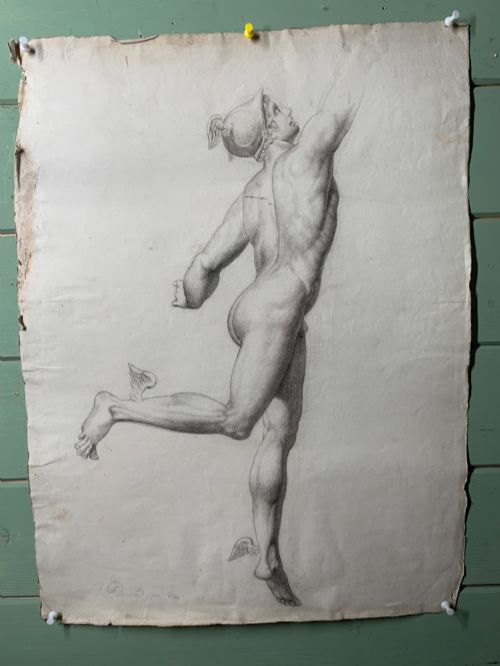
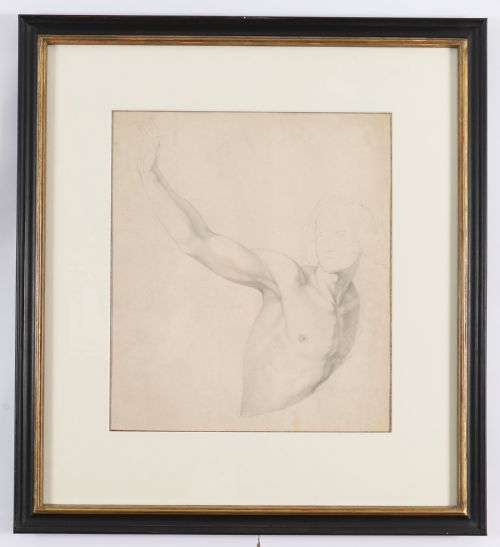
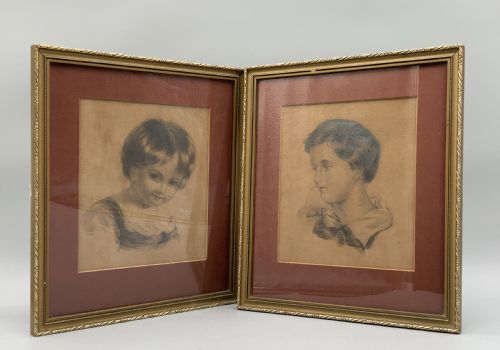
Paper graphite sketch art encompasses original drawings, framed artworks and studies executed on paper surfaces across several centuries. The selections here include Georgian and Regency portraiture, Victorian academic life studies, and twentieth-century works reflecting modern British and surrealist movements.
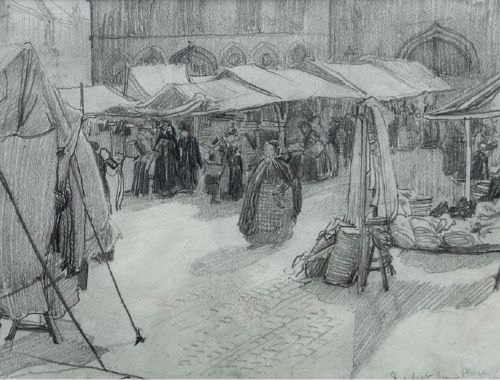
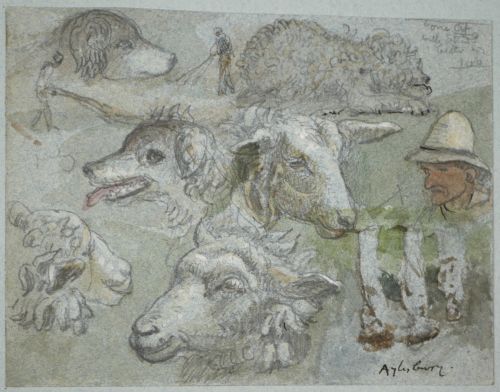
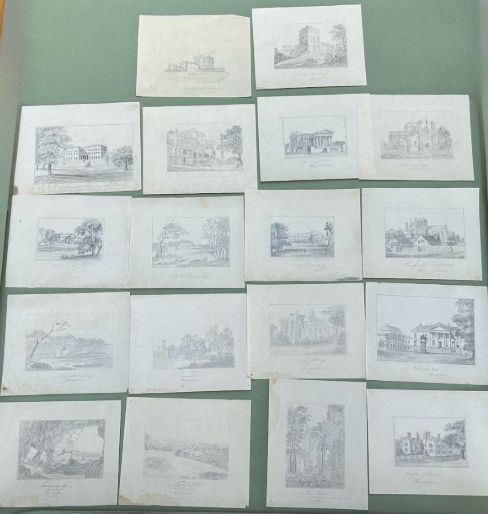
Buyers encounter diverse subject matter ranging from architectural studies of gaols and market squares to intimate figural sketches, animal portraits and landscape views. The pieces appear in various formats, from single framed drawings to collected sets of early nineteenth-century Hampshire landscapes.
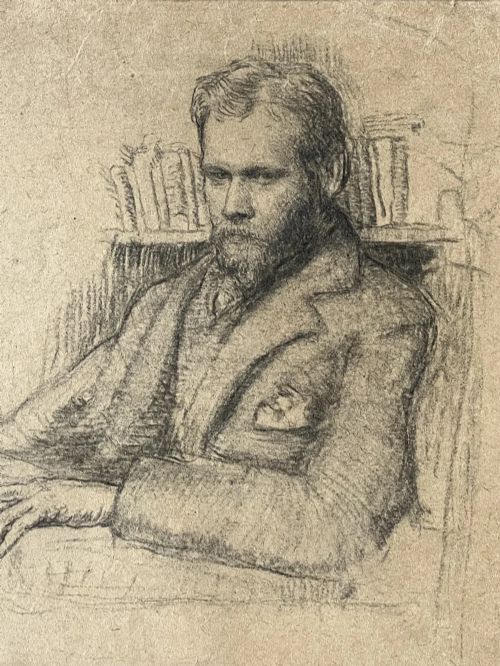
Originating from British, French and international hands, these works bridge informal preparatory exercises and finished portrait compositions. The physical supports reflect age-appropriate patination, housed variously in period frames or preserved as loose sheets.
Materials and technique
Artists utilise graphite, pencil and charcoal on paper substrates, frequently combining media with touches of ink, chalk and watercolour. The application ranges from delicate, sharp linear work to atmospheric smudged shading that defines volume and depth.
Works on paper rely entirely on the interaction between dry drawing materials and the tooth of the paper sheet. Protective mount boards, glass glazing and wooden framing often preserve these delicate surfaces from atmospheric degradation.
The listings span from the eighteenth century through the Victorian era to mid-century modernism, utilising pencil, charcoal, ink and watercolour on paper.
What varies in quality
Quality rests on the sureness of the draughtsmanship and the expressive economy of the line, distinguishing confident anatomical observation from stiff academic exercise. The ability of an artist to capture a likeness, mood or architectural perspective with minimal strokes defines the upper tier.
Condition and paper integrity dictate the enduring appeal of each work, involving the stability of the graphite, the absence of heavy acidic staining, and the preservation of original framing or provenance. Signed sheets and works attributed to documented historical figures command greater scholarly interest.
Henry Percy Huggill·James Smetham·Augustus John·Hans Holbein·Sir Thomas Lawrence·Sir Francis Leggatt Chantrey·Fred Lawson·LS Lowry·Ted Halliday·Mariette Lydis·Faeq Hassan·Dame Laura Knight·Henri Josephe Hesse·Alexandre Decamps·Sir Nathaniel Dance-Holland·Henry Edridge
The Paper Graphite Sketch Art Glossary
- Graphite
- A form of crystalline carbon used as a drawing medium in pencil form, yielding grey or black marks of variable hardness. It allows artists to achieve fine detail as well as broad tonal shading.
- Academic study
- A rigorous drawing or painting created as a training exercise, often focusing on the human figure, anatomy or classical sculpture. These works emphasise technical precision and formal composition.
- Ground
- The prepared surface of paper or canvas upon which a drawing or painting is executed. In works on paper, the original sheet acts as the primary ground for the medium.
- Provenance
- The documented history of ownership of an antique object, establishing its authenticity and chain of custody. Verified origin adds significant contextual value to historical sketches.
- Wash
- A thin, transparent layer of diluted ink or watercolour applied with a brush to provide tonal depth. It frequently accompanies underlying pencil or graphite lines in topographical and architectural views.
Paper Graphite Sketch Art: Frequently Asked Questions
How should I display antique paper sketches?
Keep drawings out of direct sunlight to prevent fading of the graphite, pencil and paper fibres. Frame them using acid-free mount boards and conservation glass to protect the delicate surface.
Position them in rooms with stable humidity levels, away from heat sources and damp exterior walls, to ensure the paper remains flat and stable over time.
What is the difference between a sketch and a study?
A sketch is typically a rapid, spontaneous record of a subject, capturing an immediate impression, movement or compositional idea. It prioritises capturing the essence of a scene over intricate finish.
A study is a more deliberate, detailed examination of a specific element, such as an anatomical feature, a hand, or a drapery fold. Artists use studies to resolve technical problems before incorporating them into larger finished paintings.
How do I identify the period of an unsigned drawing?
Look to the paper watermark, the style of the script in any annotations, and the framing materials if they are period-original. Papers manufactured in the eighteenth and nineteenth centuries often possess distinct textures and weights.
Examine the clothing, hairstyle, or architectural elements depicted within the subject matter. These details frequently offer reliable clues to narrow down the decade of creation.
Why are some graphite drawings combined with watercolour?
Artists frequently laid down an initial graphite or pencil framework to map out perspective, proportions, and outlines before applying transparent washes of colour. This method ensured accurate placement of architectural details or figures.
The underlying graphite line remains visible beneath the translucent watercolour, adding definition and structural crispness to landscape and portrait compositions.