


Paper Equestrian Painting
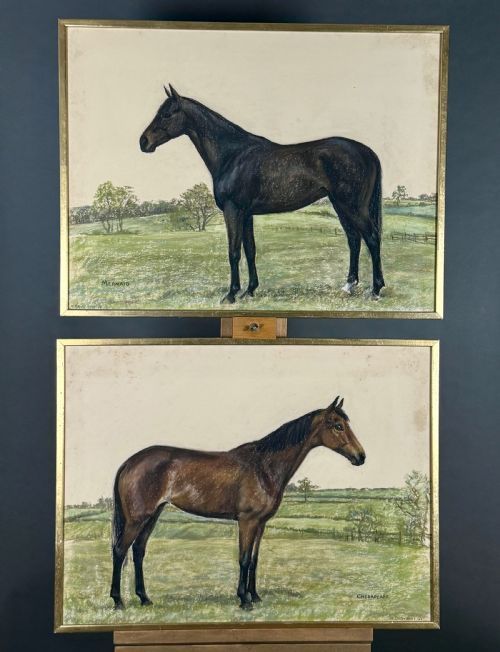
These paper equestrian painting works capture horses and riders across periods from the Georgian era to the mid-century.
Paper Equestrian Painting
A paper equestrian painting brings together horses, riders, and rural scenes executed on paper supports across various historical periods. The selection on this page ranges from Victorian monochrome hunt scenes to early twentieth-century illustrations and mid-century pastels.
Buyers will encounter single watercolours, pairs of hunting studies, and set groupings executed in media such as ink and gouache. These works span English school traditions, French military subjects, and Persian miniature painting.
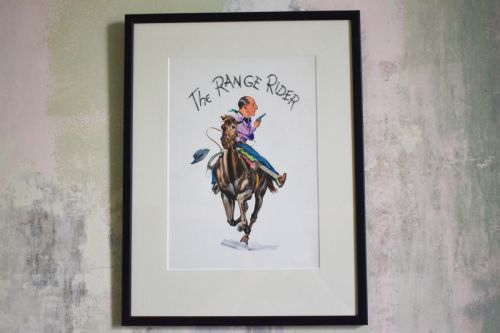
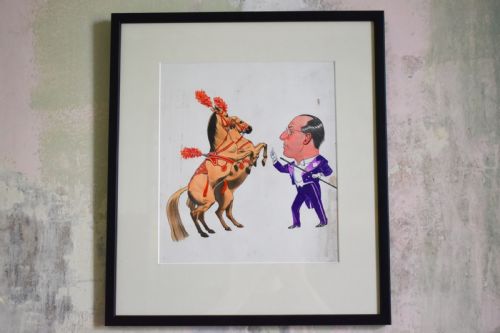
The forms vary from intimate cartoon watercolours to large framed artwork depicting polo matches, plough teams, and garrison life. Dating stretches from the eighteenth century through to nineteen sixty.
Materials and technique
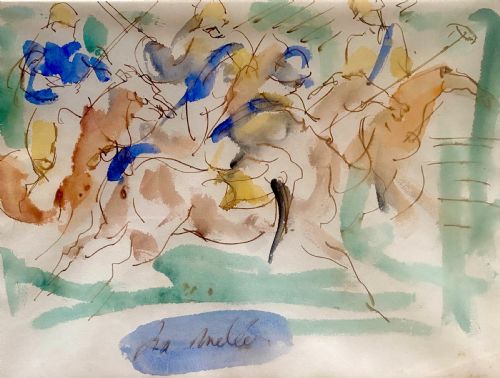
These works rely primarily on paper supports combined with water-based pigments, ink, and pastel. Artists utilised watercolour paint and watercolour pigment to build translucent washes, often pairing them with ink line work.
Framing materials incorporate wood and glass to protect the paper surfaces. Gilt wood frames appear on select pieces, adding a traditional border to the watercolours and pastels.
The inventory records paper supports utilised alongside watercolour, ink, gouache, and pastel across multiple historic periods.
Judging quality in these works
Quality rests upon the sureness of the brushwork and the precision in capturing the anatomy and movement of the horse. Works by listed artists demonstrate a fluent handling of watercolour and ink that brings the subject to life.
The preservation of the paper support and the clarity of the pigment dictate desirability. Strong compositions with distinct provenance stand apart from anonymous decorative watercolours.
John Augustus Atkinson·Helena Maguire·Thomas Mackay·Adrian Jones·John Sanderson Wells·Henry Charles Fox·George Cattermole·Frank Dadd·Charles James Adams
The Paper Equestrian Painting Glossary
- Watercolour
- A paint consisting of a colour suspended in a water-soluble binder. It provides transparent washes ideal for delicate paper works.
- Gouache
- An opaque water-based paint that includes a white pigment filler. It creates solid areas of colour distinct from transparent watercolour.
- Pastel
- A dry drawing medium made of powdered pigment and a binder. It produces rich, velvety surfaces on paper.
- Miniature painting
- A small, highly detailed work of art. These are often executed on paper with fine brushes.
- English School
- A term used to group artists working within British traditions. It encompasses generations of landscape and sporting painters.
Paper Equestrian Painting: Frequently Asked Questions
What periods do these paintings cover?
The selections span from the Georgian period through the Victorian and Edwardian eras into the mid-twentieth century. Pieces date from eighteen hundred up to nineteen sixty.
Each era brings distinct stylistic approaches, ranging from traditional British sporting art to mid-century expressionism.
How should I display paper works?
Paper paintings require protection from direct sunlight to prevent the watercolour pigments from fading over time. Professional framing with glass and acid-free mounts ensures longevity.
Keep them in rooms with stable humidity levels to avoid warping the paper or damaging the wooden frames.
What subjects are included in equestrian art?
The subjects range from hunt scenes and polo matches to working plough teams and military cavalry encounters. Portrait studies of individual horses also feature prominently.
Artists captured both leisurely rural pursuits and dynamic action scenes involving horses and riders.
Are these works signed by the artists?
Many pieces feature signatures or attributions to established painters such as Thomas Mackay, Frank Dadd, and Henry Charles Fox. Other works represent the broader output of the English school.
Attributions rely on period documentation, style, and visible signatures recorded in the titles.