




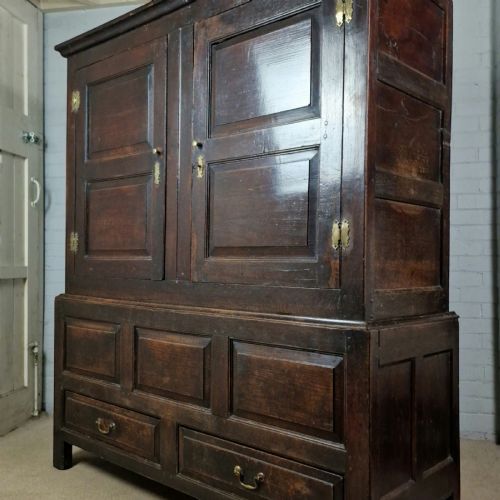
Panelled Wood Chest
A panelled wood chest is a sturdy storage piece built from oak or walnut panels, offering timeless utility and historical character for any room.
Panelled Wood Chest
When searching for a panelled wood chest, buyers encounter heavy storage furniture built primarily during the seventeenth and eighteenth centuries, alongside later revival pieces.
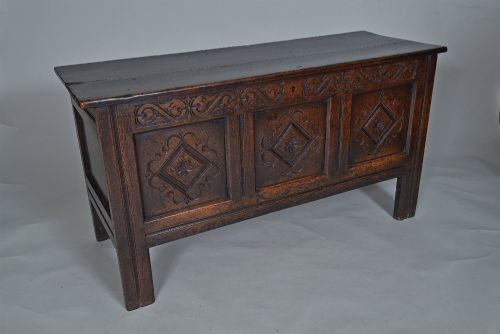
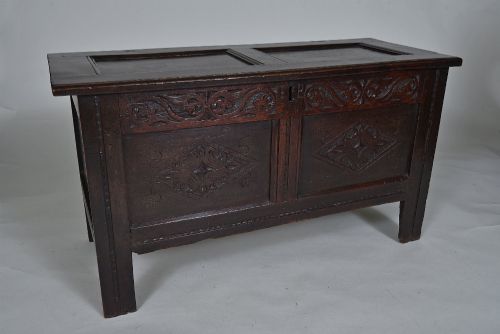
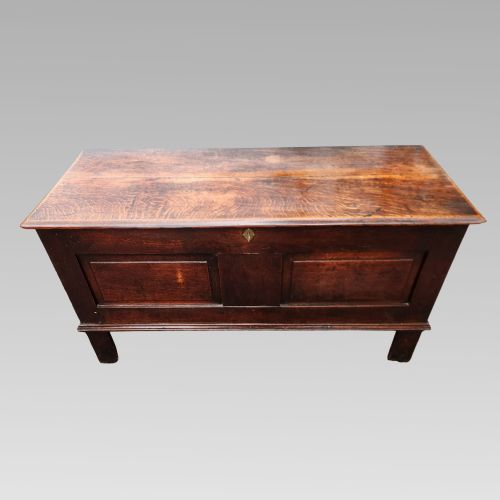
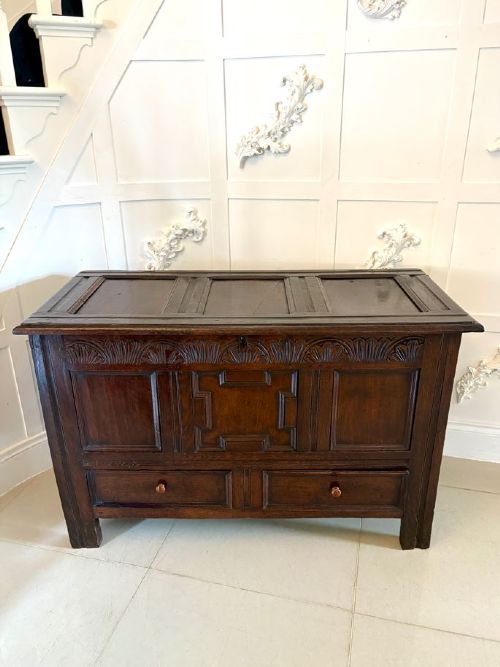
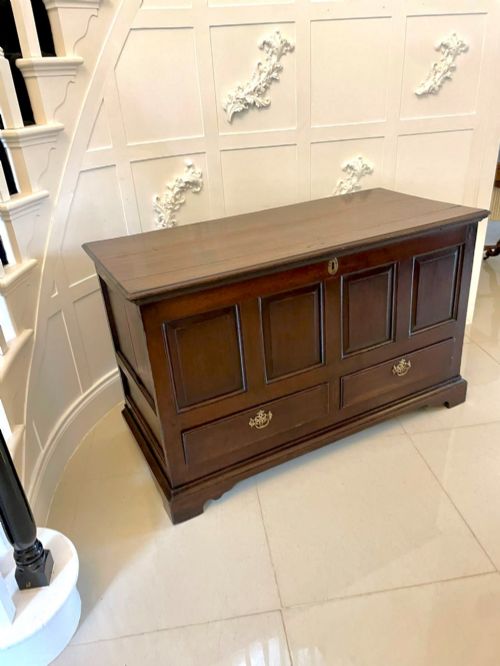
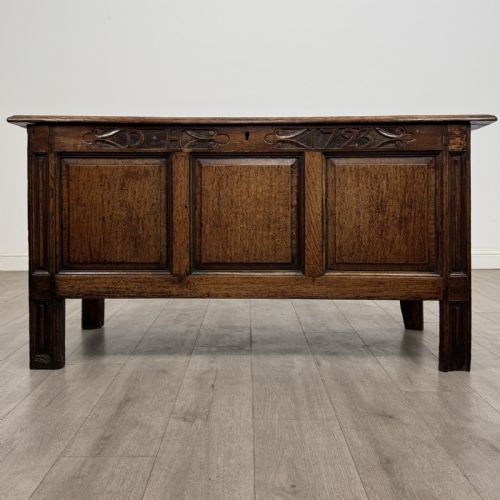
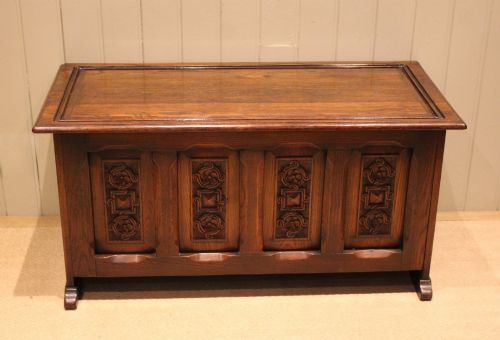
The most common examples on this page are oak coffers and blanket chests featuring panelled construction, sometimes fitted with drawers or carved fronts.
Originating as practical vessels for storing household valuables, garments, and documents, these chests survive in forms ranging from simple boarded boxes to elaborate joined furniture.
How they were made
Joiners constructed these pieces using frame and panel techniques, allowing solid timber like oak, walnut, and fruitwood to expand and contract with seasonal humidity without splitting.
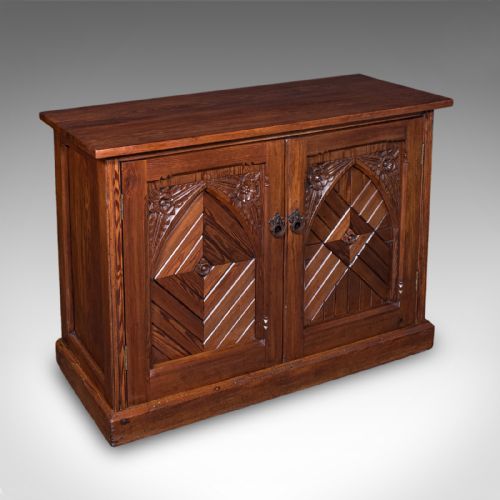
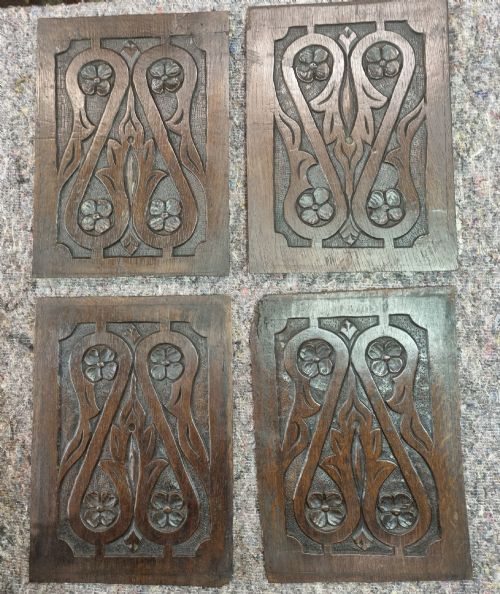
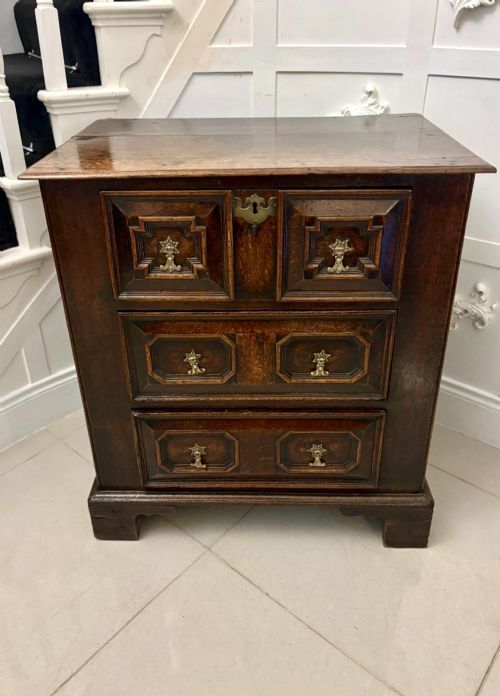
Surfaces were often decorated with geometric mouldings, linenfold carvings, or inlaid details, whilst structural integrity relied on pegged mortise and tenon joints.
Iron and brass hardware, including strap hinges and locks, secured the lids and doors on many examples.
Panelled Wood Chest Retail Price Guide 2026
Typical asking prices for panelled wood chest among the pieces listed under this phrase on Sellingantiques today, from the lower quarter to the upper quarter. They describe what is for sale here now, not the wider market.
Several chests still retain their original internal candle boxes, used long ago to store tallow safely away from linens.
What varies in quality
The distinction between ordinary and superior examples lies in the crispness of the hand-carving, the selection of figured timber, and the retention of original boards and hardware.
Pieces retaining their authentic feet, untouched patination, and original internal till boxes command greater respect among collectors than heavily restored or altered equivalents.
The Panelled Wood Chest Glossary
- Coffer
- A heavy wooden chest traditionally used for storing valuables. Early examples often feature boarded or joined construction with hinged lids.
- Mule chest
- A storage chest featuring one or more drawers beneath the main compartment. This form emerged as a transitional piece between the simple coffer and the chest of drawers.
- Linenfold
- A style of relief carving resembling folded linen, popular on sixteenth and seventeenth-century panels. It gives flat wooden surfaces a textured, textile-like appearance.
- Crossbanding
- A border technique where thin strips of veneer are laid across the grain of the primary wood. This method frames drawer fronts and tabletops on finer walnut and mahogany pieces.
- Framed panel
- Construction method where a central floating panel sits within a grooved frame. This technique accommodates natural wood movement.
Panelled Wood Chest: Frequently Asked Questions
What is a panelled wood chest used for?
These chests served primarily for storing household textiles, church silver, and valuable documents securely away from damp floors and pests.
Today, they function well in modern homes as blanket boxes at the end of a bed or as coffee tables with hidden storage.
How do I date an old wooden chest?
Dating relies on examining the construction methods, tool marks, timber species, and style of carving present on the frame.
Hand-riven boards, pegged joints, and historic ironwork typically indicate seventeenth-century or earlier origins, whilst machine-sawn timber points to later dates.
Are these chests made of solid oak?
Many early examples consist almost entirely of solid native timber, particularly oak, walnut, or fruitwood.
Later pieces from the Georgian period and beyond may incorporate secondary timbers or mahogany veneers over a stable core.
How should I care for an antique wooden chest?
Keep the wood away from direct heat sources and drastic humidity changes to prevent the timber from warping or splitting.
Apply a microcrystalline wax occasionally to nourish the surface and preserve the historic patina without sealing the pores.