

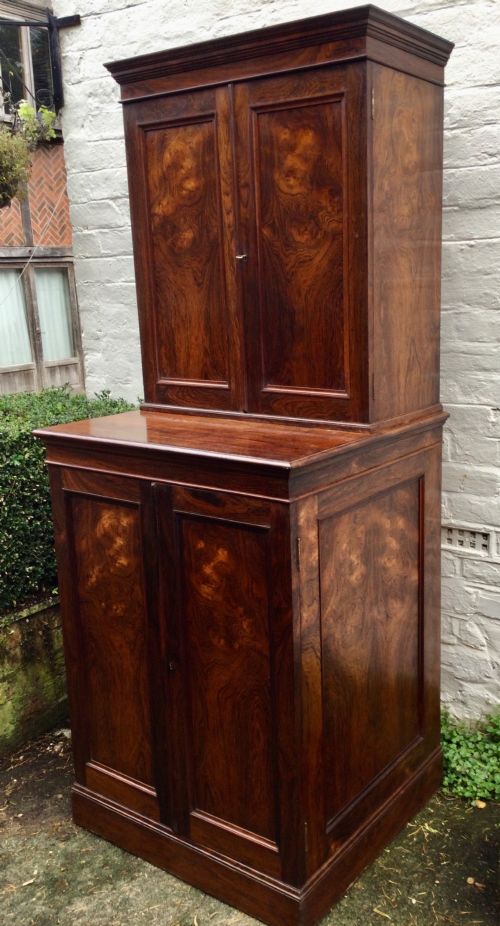
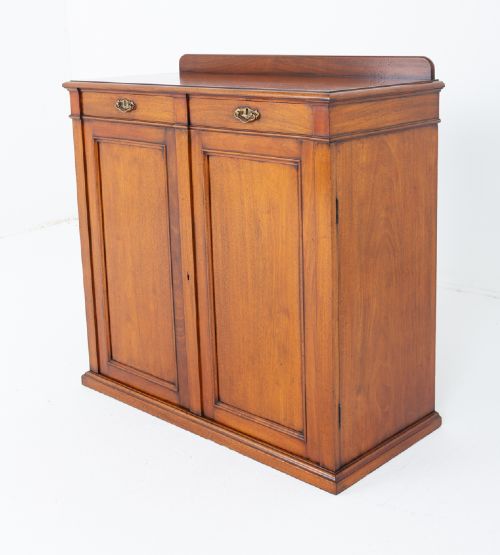
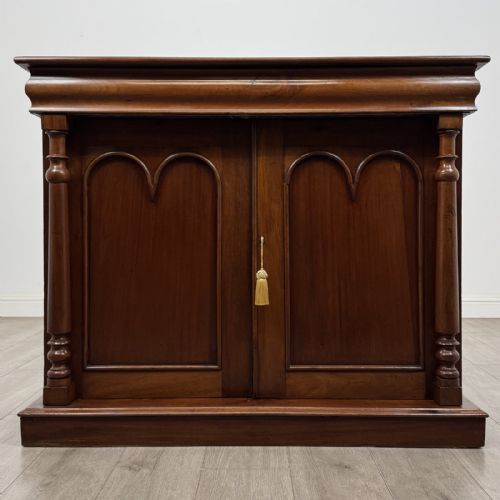
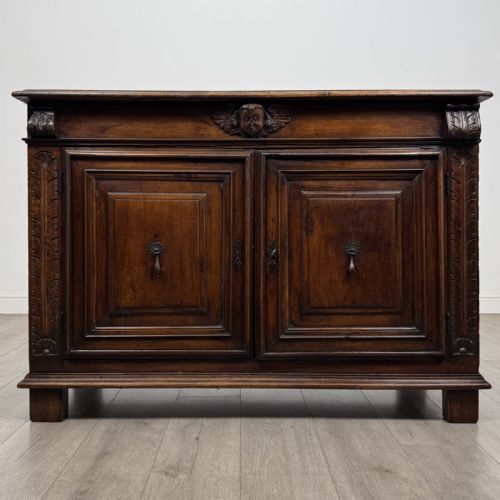
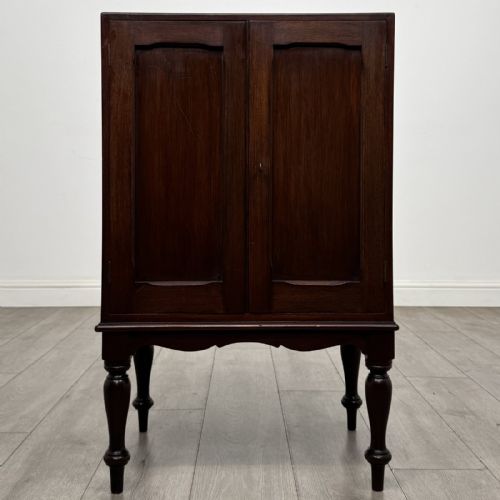
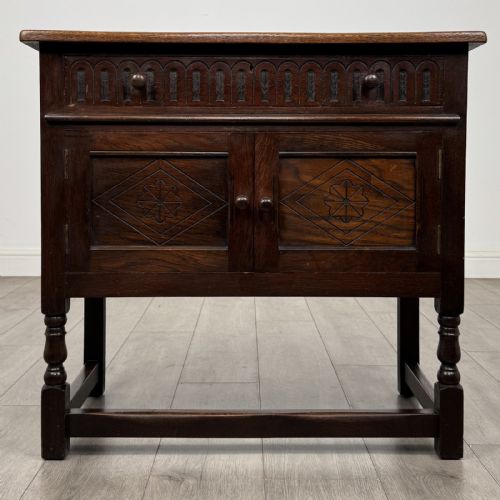
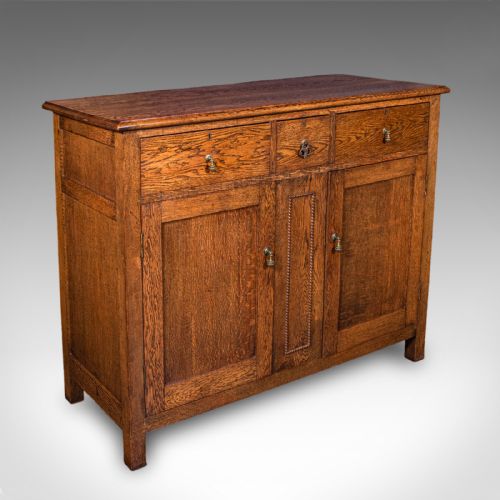
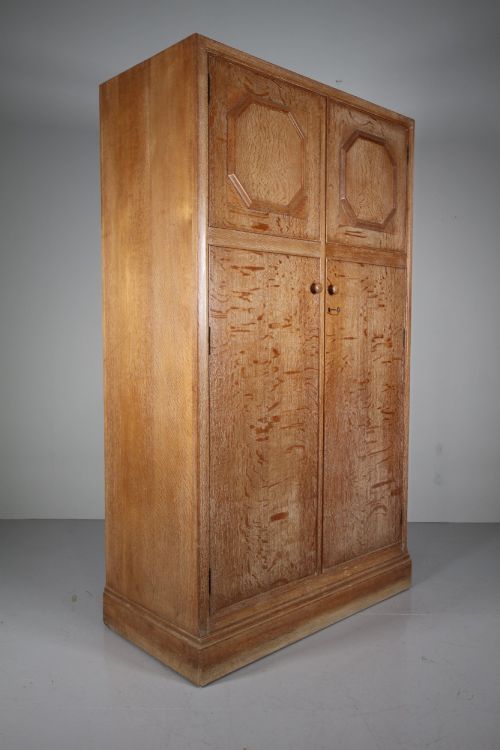
Panelled Storage Cabinet
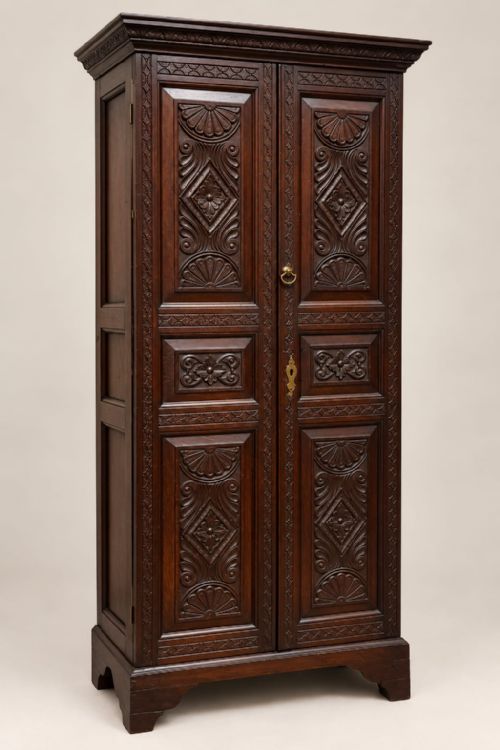
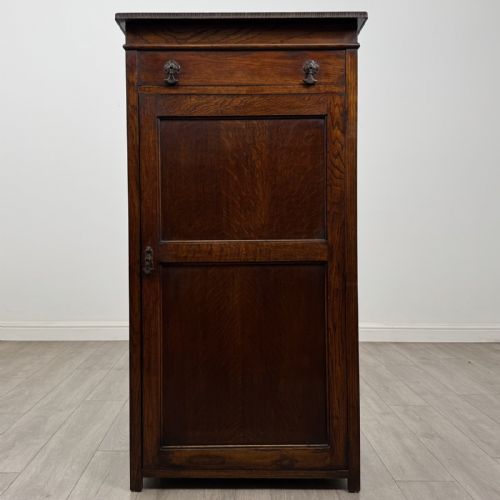
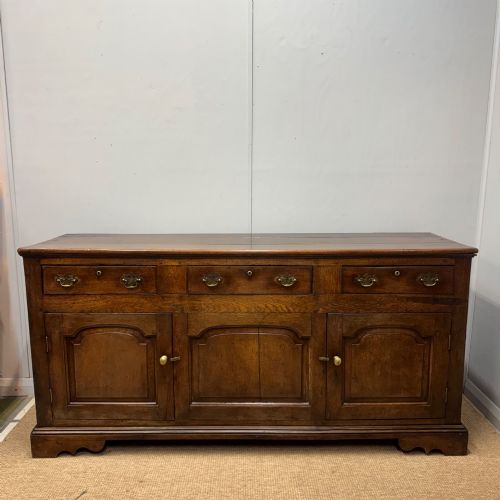
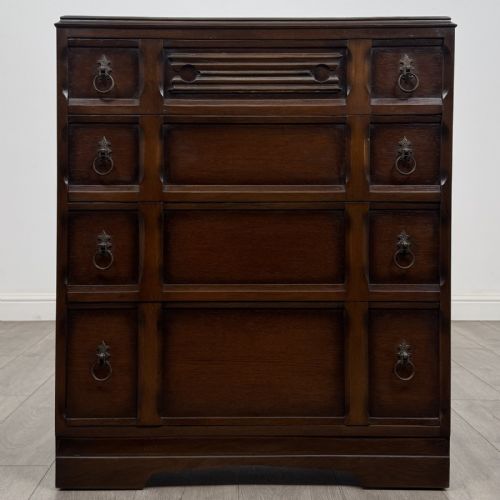
Panelled storage cabinets bring together centuries of carpentry, offering timber doors and drawers designed to hold household goods in any room.
Panelled Storage Cabinet
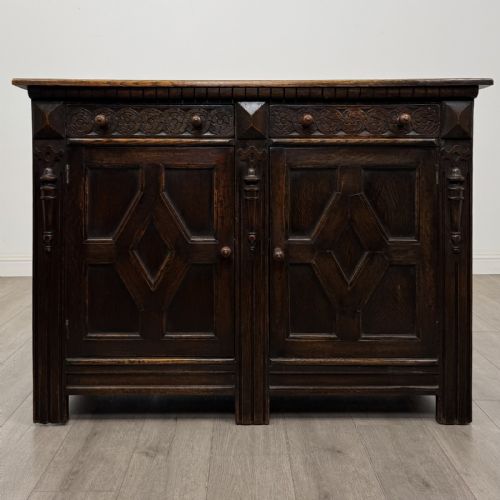
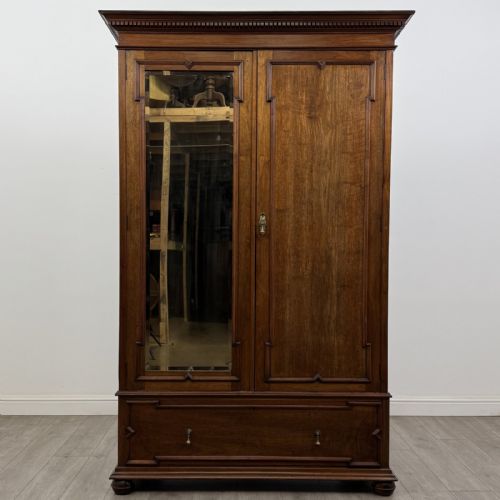
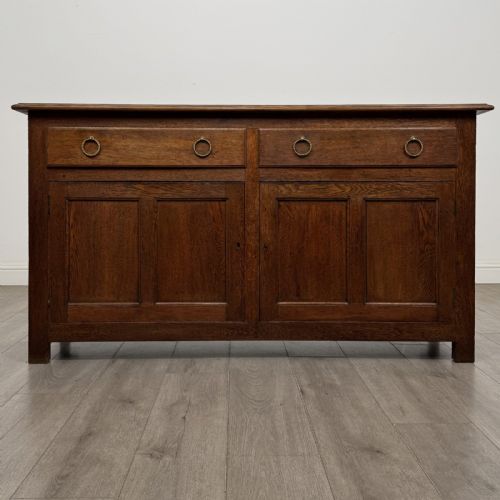
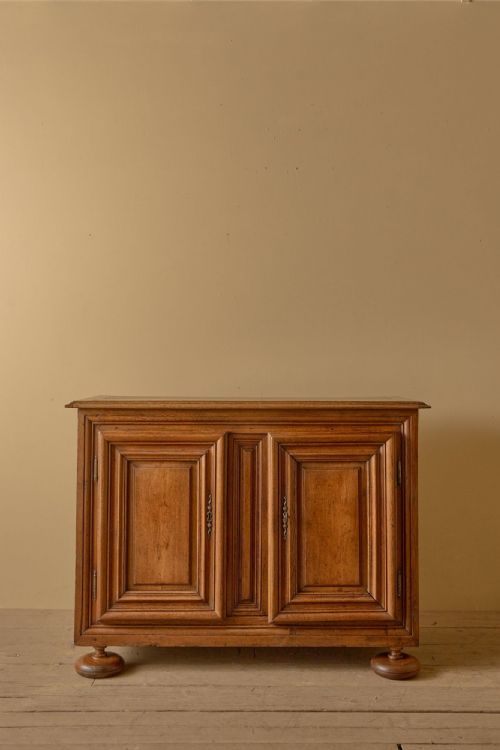
A panelled storage cabinet appears across several centuries, spanning 17th century styles through to Edwardian pieces. Buyers searching for a panelled storage cabinet commonly encounter solid timber cupboards, sideboards, and wardrobes featuring recessed or carved wooden panels.
Early examples include 18th century oak cupboards and court cupboards, while later Victorian and Edwardian periods offer smaller side cabinets and wardrobes in oak, mahogany, and pine. Regional varieties such as Welsh elm food cupboards also appear alongside Georgian mahogany corner cabinets.
Construction forms range from tall linen presses and larder cupboards to low dresser bases and bedside cabinets. Many incorporate fitted drawers, turned legs, or raised galleries alongside their primary storage compartments.
Assessing craftsmanship
Quality rests in the selection of timber and the precision of the joinery, particularly where frames meet panel inserts. Superior pieces display harmonious grain matching, crisp hand-carving, and original brass or iron hardware that remains well-fitted to the doors and drawers.
Subtleties in turning on legs, the thickness of backboards, and the smoothness of drawer operation distinguish workshop standards across different periods. Less refined items rely on simpler construction with heavier proportions and plain, unfigured secondary timbers.
Panelled Storage Cabinet Retail Price Guide 2026
Typical asking prices for panelled storage cabinet among the pieces listed under this phrase on Sellingantiques today, from the lower quarter to the upper quarter. They describe what is for sale here now, not the wider market.
Storage formats include wardrobes, larder cupboards, corner cabinets, and dresser bases with brass and iron hardware.
Heals Of London
The Panelled Storage Cabinet Glossary
- Panel
- A flat piece of wood set within a surrounding frame to prevent splitting as the timber moves. This construction method defines the surface appearance of many traditional cupboards.
- Court cupboard
- An antique two-tier storage piece originating in the early periods, often featuring carved upper sections and enclosed lower cupboards. These early forms provide substantial historical character.
- Linen press
- A tall storage cabinet traditionally used for storing textiles and garments, featuring sliding trays or shelves behind upper doors above lower drawers. They occur frequently in mahogany and oak.
- Dresser base
- A low cabinet fitted with drawers and sometimes lower cupboards, originally utilised in kitchens or dining rooms for food preparation and storage. They are constructed primarily from solid oak or elm.
- Cornice
- The decorative moulding projecting along the top edge of a cabinet or wardrobe. It crowns the structure and varies in complexity from simple bevels to carved dentil bands.
Panelled Storage Cabinet: Frequently Asked Questions
How do I clean a wooden storage cabinet?
Dust the surfaces regularly with a soft, dry cloth to prevent grit accumulation on the timber grain.
Apply a traditional beeswax polish occasionally to nourish the wood and maintain a gentle lustre without building up heavy residue.
Are these cabinets suitable for modern clothing?
Many larger examples such as wardrobes and linen presses accommodate modern hangers or folded garments with ease.
Internal depths vary across periods, so checking specific dimensions ensures modern items fit comfortably inside.
How do I identify an 18th century oak cabinet?
Look for pegged mortise and tenon joints, hand-carved panels, and the deep colour that develops in oak over centuries.
Backboards on these pieces typically consist of hand-riven boards rather than modern sheet materials.
Where should I place a corner cabinet?
Corner cupboards fit neatly into unused room junctions, making efficient use of floor space in dining rooms or hallways.
Their triangular footprint requires specific wall angles, so measuring the corner geometry beforehand is essential.