
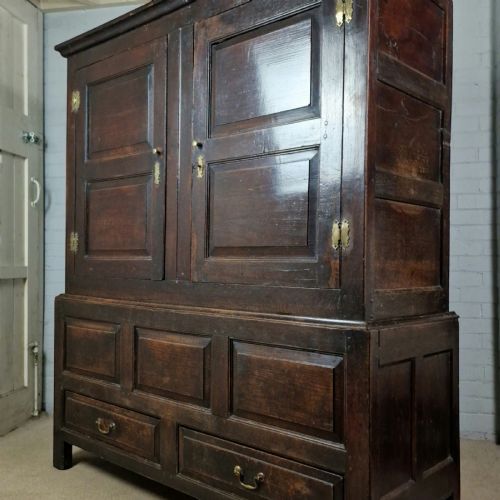
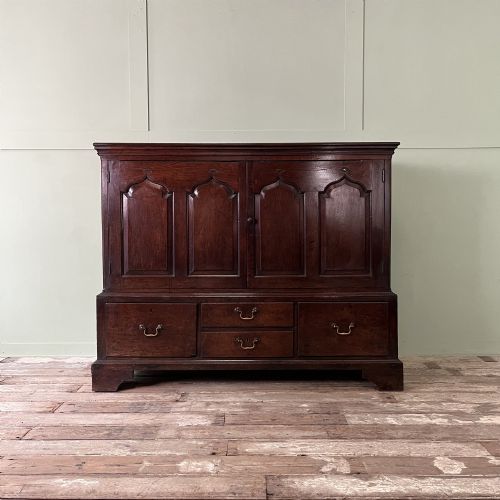
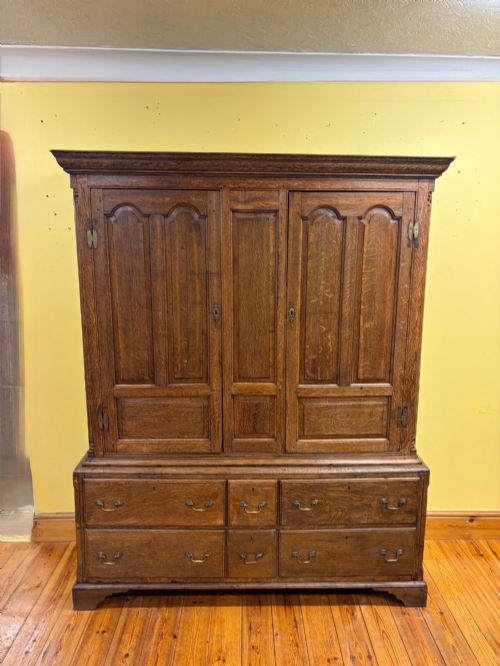
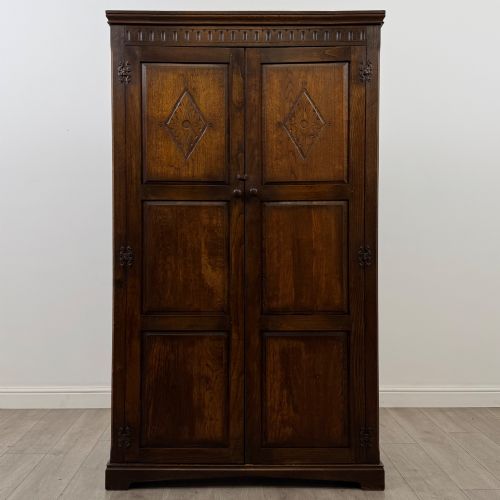

Panelled Oak Linen Press
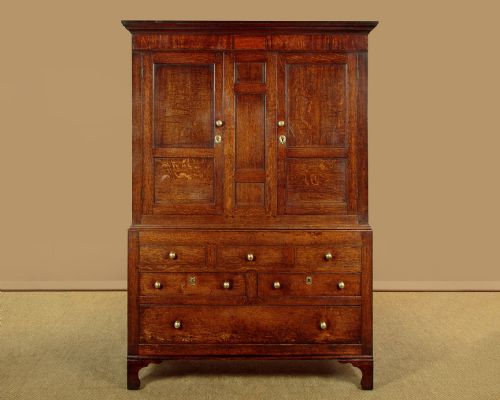
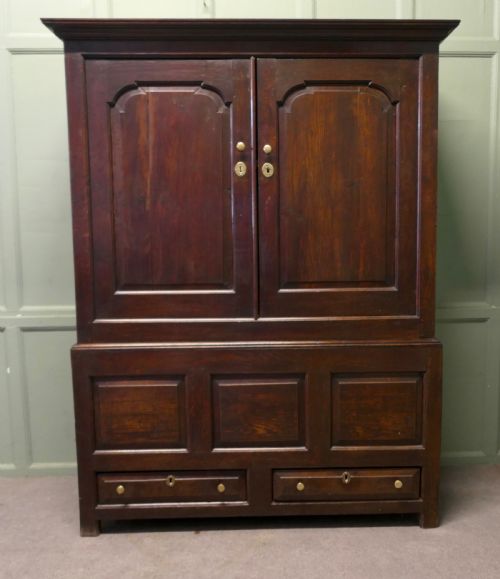
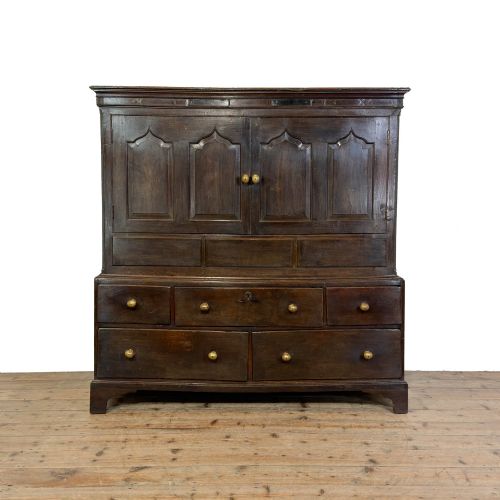
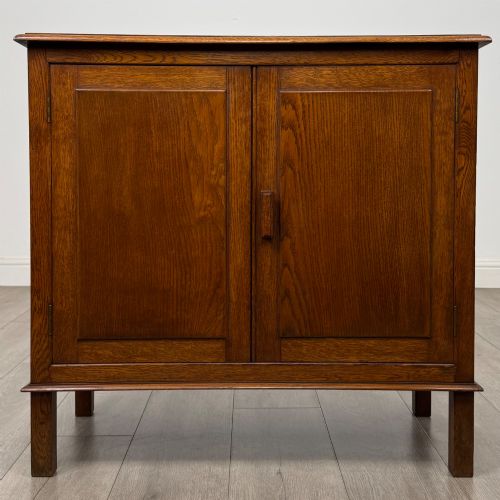
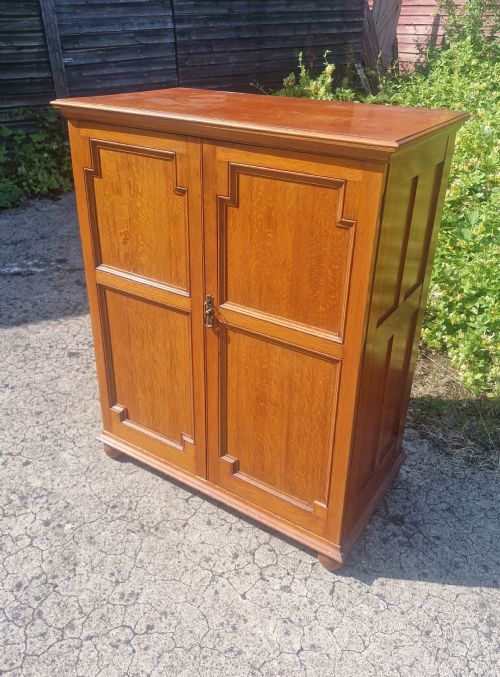
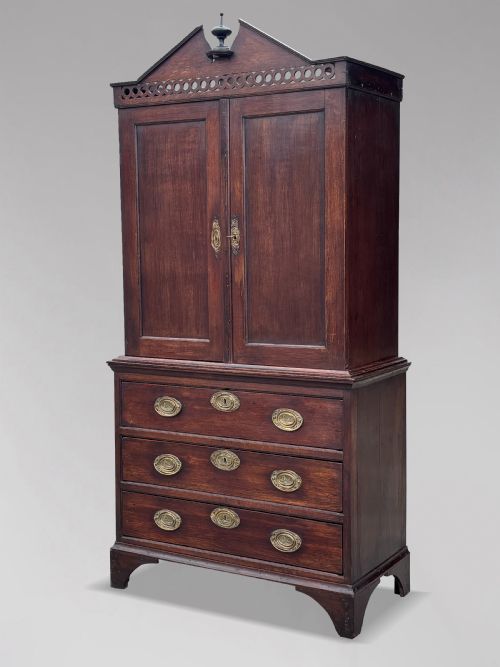
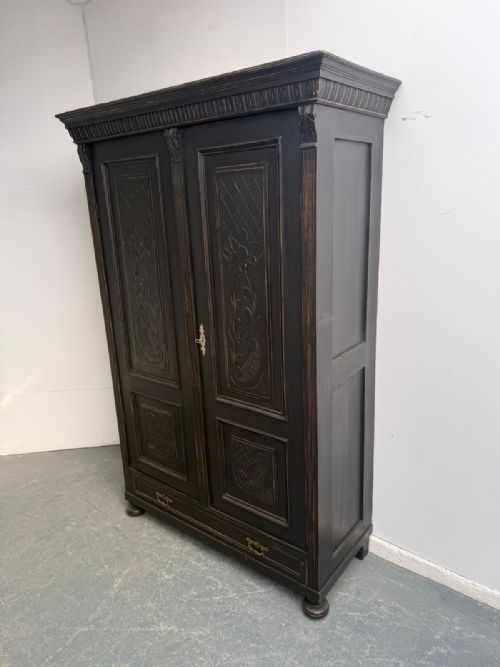
A panelled oak linen press is a substantial storage piece built to hold household textiles, combining sturdy timber construction with architectural front panels.
Panelled Oak Linen Press
A panelled oak linen press serves as a commanding storage cabinet designed primarily to keep family linens and garments organised in domestic interiors. These architectural pieces appear across multiple periods, including the seventeenth, eighteenth, and nineteenth centuries, spanning regional British vernacular and continental workshop traditions.
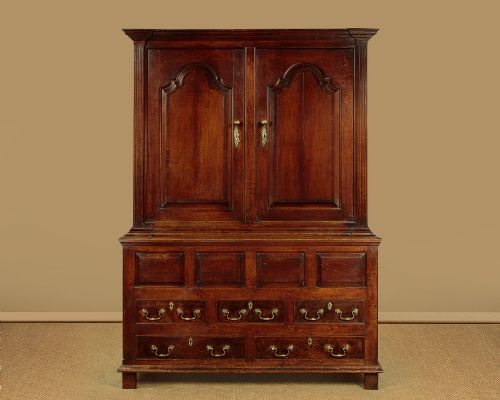
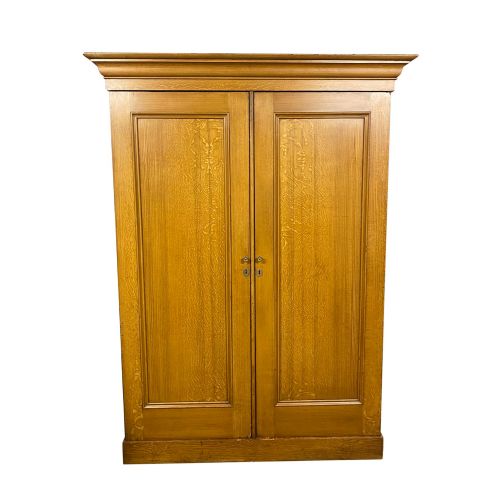
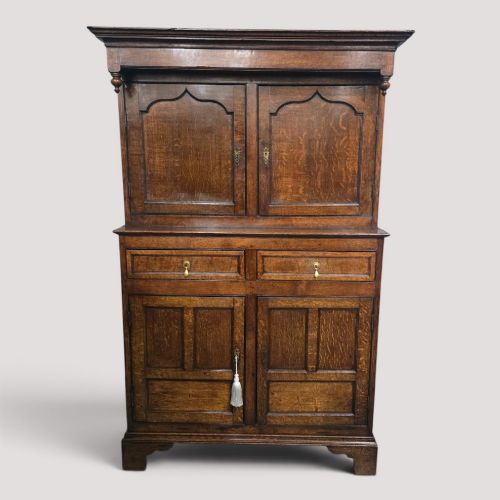
Buyers encountering this furniture category will find items ranging from tall Georgian housekeeper cupboards to low Welsh press variations and compact Edwardian wardrobes. The construction typically divides into upper shelving sections and lower drawer bases, providing versatile compartments for domestic textiles.
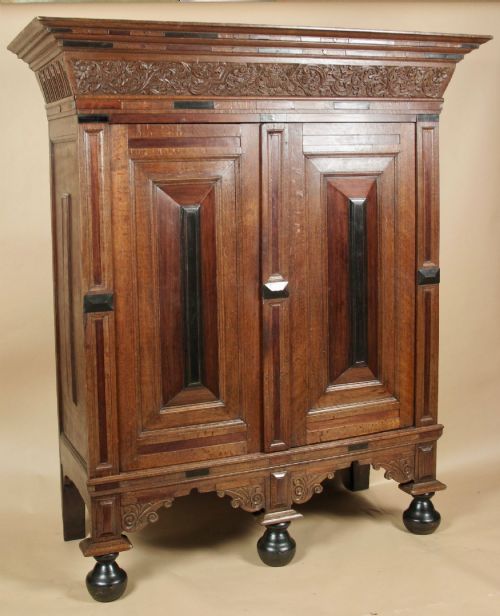
Regional variations often surface in the build, such as Welsh country pieces displaying distinct proportions and Dutch examples incorporating contrasting timbers like rosewood and ebony. This diversity ensures that each surviving press carries the structural hallmarks of its specific era and origin.
Materials and Construction Methods
Makers built these presses predominantly using solid oak, often selecting timber with strong medullary rays that highlight the natural grain of the wood. Secondary materials like pine, brass, and iron appear in internal fittings, hinges, and drawer pulls, supporting the robust daily operation of heavy doors.
Frame and panel construction formed the core technique, allowing the solid oak components to expand and contract naturally with seasonal changes in humidity. Decorative touches such as marquetry inlay, scumble paint, and carved detailing were applied selectively to enrich the architectural surfaces.
Several compact pieces designed specifically for children and harnesses survived centuries alongside towering housekeeper cupboards built for vast country estates.
Judging Quality in Historic Storage Furniture
Quality rests heavily on the integrity of the timber selection and the precision of the joinery within the framework. Superior examples display tightly fitted panels and original brass or iron hardware that has survived centuries of functional use without major modification.
The refinement of proportion and the subtlety of surface patination separate standard regional pieces from exceptional examples. Original finishes, whether unpolished oak or historic scumble paint, retain a depth that modern interventions cannot replicate.
The Panelled Oak Linen Press Glossary
- Panelled
- Construction method utilising fitted wooden boards held within a surrounding frame to prevent warping. This technique defines the architectural facades of early cupboards.
- Linen press
- Large cabinet specifically designed for storing folded textiles and garments on internal shelves. These units often feature sliding trays behind the upper doors.
- Housekeeper cupboard
- Large domestic storage furniture used for housing household provisions, linen, and tableware. They typically offer extensive shelving behind wide panelled doors.
- Scumble paint
- Decorative surface finish applied to imitate the grain pattern of finer timbers like oak. This technique was frequently employed during the nineteenth century.
- Livery cupboard
- Traditional term for a storage cabinet used to keep food or clothing in domestic halls. Surviving examples often display robust seventeenth and eighteenth-century framing.
Panelled Oak Linen Press: Frequently Asked Questions
What is a panelled oak linen press used for?
These large cabinets provide deep storage capacity for folded garments, household linen, and bulky textiles within bedrooms or hallways. The internal shelving and lower drawers accommodate diverse household items efficiently.
Historically, they kept valuable fabrics protected from dust and dampness in large country houses and modest domestic dwellings alike.
How do I date an antique oak press?
Dating relies on observing construction methods, timber characteristics, and hardware styles across the piece. Hand-cut joints, pegged tenons, and primary woods like oak point towards earlier Georgian and seventeenth-century origins.
Later Victorian and Edwardian examples often incorporate machine-sawn components, simpler internal fittings, and different secondary timbers like pine behind the main facade.
Where were these linen presses made?
Makers constructed these storage pieces across English and Welsh rural workshops, alongside continental European cabinet-making centres. Regional styles emerged from distinct areas such as Wales and the Netherlands, featuring specific proportions and decorative details.
Local timber availability heavily influenced the choice of solid oak as the primary structural material for these regional workshops.
How do I care for antique oak furniture?
Maintain stable indoor humidity levels and keep wooden furniture away from direct heat sources to prevent timber splitting. Regular dusting with a dry cloth protects the historic surface patination without stripping natural oils.
Avoid using modern silicone-based polishes that can build up a sticky residue over the traditional wax or unpolished oak finishes.